


Mauritius
A sleepy, relaxed Sunday in Trou aux Biches in the northwest of Mauritius: Taxi boats bob in the turquoise sea, carrying the promise of vacation happiness in their names - "Summerwind" or "Jackpot". In the afternoon it gets livelier, the shady beach parks fill up with locals all the way down to Balaclava. They queue up in front of the seafood snack bars or feast on the picnic food they have brought with them, accompanied by music from their own loudspeakers. Men playing boules make a clattering noise - and give the whole thing a touch of French flair. Meanwhile, a cyclist is zipping obliviously along the coastal road - one hand on the handlebars, the other clutching a fishing rod. Things are not always so relaxed everywhere on the island in the Indian Ocean. On the way inland, nasty traffic jams are a reality, as are stretches of highway where you can speed along at 110 km/h.
But one thing is always present, even away from the reef and palm-fringed showpiece beaches like in Trou aux Biches: the idyllic nature with billowing sugar cane, salt pans and endless lychee plantations, which are protected from flying foxes and birds by nets. The hills and mountains do not reach an altitude of 1,000 meters, but exert a fascination of their own; with sweeping, sinuous contours, bizarre jags and peaks. The valleys are lush, the plants lush green. Exotic birds compete with the flowers of the flamboyant tree for the brightest colors. The cardinal, for example, shows itself in a red-orange dress, pigeons are also found in yellow and, rarely but still, even in pink. Geckos counter casually with bright green. To call Chamarel a colorful seven-colored earth and weeping rock would be an understatement. Seven-colored earth makes this village in the south one of the most popular excursion destinations. With their shades of blue, green, red and yellow, the dunes are a geological phenomenon - the earths were mixed together by volcanic activity. Nearby, a waterfall plunges into the depths. Another howler: the weeping rock at Gris Gris.
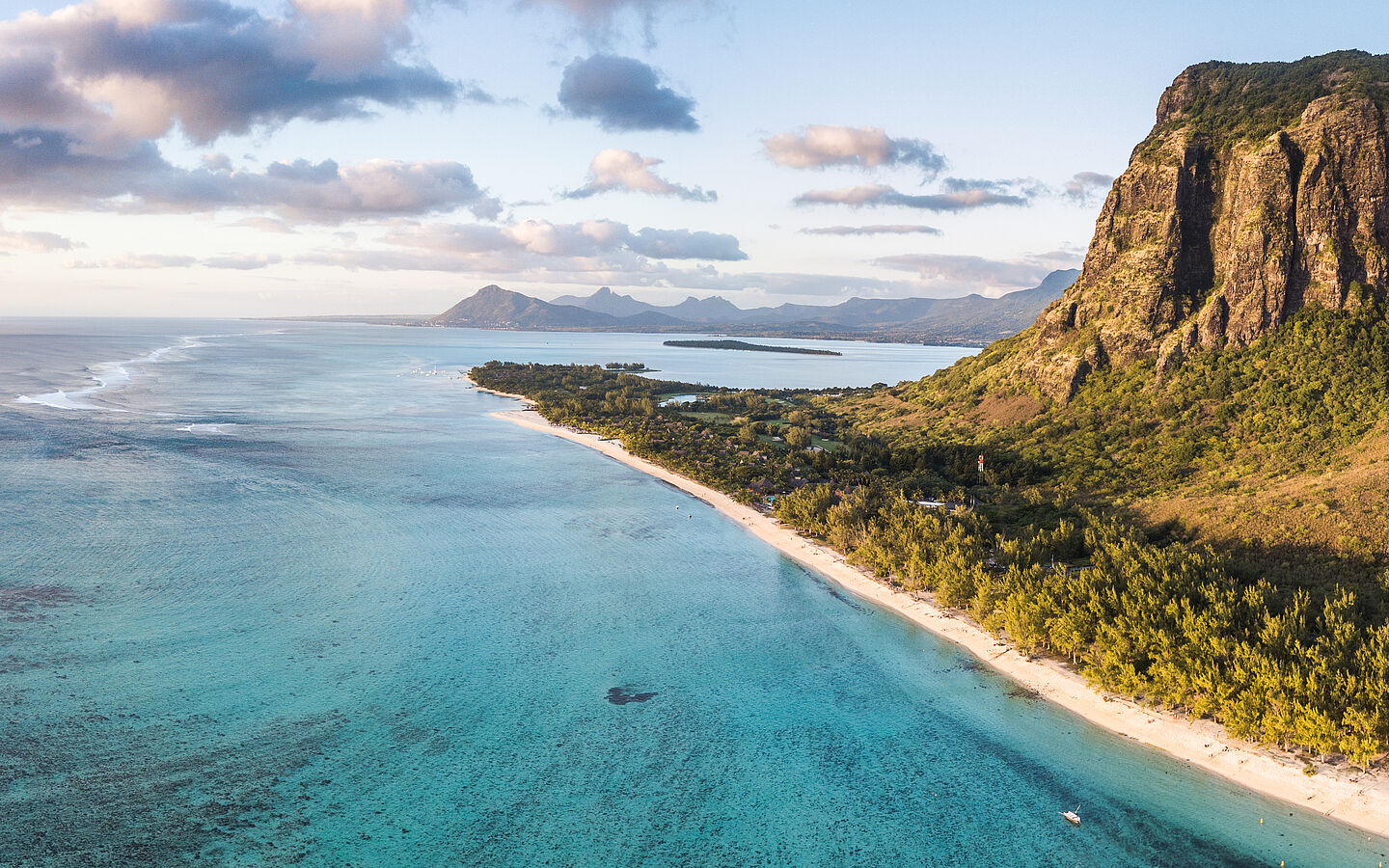
The crater lake at Grand Bassin cannot deny its volcanic past either. It is even the most sacred place in the country - for the Indian community, it symbolizes the water of the Ganges. Once a year, during the "Maha Shivaratri" festival, the lake becomes a place of pilgrimage for hundreds of thousands of Hindu pilgrims. Le Morne Brabant, also in the south, is similarly symbolically charged: a majestic 556 m high, a UNESCO World Heritage Site and a popular hiking destination. The landmark on a spectacular peninsula is regarded by Mauritians as a symbol of resistance against enslavement. Numerous forced laborers from Africa and Madagascar fled to the mountain to hide from their owners. When slavery was officially abolished on February 1, 1835, a police expedition wanted to bring the good news - too late for many serfs who had previously thrown themselves fearfully from the steep cliffs into the depths.
Pirates and other exploiters
There was to be no shortage of dark chapters after everything had begun so harmlessly and peacefully. After its discovery by Arab sailors in the 10th century, nothing happened for 500 years before the Portuguese came ashore in 1510. However, they left the settling to the Dutch, who named the island Mauritius after their regent, Prince Maurits van Oranje. The now strictly protected black ebony had attracted them - they turned it into a business by selling it to Europe for furniture and instruments. Before they left again in 1710, they quickly hunted the dodo - until the legendary ratite eventually became extinct. Plundering pirates took over the island until the French arrived in 1715, bringing with them sugar cane, coffee and tobacco. In 1810 - when Mauritius was already flourishing and prospering - the British arrived. After the abolition of slavery, the new colonial rulers simply brought in cheap labor from India - whose descendants make up two thirds of the population today. The Rainbow Nation, which became independent in 1968, has a population of 1.3 million and is completed by Creoles, Chinese traders and Europeans. As all of the island's inhabitants have a migrant background, multi-culturalism is a functioning model: a Hindu temple, a pagoda, a mosque and a Catholic church in the same street - and sometimes even in the same building - is nothing unusual here. There is room for all religions, a wide variety of festivals and peaceful coexistence.
Renaturalize, renovate, impress
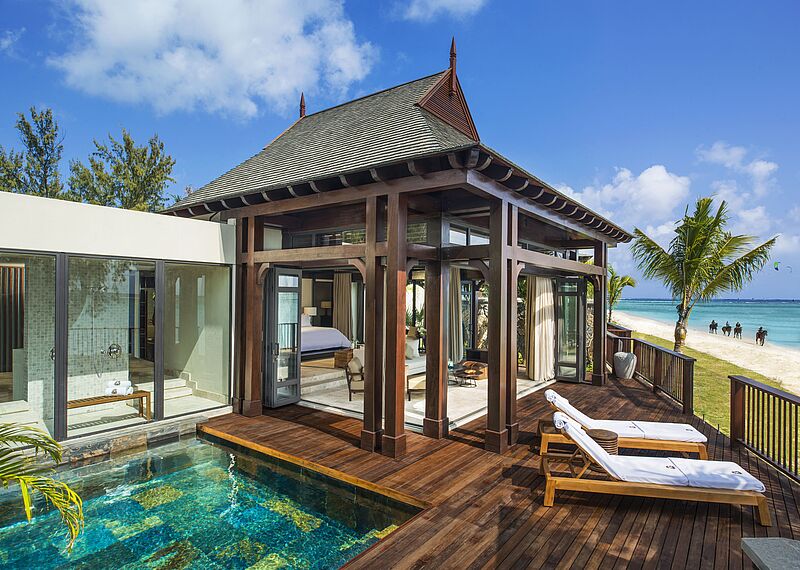
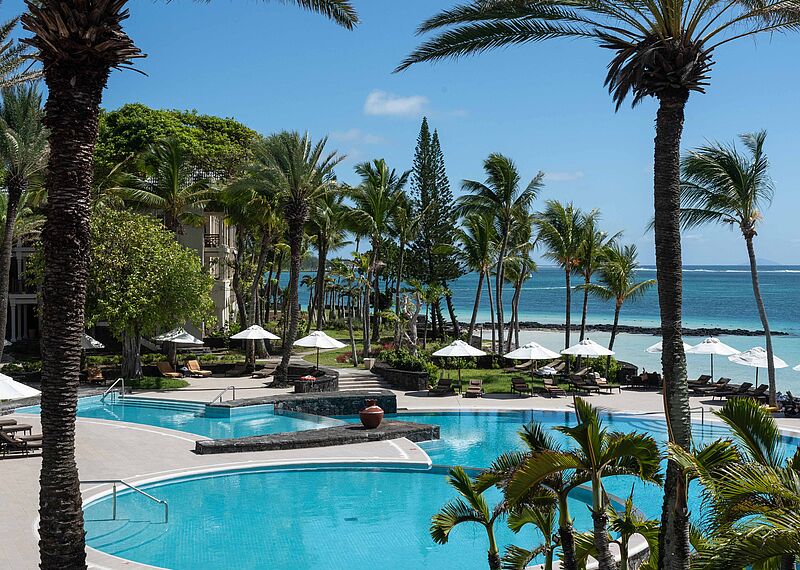
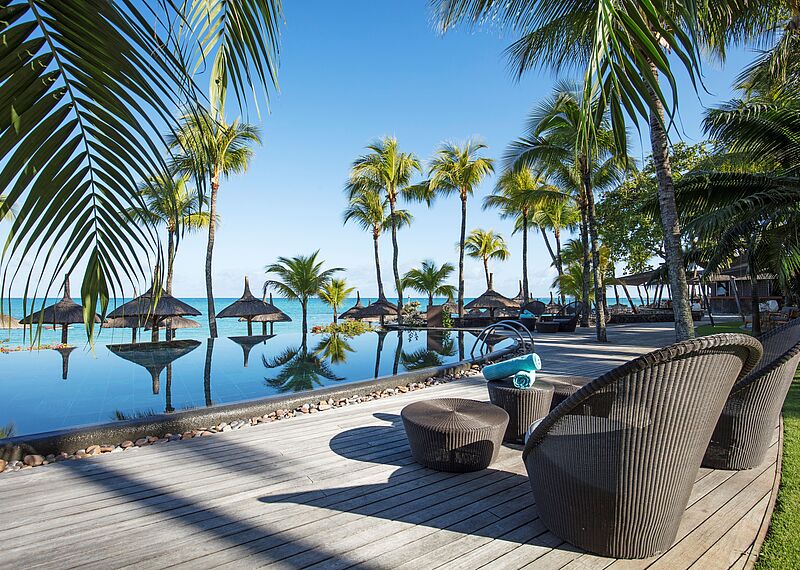
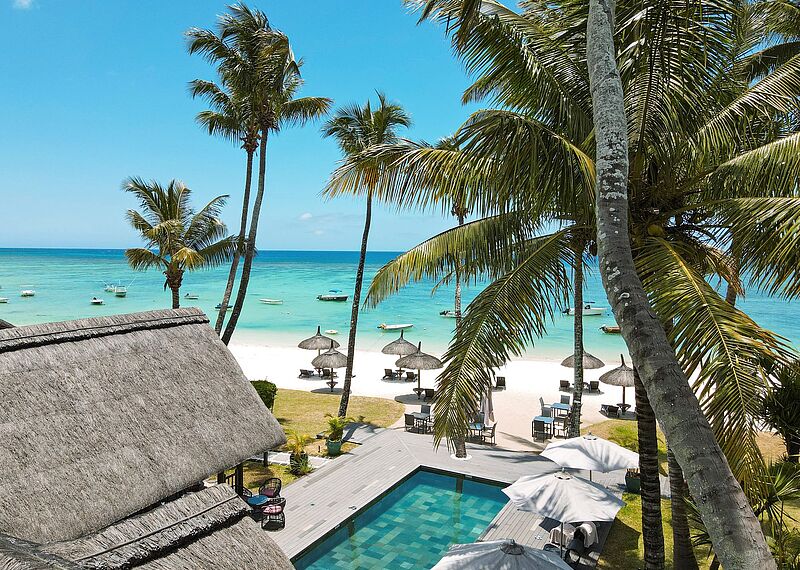
What unites the luxury hotel industry? No ostentation, just class and high quality. Mauritius is the wrong vacation destination for hipsters and bored bling-bling ladies. Sustainability programs and eco-initiatives are also increasingly part of the hospitality experience. The local hotel pioneer "Beachcomber", for example, has dedicated itself to reviving the severely damaged coral reefs. The staff at most hideaways are not only eloquent, but also genuinely hospitable. And given the high romance factor, every serious hotel treats itself to a wedding and honeymoon planner. There may be a low tide when it comes to new hotel openings, but the big names have recently treated themselves to a more than successful refresh. The kitchen performance from fresh fish downwards and the variety on offer are truly exceptional. Top European hotels could take a leaf out of the book when it comes to the buffets - this is next level. Combined with the omnipresent splendor of nature, this makes for an irresistible package, whether in the north or down in Le Morne. As the sun sinks lower and lower, you flop down on a Lazy Sunday in the pink cushions of the JW Marriott, sip champagne and nibble on tapas accompanied by sparkling rosé. The soundtrack is provided by a drummer and a violinist. Music of longing. Head cinema: hopefully soon again. Following the latest trend, definitely also in the European summer, when prices and temperatures are lower on the island.
Further quality addresses
1st Constance Prince Maurice
A first-class hideaway, perfect for those seeking peace and quiet, golfers, gourmets and vinophiles. Located on the north-east coast, surrounded by mangroves and white sandy beaches amid 60 hectares of lush greenery. Those who get hold of a water villa on stilts on the shore of the lagoon are granted the ultimate in romance. Le Barachois, the only floating fish restaurant on the island, is also one of the highlights of the hotel, which is also appreciated for its personal and authentic service. If you want to unpack your driver, you can let off steam on the two 18-hole courses (Links and Legends) at the nearby sister resort Constance Belle Mare Plage. Afterwards, use your swing to stop off at the "largest wine cellar in the Indian Ocean" - over 25,000 bottles await explorers. The hotel twins also cook up a storm: even more sophisticated than usual at the annual Constance Festival Culinaire in March. www.constancehotels.com
' 2nd LUX* Grand Baie '
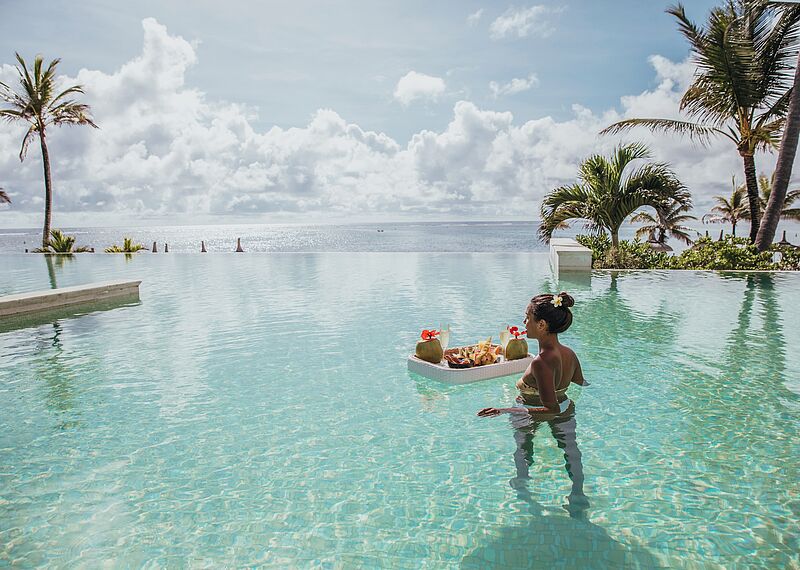
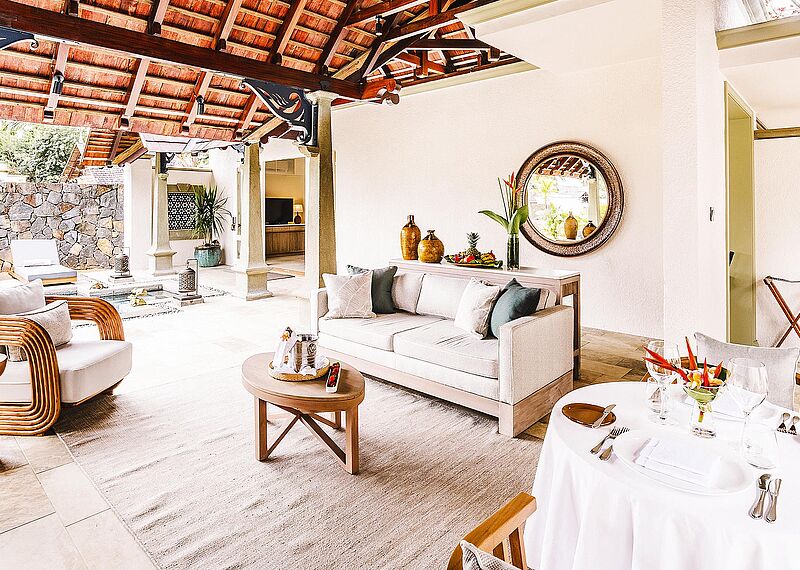
"Since the opening of this five-star resort, Mauritius has made it onto the 'want-to-go' list of the younger jet-set generation," wrote a German society magazine full of praise. But boomers also have a taste for this contemporary flagship LUX* in the north of the island. The modern architecture, funky entertainment and unique wellness experiences on a hydrotherapy circuit, with spa treatments on sand and water beds and at the cabana-lined 22-metre adults-only infinity pool create an irresistibly sparkling atmosphere. The suites and villas are designed to feel like private residences.
feel like private residences - South African-British interior designer Kelly Hoppen has really done a great job. As have the creative minds behind the stove, whose Asian revelations in the eye-catching Ai KISU restaurant deserve just as much applause. Surprise twist: a soy sauce sommelier. www.luxresorts.com
' 3rd Four Seasons Resort Mauritius at Anahita '
The elegant retreat on the east coast with 136 pool villas and residences is currently being renovated. The planned reopening after the "refresh": 1. 11. 2025. The culinary spectrum in the extensive complex in a nature reserve previously ranged from Italian to Asian, and the twelve treatment rooms in the overwater spa were similarly varied. Golfers, whether rookie or expert, will continue to find paradise on earth: the 6,828-metre Ernie Els-designed course with fascinating views of the lagoon and mountain ridges is an experience in itself. Four Seasons guests also have access to the 18 holes on the Ile aux Cerfs. www.fourseasons.com
' 4th Heritage Le Telfair Golf & Wellness Resort '
This Small Luxury Hotel of the World promises "timeless elegance", combining French plantation architecture with contemporary savoir-vivre on the south coast. All the basics for a successful stay are available: Tropical flair, blossoming gardens, beach, top cuisine (farm-to-table at Le Chateau de Bel Ombre), a "Best Luxury Destination Spa" with 20 treatment rooms and an 18-hole golf course with a hilly course, two rivers and centuries-old trees. Those who prefer more action can hike to waterfalls or check out a sunset safari on a quad bike. www.heritageresorts.mu
Highlights
■ Black River Gorges National Park
Established in 1994, the 6,500-hectare park, which covers two percent of the island's total area, is of immense importance: it is home to many indigenous and endangered species as well as the last rainforest on Mauritius. The animal inhabitants include macaques, wild boars, deer, flying foxes and nine bird species that can only be found on Mauritius.
One of the numerous, well-signposted hiking routes leads to the highest point on the island, the Piton de la Petite Rivière Noire at 828 meters. Those who prefer to conquer the wild south with expert guides can make a reservation at www.trekkingmauritius.com
■ Bras d'Eau Nature Park
The green lung in the north-east may not be as prominent as the Black River Gorges National Park, but it is still absolutely worth a visit: bird watching, rare ferns and orchids, ebony, mango and lychee trees, exciting hiking trails and an idyllic lake. And a happy ending is also guaranteed: The excursion ends on the beach in Poste Lafayette.
■ Grand Bassin
This crater lake, also known as "Ganga Galao", the lake of the Ganges, is considered the holiest pilgrimage site for Hindus in Mauritius. It also impresses people of other faiths. Sacrificial shrines and temples line the shore, the eye-catcher being a 33 m high statue of Shiva. There is only a small lake in the middle, but the crater of the Trou aux Cerfs volcano near Curepipe, 605 m above sea level, offers a panoramic view.
■ Chamarel
The "seven-colored earth", which was created by the transformation of basalt lava into clay minerals, is somewhat reminiscent of a lunar landscape in the middle of tropical greenery. The palette ranges from yellow to ochre, orange, red, green and blue to violet. The natural wonder is complemented by the nearby waterfall, which is fed by three rivers and pours from around 100 m over a basalt cliff into an oval basin - both magical if you catch the right time to visit. Early in the morning or late in the afternoon is always a good option. www.chamarel7colouredearth.com
■ Le Morne Brabant
Mount Doom is the unofficial landmark of Mauritius. Many locals come here to reflect, international guests head for the summit at 556 m in hiking boots because of the mega-spectacular overall picture: Rock, peninsula, palm trees, baby-blue lagoon, offshore reef, kilometer-long beach. It's worth getting up very early and being accompanied by a guide,
the temperatures on the ascent are still bearable in the morning. Water sports enthusiasts are also in for a treat in Le Morne: "One Eye" is one of the 10 best kitesurfing spots in the world thanks to the trade winds.
■ Pont Naturel
A bridge, shaped by nature, as the final destination of longing between Le Souffleur and Le Bouchon. The rock formation with blow hole literally contains music: The water
whistling sounds are created by the water in the rock holes. However, the view and the radio play have to be earned first - a bumpy dirt track leads through sugar cane fields.
■ Port Louis
The capital is not a classic must-see, but there are a few worthwhile places to stroll around.
The Blue Penny Museum, for example, where two of the rarest and most expensive stamps in the world, the Red and Blue Mauritius, are on display. Or just around the corner is the chic Caudan Waterfront with its fashion boutiques, jewelers, interior stores, cinema and casino. Haggling is pointless in this shopping center - in contrast to the lively, covered central market, where you can find everything from handicrafts to medicinal herbs and Indian pancakes.
can be found.
■ Central Flacq Market
The Sunday market in Flacq is an atmospheric, authentic bazaar experience
for locals and tourists alike: hundreds of traders sell their wares here, from fruit and vegetables to crabs in baskets, cell phone covers, saris and fake branded clothing. Some shout their rupee prices into the warm, vanilla and tea-scented air, others try their hand at it with a Zen attitude. In any case, a spectacle in a class of its own.
■ Pamplemousses
This botanical garden in the north, 15 km from the nightlife center of Grand Baie, is almost bursting with exoticism, be it the gigantic water lilies of the Victoria Amazonica species or the Talipot palms, which only bloom once every 50 or 60 years and then breathe their last. One of the monstrous leaves of this tree can provide shelter for up to ten people.
Sugar museum
Very close to Pamplemousses, the sugar museum in the former Beau Plan factory
factory of Beau Plan tells the story of how sugar cane cultivation shaped the country's economy for centuries and how Mauritius became the largest sugar producer in the British Empire. Until independence in 1968, the "sweet stuff" accounted for around 90 percent of all exports. Today, the country is much more diverse, with the new gold coming not from agriculture but from tourism, textiles and the financial industry.
DIPLOMATIC MISSIONS
in Germany
Embassy of Mauritius
Kurfürstenstraße 84, 10787 Berlin
Phone: +49 30 2639360
Fax: +49 30 26558323
www.berlin.mauritius.govmu.org
in Austria
Honorary Consulate
Paul Ehrlich-Gasse 25/8, 1190 Vienna
Phone: +43 664 1006388
E-Mail: dr.freissler@mauritius-consultate.com
Location
Mauritius liegt 20 Grad südlich des Äquators im Indischen Ozean, rund 800 km östlich von Madagaskar und etwa 1.800 km vom afrikanischen Festland entfernt. Mit La Reunion und Rodrigues gehört die rund 70 km lange und 45 km breite Insel zu den Maskarenen – vulkanische Eilande, die vor acht Millionen Jahren aus dem Meer auftauchten. Fläche: 2.000 km2, Einwohner: 1,3 Millionen.
Area
2040 km²
Population
1.296 million
Language
Creole, French, English
Arrival
From Germany non-stop with Discover Airlines, Eurowings and Condor, from Vienna with Austrian and from Zurich with Edelweiss Air. Flight time to Sir Seewoosagur Ramgoolam International Airport, named after the first Prime Minister: between 10 and 12 hours. The best alternative to the European carriers: Emirates with a transfer in Dubai.
Hotels are happy to pick you up, but if you prefer to hop into a rental car, e.g. from Maki (www.maki-car-rental.com), you should take into account the left-hand traffic, a British legacy. A personal (cab) driver is not a bad idea for excursions.
Capital city
Port Louis
Religion
predominantly Hindus, the rest Christians and Muslims
Weather
From mild to tropically hot, from 17 degrees in August to a good 30 degrees in February. The two seasons, summer and winter, are the opposite of the European seasons. May to November is the dry season, and in the high season from November to April, when the sea is
the sea is bathtub-warm, cyclones can occur.
.
Best time to travel
in spring and fall.
Climate
| Jan | Feb | Mar | Apr | May | Jun | Jul | Aug | Sep | Oct | Nov | Dec | |
| Max. Temperature | 30 | 30 | 30 | 28 | 27 | 25 | 24 | 25 | 26 | 27 | 29 | 30 |
| Min. Temperature | 23 | 23 | 23 | 21 | 119 | 17 | 17 | 17 | 17 | 18 | 20 | 21 |
| Hours of Sunshine | 8 | 8 | 7 | 8 | 8 | 7 | 7 | 8 | 8 | 9 | 9 | 9 |
| Rainy days | 15 | 16 | 18 | 17 | 15 | 11 | 13 | 14 | 9 | 9 | 7 | 14 |
| Water Temperature | 27 | 27 | 27 | 27 | 25 | 24 | 23 | 22 | 23 | 23 | 24 | 25 |
Time difference (to MEZ)
MEZ: + 3 Stunden, während der europäischen Sommerzeit + 2 Stunden
Currency
Rupee (100 rupees approx. 2.4 euros)
Visa
Visa-free, travelers from Germany, Austria and Switzerland require a passport valid for 6 months on arrival and a return flight ticket for a stay of up to three months.
Information without guarantee. For further information please contact your embassy directly.
Vaccinations
None if entering directly from Europe.
Information without guarantee, more detailed information at the Tropical Institute
Love apples & millionaire's salad
Mauritian cuisine is a reflection of the population. Whether street food or
fine dining in a gourmet temple: this melting pot is hot!
French and English colonists have left their culinary legacy on Mauritius, as have Creole slaves and Indian or Chinese workers. The traditional dishes of their old homeland have been spiced up time and again with regional ingredients. The result is a tasty multicultural cuisine - here are some samples:
Palm heart salad: A delicious and sumptuous dish that was ennobled as the "millionaire's salad" for good reason: It takes seven years before the pith of the local palm trees can be harvested as palm hearts.
Rougaille: The most important ingredient in this stew is local tomatoes, whose intense aroma has led to them being poetically dubbed pommes d'amour, or love apples. Rougaille is most often prepared with fish, seafood, sausages, beef, eggs or peas.
Mine Frite: Chinese fried noodles, tossed in a large wok with soy sauce.
Dholl Puri: The island's most popular snack. The flatbreads made from ground split peas or wheat flour are filled with delicious curry.
Biryani: Steamed basmati rice, which is fried with boiled potatoes, vegetables, meat or fish, eggs, yoghurt and a spice mixture of saffron, cardamom, cumin, star anise, cloves and cinnamon in a large cast iron pot ("deg").
Island restaurants outside the luxury hotels:
La Demeure Saint Antoine
Creole delicacies and an adieu coffee enjoyed in the shade of a banyan tree. lademeuresaintantoine.com
' Chez Tante Athalie '
Hearty cuisine based on traditional recipes. To accompany your meal
This 19th-century residence near the Pamplemousses Botanical Gardens has a collection of vintage cars to admire.
www.cool-escapes.de
" Le Pescatore "
Seafood specialties with a panoramic view of the blue lagoon of Trou
aux Biches. The "by-catch": hearts of palm and foie gras. www.pescatore.restaurant.mu
' L'Alchimiste '
Harmonious restaurant with 80 seats and homemade bread. Signature dish: wild boar marinated in rum. www.rhumeriedechamarel.com
' Le Domaine de St. Aubin '
Lunch is served in an old manor house in the style of colonial architecture with a view of the lush garden - there is no better way to enjoy nostalgia. www.mauritiusattractions.com
Street food
The snack bar "B Don B" in Port Louis sells steamed dumplings, which are called boulettes on the island. These Chinese-Mauritian flavor bombs are served in a clear broth and can be filled with chicken, cheese and chayote (a local pumpkin plant). Mister CHU in Chinatown is also a street food institution, albeit with a sweet twist. His sesame balls are not stuffed with red bean paste as usual, but with pineapple and nuts. www.tastebuddies.mu
Wine
100% Mauritius in a glass doesn't exist? Mais oui! The local lychee wine is highly recommended for those who like to experiment. It is produced in Mauritius by the Takamaka Boutique Winery and is a sparkling creation by experienced oenologist Alexander Oxenham. This fine wine is no longer exotic in the cellars of upmarket hotels. Takamaka's white and rosé pair perfectly with curries, hearty dishes, cheese and salads.
www.takamakawinery.com
Water sports
Long dream beaches and small, hidden bays make Mauritius a unique water sports paradise that offers all kinds of activities, from diving to wakeboarding. In addition to the Le Morne Peninsula, Tamarin Bay on the west coast is a popular hotspot for surfers. And the best news for swimmers only: the more than 160 km of island beaches are protected by a ring of coral reefs. But you should still be careful when jumping into
the inviting blue waters: Bathing shoes are advisable in many places, even if they are not the spawn of sexiness.
Golf
Mauritius was the third country in the world to play golf, and with the "Gymkhana" in Vacoas in the interior of the country, founded in 1844, it also has the oldest golf club in the southern hemisphere in its portfolio. In 2025, a good dozen first-class courses are vying for the favor of players of all abilities. The backdrops are often breathtakingly beautiful: mountains, hills, lagoons, lush gardens, tropical splendor, volcanic terrain, the whole nine yards. The Heritage GC in the south and the challenging 18-hole course designed by Bernhard Langer on the Ile aux Cerfs in the east enjoy an excellent reputation. This offshore beauty can only be reached by boat - which is very quick and uncomplicated for hotel guests at Le Touessrok. It is more difficult to concentrate on the game after going ashore: It is said that even experienced golfers are so distracted by the surrounding beauty that they sometimes forget to count their points. www.mauritiusgolftourism.com
General information
www.mauritiusnow.com www.mymauritius.trael
Hotels





![[Translate to en:] AMADEUS Riva (c) Lüftner Cruises](/fileadmin/_processed_/d/e/csm_AMADEUS_Riva_ebdf4c2c55.jpg "[Translate to en:] AMADEUS Riva (c) Lüftner Cruises")






























![[Translate to en:] AMADEUS Riva (c) Lüftner Cruises](/fileadmin/_processed_/d/e/csm_AMADEUS_Riva_64c1995e26.jpg "[Translate to en:] AMADEUS Riva (c) Lüftner Cruises")