


Maldives
The sustainable paradise
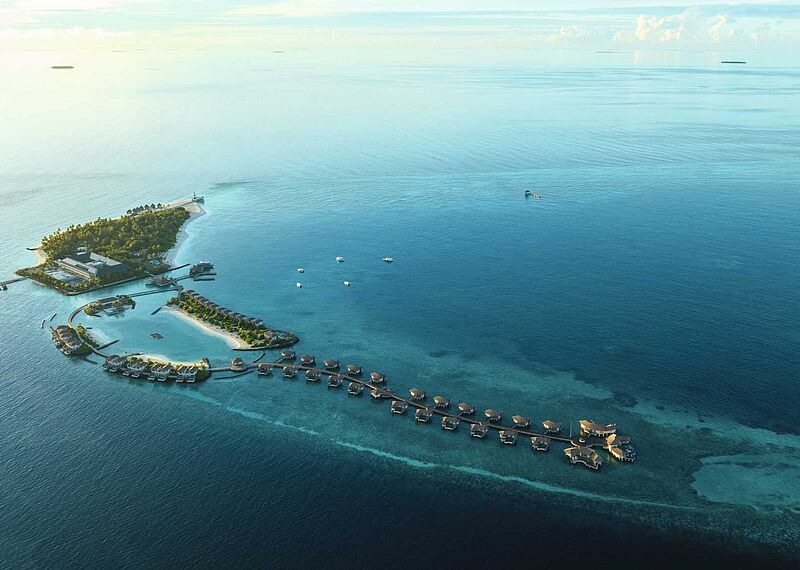
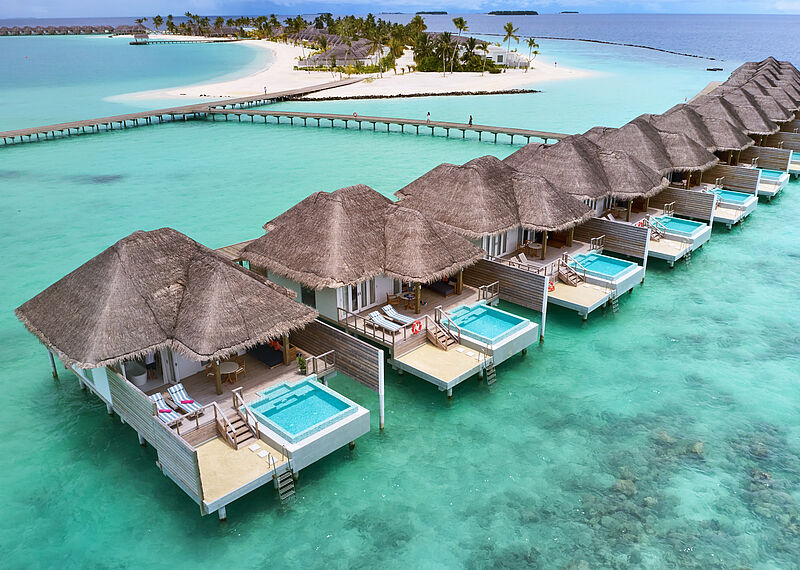
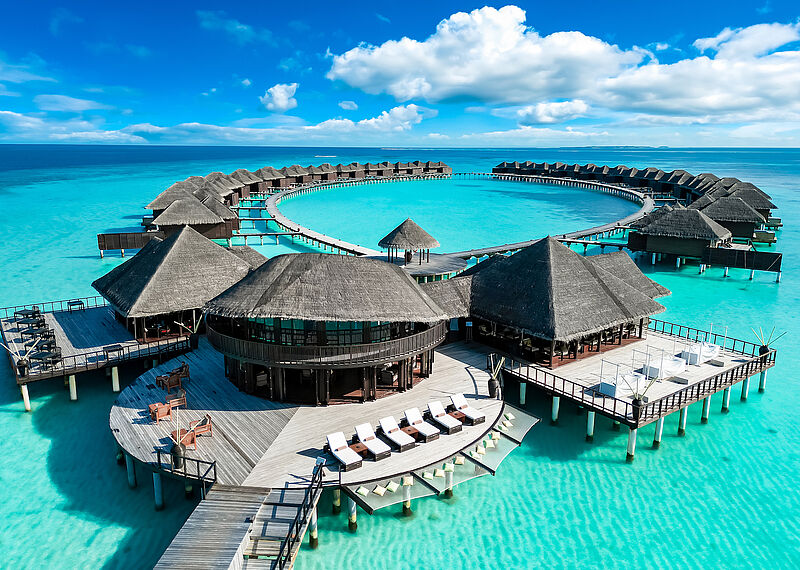
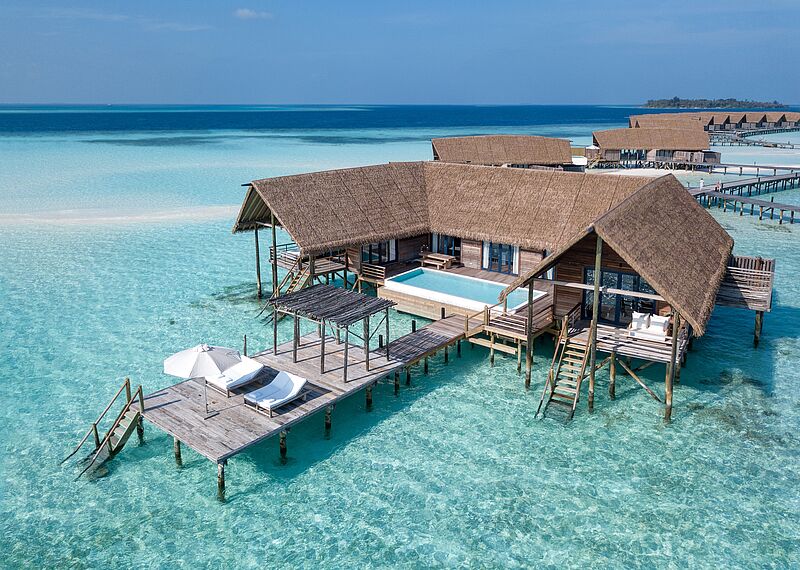
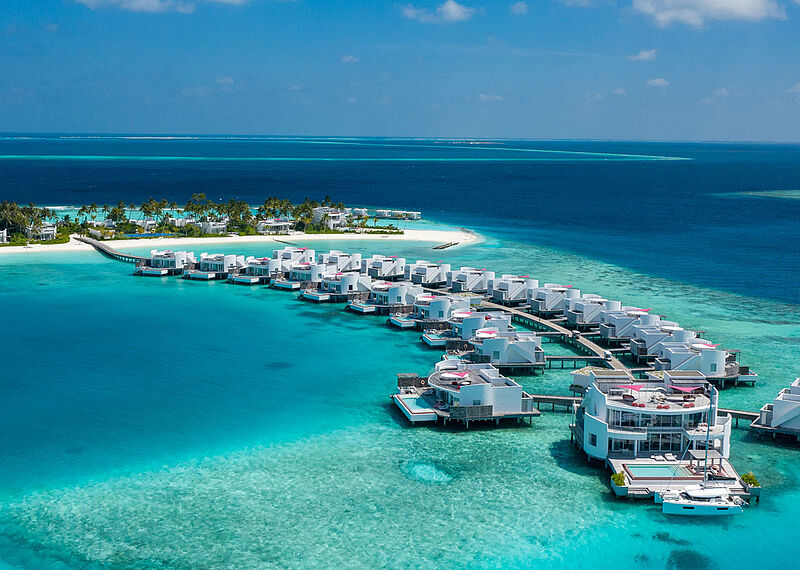
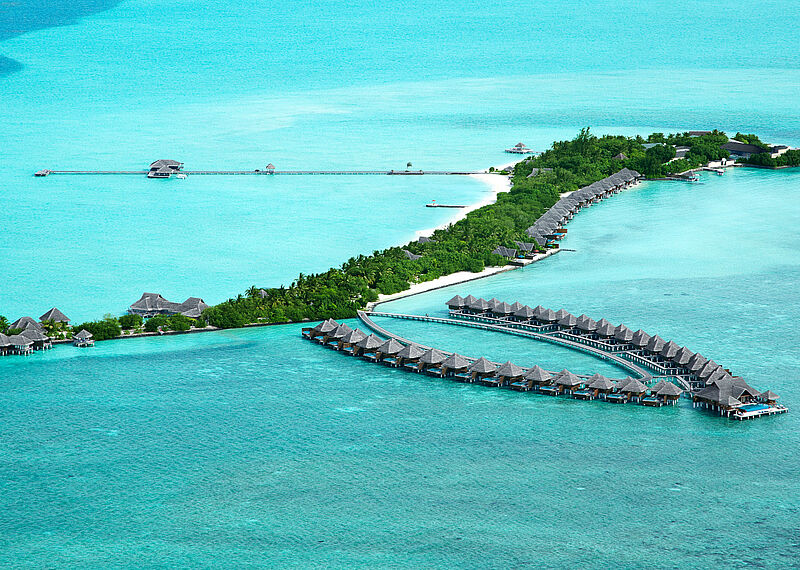
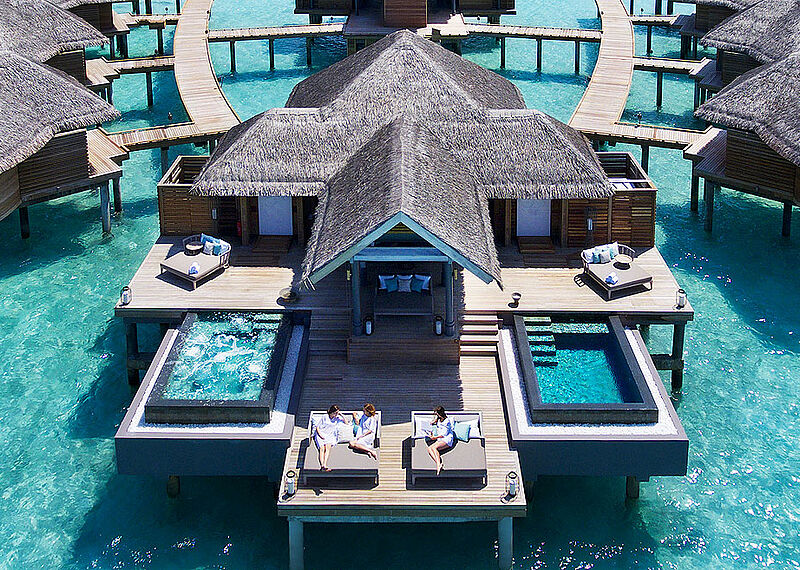
The boom in the Maldives continues. This is demonstrated by the fact that international luxury hotel groups - despite the propagated "doom" press conference of the head of state in 2008 - are settling here for the first time (Shangri-La, Alila Villas) or are already opening their second and third island resorts (Six Senses, Hilton International, Banyan Tree, Constance, Anantara). However, the ongoing boom has not - as might be expected - only had a negative impact on the "pearls in the Indian Ocean": On the one hand, the new resorts are developing ideas that set them apart from their competitors, with the special design in combination with certified sustainability (Alila Villas Hadahaa, Six Senses Laamu), a new spa and excursion concept (ShangiLa Villingili) or a sophisticated all-inclusive offer (Lily Beach, Constance Moofushi Resort) being the decisive factors.
Sustainability and luxury come at a price
What is particularly pleasing is that the 5-star island resorts we visited this time, following the example of Soneva Fushi, have created a new awareness among guests and locals through their commitment to environmental protection and C02-neutral programs. Hardly any luxury resort is not involved in special environmental programs or even subsidizes its own project. And in many cases, initiatives aimed at educating Maldivians are also supported, as the Muslim state, which is still one of the poorest countries in the world, is dependent on its population also developing this awareness.
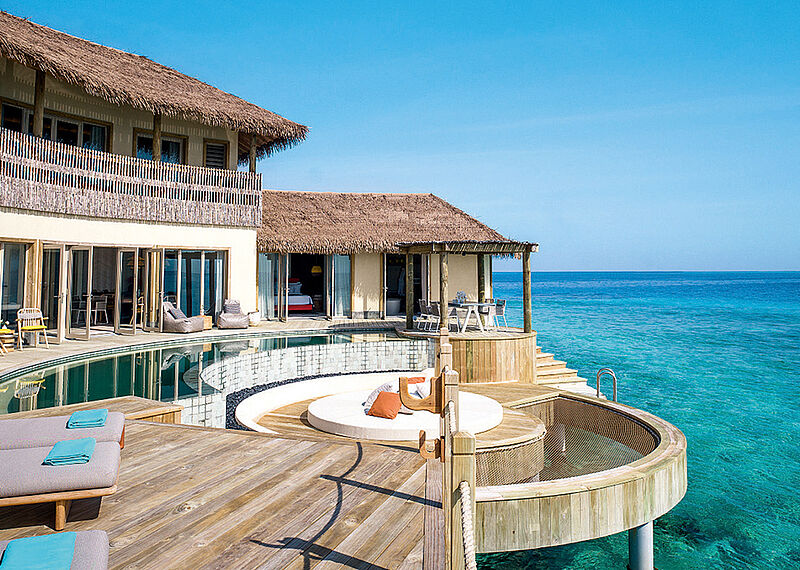
Of course, all this comes at a price, and some guests will wonder whether 800 to 12,000 euros for two people for a 5-star villa per night can be justified at all. In addition, there are also considerable expenses for food, drinks, transfers, spa and excursions. The offers for leisure activities (diving schools, water sports, excursions, wedding packages, spa or dining by design) are ultimately all included in a single check-out bill and, for stays of a week or more, usually exceed the price of the overnight stays by a considerable amount. This is why some of the new 5-star resorts have now introduced all-inclusive packages - something that was previously unthinkable - in order to create more transparency.
The pioneer was the Island Hideaway's sister hotel, which opened in 2009. With its Platinum Plan, the Lily Beach Resort developed an all-inclusive at a very high level for the first time, which not only includes all (alcoholic) drinks, but also the gourmet restaurants, mini bar, internet, excursions and all non-motorized water sports. The "Crystal All inclusive Package" at the Constance Moofushi Resort, which can be booked at will, promises similar services.
Diving and snorkeling are still the biggest attractions on the islands, but because the reefs have suffered enormously from El Nino, the tsunami and environmental pollution in recent years, many resorts are undertaking self-financed marine species protection programs. Particular examples are the Diva Resort (whale sharks), the BanyanTree Vabbinfaru (sea turtles and whale sharks), the Taj Exotica (member of the Padi Protect Aware Eco) Baros and the Coco Palm Bodu Hithi with its own reforestation programs for corals.
A PLEASURE UNIVERSE BECOMES CO2-CONSCIOUS
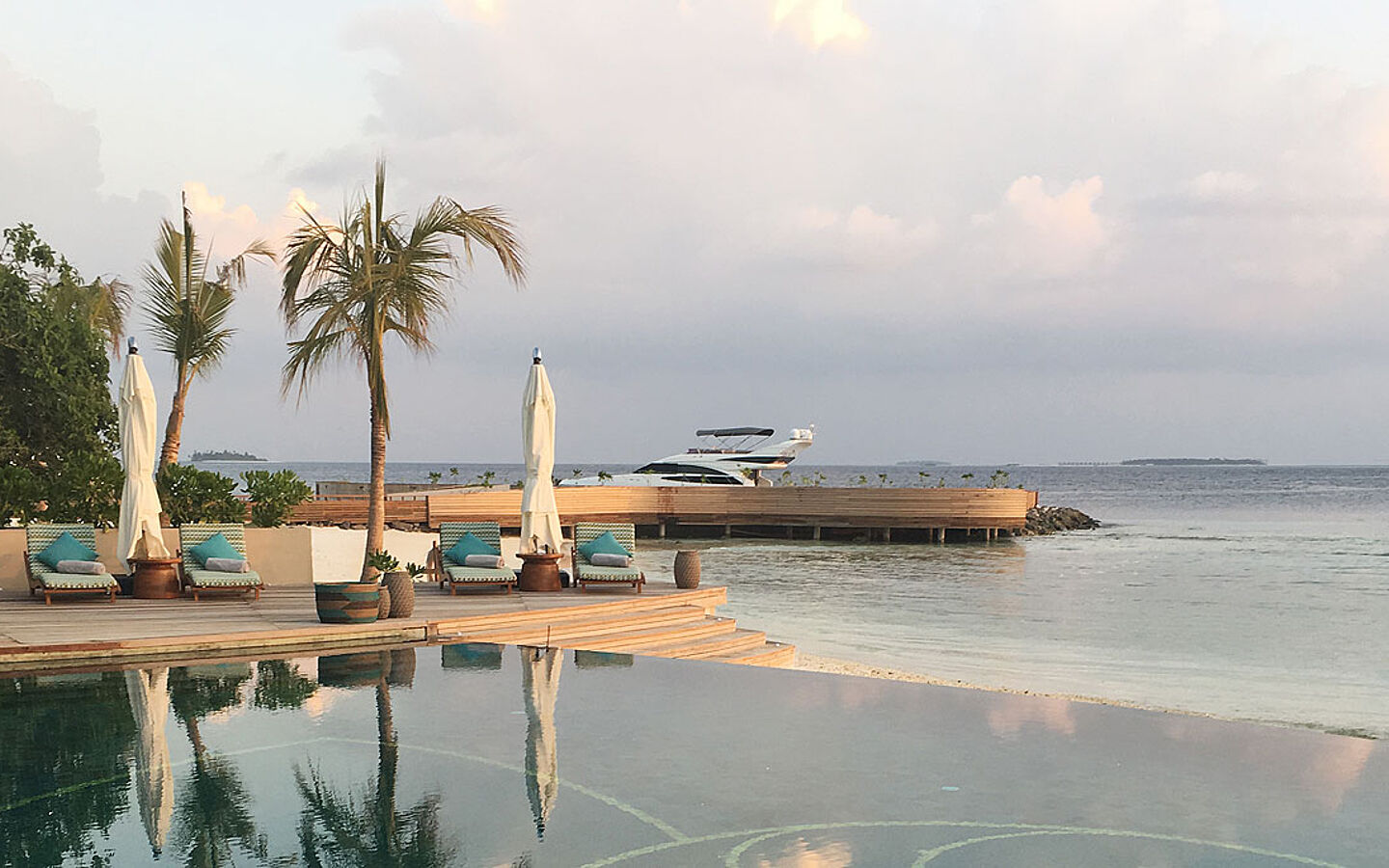
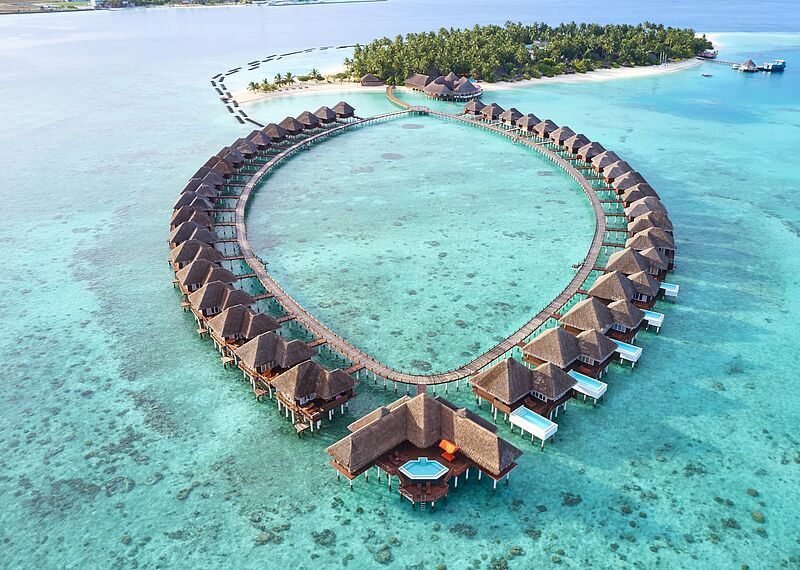
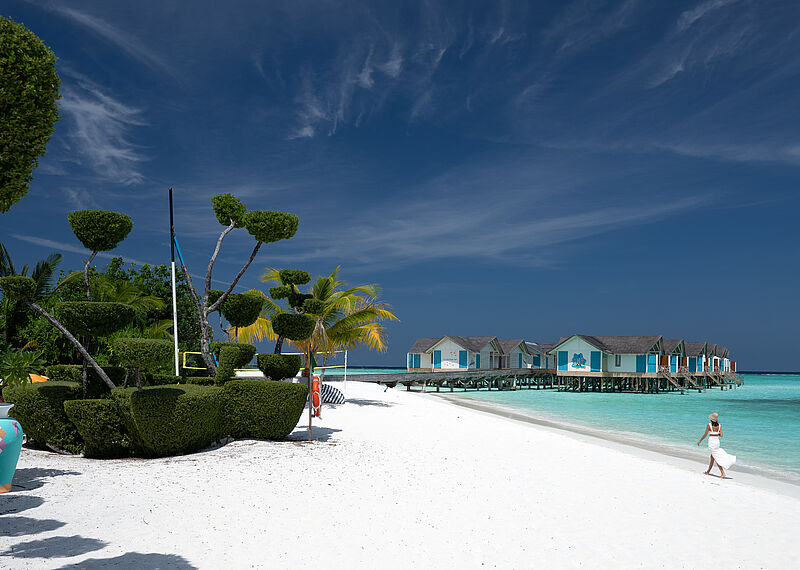
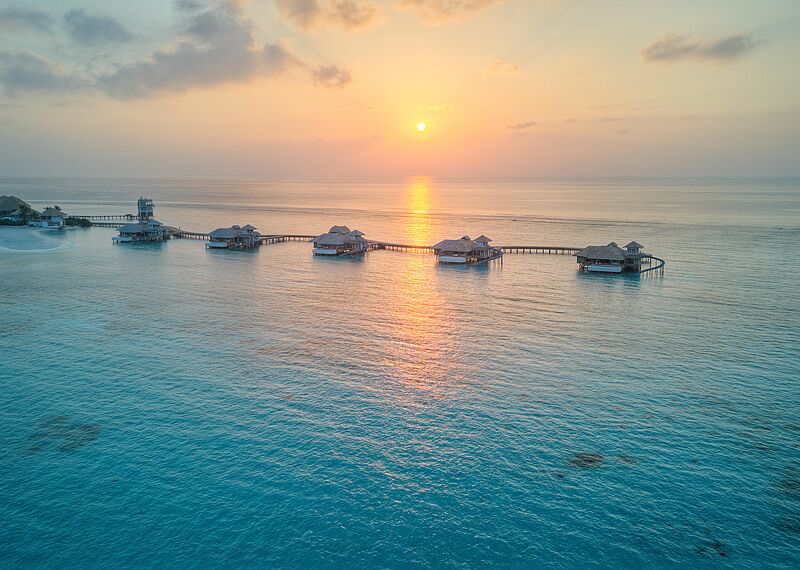
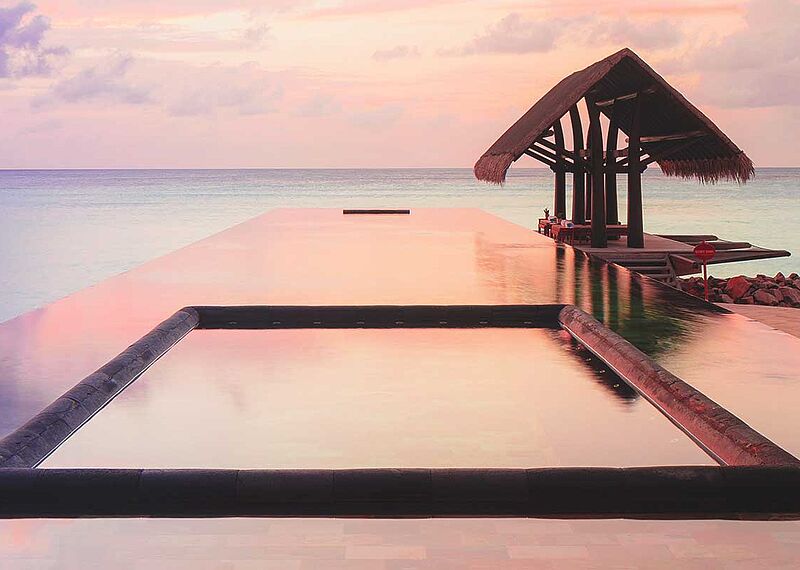
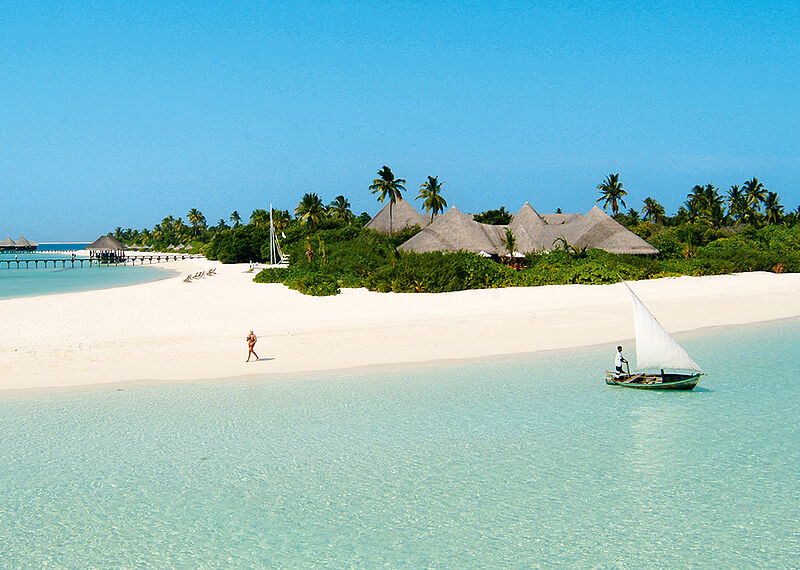
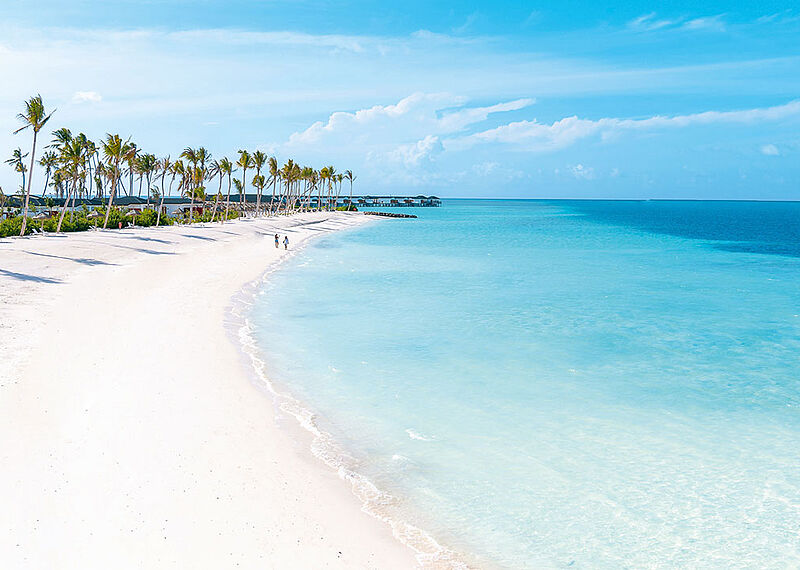
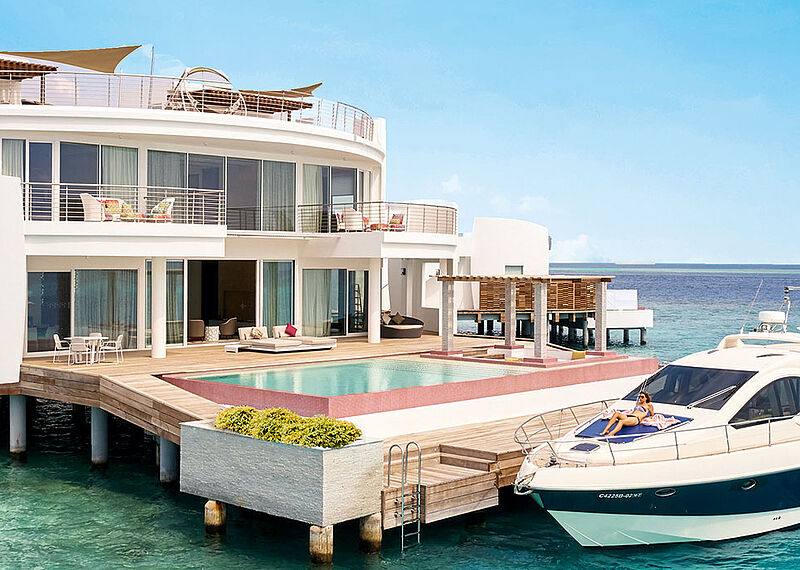
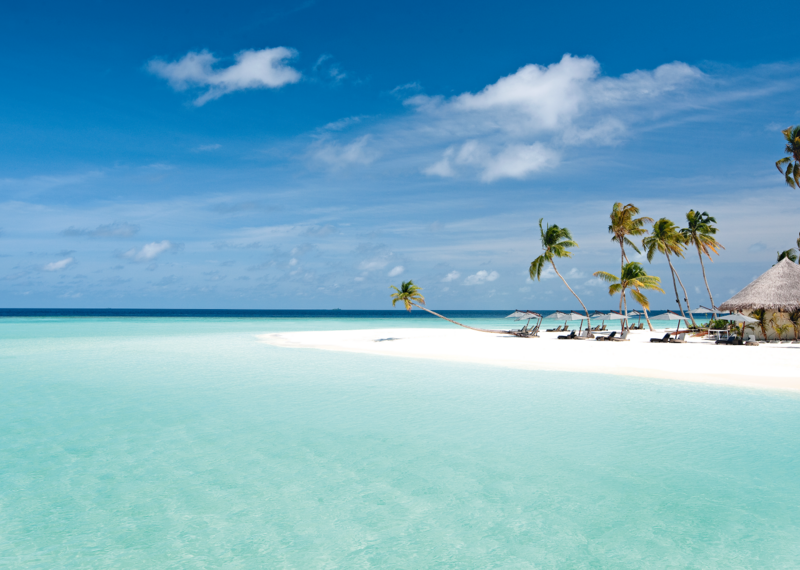
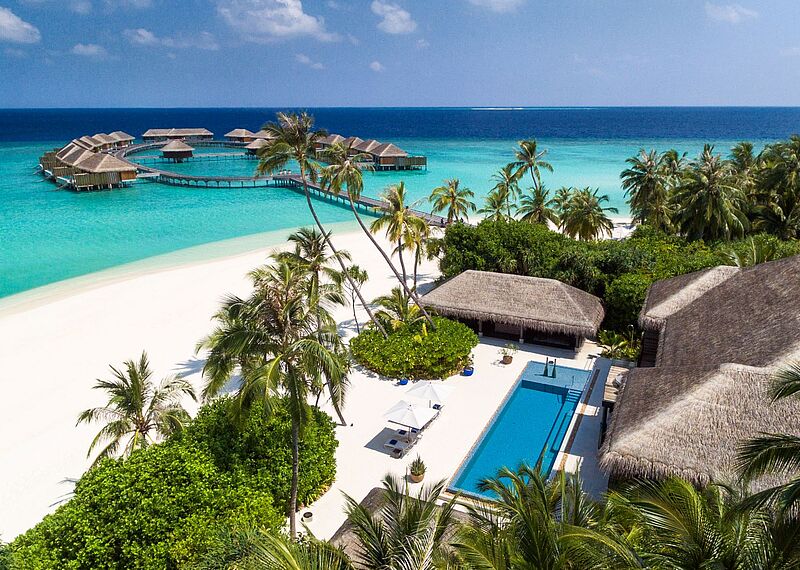
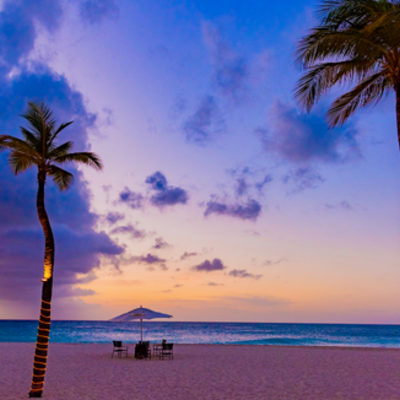
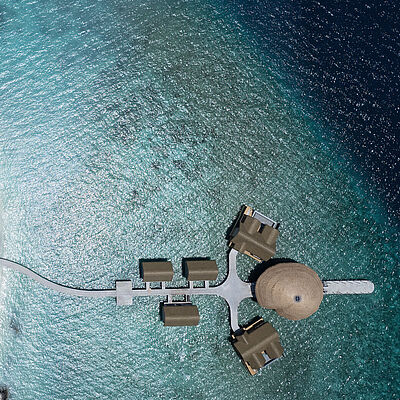
Ultimately, however, most guests come to enjoy the breathtaking beauty of the beaches, lagoons and the Indian Ocean and, first and foremost, to relax in an unreal, picturesque paradise landscape. This is why the newly developed luxury resorts are increasingly emphasizing the design and versatility of their spas and restaurants. The spa facilities are getting bigger and bigger and there are more and more different treatments, all of which are carried out by highly competent staff. What once began with a massage bench on the beach at spa pioneer Soneva Fushi has now grown into complex spa villages, such as at Shangri-La Villingili or Waldorf the Beach House, or spa oases built on stilts in the ocean with sea views, such as at Velassaru, Soneva Gili or Bodu Hithi. Increasing attention is also being paid to ensuring that the spa care lines are made from local products.
The same applies to the ingredients used in the restaurants. Even if most of the food has to be flown in, there is an increasing focus on local produce, at least in terms of fish and various types of fruit and vegetables. The fact that this cannot always be the case is particularly evident in luxury resorts, where guests want to be provided with top international cuisine and every culinary requirement is catered for. In addition, corresponding wines and, unfortunately, stylish mineral waters have to be flown in from all over the world, which not only affects the price, but is also not good for the CO2 footprint despite eco-friendly measures. This is why a luxury vacation in the Maldives has its price and that's a good thing ...
Almost all newly opened high-class resorts in the Maldives are now increasingly committed to the fragile ecosystem of the islands in addition to their remarkable achievement of offering every conceivable luxury. A trend that should benefit both guests and the state.
Highlights
Connoisseur special tip:
Island hopping with the "Four Seasons Explorer"
Admittedly, there are many providers of (diving) cruises in the Maldives, but nowhere else can you cruise as comfortably as on the Four Seasons Explorer. On the sleek catamaran with a total of 11 cabins for 22 guests, divers are not the only ones to find their Eldorado; the service and gastronomy are also on a proven Four Seasons level. There is even a massage therapist on board to pamper guests after dives (also with Nitrox) or after numerous beach activities. Simply ideal for adding a multi-day excursion option to your stay at the resort. There are 3, 4 or 7-day excursions available, all departing from the Four Seasons Resort Kuda Huraa.
www.fourseasons.com
DIPLOMATIC MISSIONS
in Germany
Honorary Consulate Maldives
Pariser Platz 4A, 10117 Berlin
Phone: +49 30 300145523
E-Mail: info@maldivesembassy.de
www.auswaertiges-amt.de
in Austria
Honorary Consulate Maldives
Weimarer Straße 104, 1190 Vienna
Tel.: +43 1 36966440
Fax: +43 1 369664430
Location
Malediven
Area
298 km² (1196 Inseln)
Population
345.023
Language
Dhivehi, English
Capital city
Malé
Religion
Islam, the inhabitants are Sunni Muslims
Weather
The Maldives have a tropical climate all year round with temperatures of around 27°C to 35°C and high humidity. It only cools down slightly at night. The driest time to visit the Maldives is from January to April. The remaining months are permanently humid, with a pronounced rainy season on the northern islands. Heavy rain showers are possible, especially from May to November/December.
Best time to travel
Mid-December to April. It rains less then and the sea is calmer; the driest months are January-March.
Climate
| Jan | Feb | Mar | Apr | May | Jun | Jul | Aug | Sep | Oct | Nov | Dec | |
| Max. Temperature | 29 | 29 | 30 | 31 | 31 | 30 | 31 | 30 | 29 | 29 | 29 | 29 |
| Min. Temperature | 26 | 26 | 27 | 27 | 27 | 26 | 26 | 26 | 26 | 26 | 26 | 26 |
| Hours of Sunshine | 8 | 9 | 8 | 7 | 6 | 5 | 6 | 6 | 6 | 5 | 6 | 8 |
| Rainy days | 3 | 1 | 1 | 3 | 9 | 17 | 14 | 12 | 10 | 11 | 08 | 5 |
| Water Temperature | 27 | 27 | 28 | 29 | 29 | 28 | 28 | 27 | 27 | 28 | 28 | 27 |
Time difference (to MEZ)
MEZ: + 4 Stunden, während der europäischen Sommerzeit + 3 Stunden
Currency
1 Rufiyaa (Rf), 1 Euro = approx. 16RF subject to exchange rate fluctuations
Visa
on arrival for a stay of 30 days. A passport valid for at least 6 months, proof of accommodation, return or onward travel tickets, sufficient funds/credit card are required on entry.
Information without guarantee. For further information please contact your embassy directly.
Vaccinations
advisable against diphtheria, tetanus, hepatitis A, risk groups also hepatitis B and typhoid,
Information without guarantee, more detailed information at the Tropical Institute
Food in the Maldives - Fresh fish, the staple food
In the meantime, the Maldives has adapted to the tastes of tourists and now also offers international specialties, but fish - called "Mas" in the Maldives - is still considered the staple food. Maldivian cuisine is down-to-earth and strongly influenced by Indian and Ceylonese cuisine. There are only a few local vegetables, such as coconuts and bananas, the rest is imported from India, Sri Lanka or worldwide at high prices. Fish is available in all varieties, but some dishes, such as shark steaks, have become increasingly rare due to species protection.
Pork has only recently become available in the Maldives, because despite moral concerns (pork is forbidden in Islam), the will of the tourists has obviously prevailed.
As alcoholic drinks are only served on the tourist islands, tea is the national drink of the Maldives. But the delicious soft drinks, such as coconut milk, are also a highlight on the islands.
Islands in the Maldives - A great offer awaits you
The islands of the Maldives offer a wide range of tourist attractions
the ideal conditions for an active and varied vacation in the Maldives.
in the Maldives. On the individual touristically well-developed islands
the vacationer can choose from a variety of sports activities. So
the hotel complexes on a vacation in the Maldives offer the
Maldives, for example, you can play table tennis, badminton, darts or volleyball.
play volleyball. Due to their location in the Indian Ocean, there are also
the Indian Ocean on the individual islands of the Maldives, there are also many
water sports on offer, such as water skiing, snorkeling, speed boating, windsurfing
speedboating, windsurfing, canoeing and diving.
Excursions Maldives - Sights on Malé
The international airport is located at the southern end of the North Malé Atoll on the island of Hulhule (a few kilometers northeast of Malé City) with facilities such as stores, duty free stores, restaurants, medical facilities, banks, post office and an airport hotel.
The capital Malé is the political and commercial center of the Maldives and is one of the most densely populated cities in the world with around 100,000 inhabitants. All ministries and government institutions are based there, as are the branches of larger companies and banks (ATMs!).
Malé consists of five districts, most of which are located on the island of Malé. Parts of the islands of Villingili and Hulhumale also belong to Malé.
There are several hotels and restaurants in Malé, but a stay is only recommended for a half-day excursion from a nearby island. Various resorts offer excursions to the capital. However, you should bear in mind that alcohol is strictly prohibited here - even in the hotels.
Places of interest on Malé:
1st Hukuru Miskily or Friday Mosque: was built in 1656 from coral rock and decorated with carvings.
2nd Mulee-aage: the presidential palace was built shortly before the First World War.
3rd Islamic Center: opened in 1984. In the center is the magnificent Grand Mosque with its striking golden dome.
4th fish market: It is very busy in the afternoon when the local fishermen return from the sea and bring their catch to sell.
5th fruit and vegetable market: to the west of the fish market, selling fruit and vegetables from all over the Maldives.
6th Majeedhee Magu: shopping mile, here and in the surrounding streets you will find fashion stores, sports and lifestyle stores.
Hotels







![[Translate to en:] AMADEUS Riva (c) Lüftner Cruises](/fileadmin/_processed_/d/e/csm_AMADEUS_Riva_ebdf4c2c55.jpg "[Translate to en:] AMADEUS Riva (c) Lüftner Cruises")

































![[Translate to en:] AMADEUS Riva (c) Lüftner Cruises](/fileadmin/_processed_/d/e/csm_AMADEUS_Riva_64c1995e26.jpg "[Translate to en:] AMADEUS Riva (c) Lüftner Cruises")