


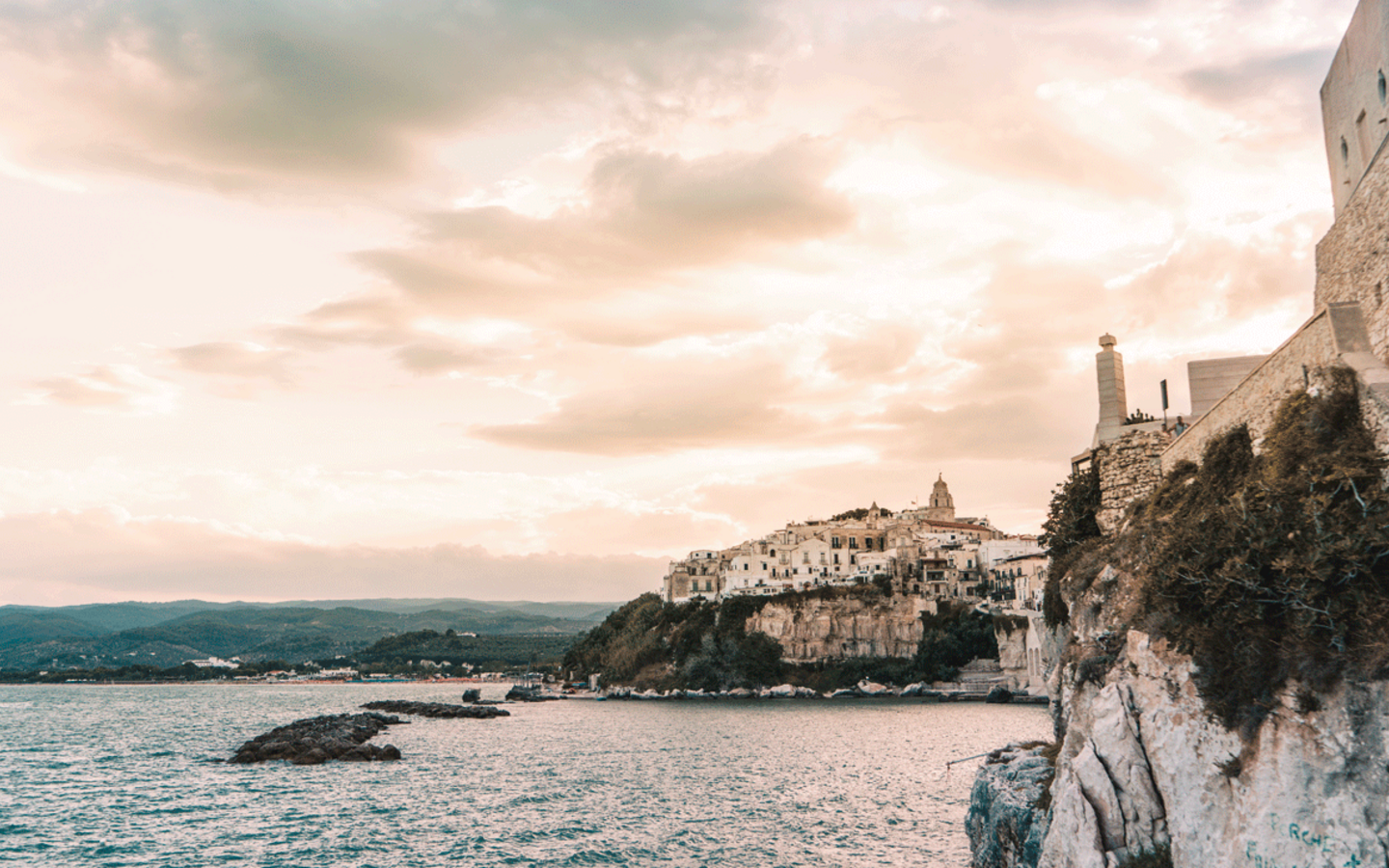
Apulia
The journey in the hire car on the two-lane highway from Bari to the south is anything but relaxing at first due to the chaotic traffic. Until you realize that you simply have to adapt to the driving style of the Italians in order to arrive in a relaxed manner instead of sinking in the first few metres. When you finally take the Savelletri exit near Fasano, there is no sign of stress. Instead, the anticipation of the tranquil life in the Masserie spreads.
The historic estates are part of the typical architectural heritage of the Apulian landscape, as is the reddish-brown soil on which the magnificent, ancient olive trees thrive. Many a masseria goes back to the tradition of the Roman villae and was once the hub of the respective estate administration. Or it was a citadel, which also had to offer defense possibilities.
had to offer defensive possibilities.
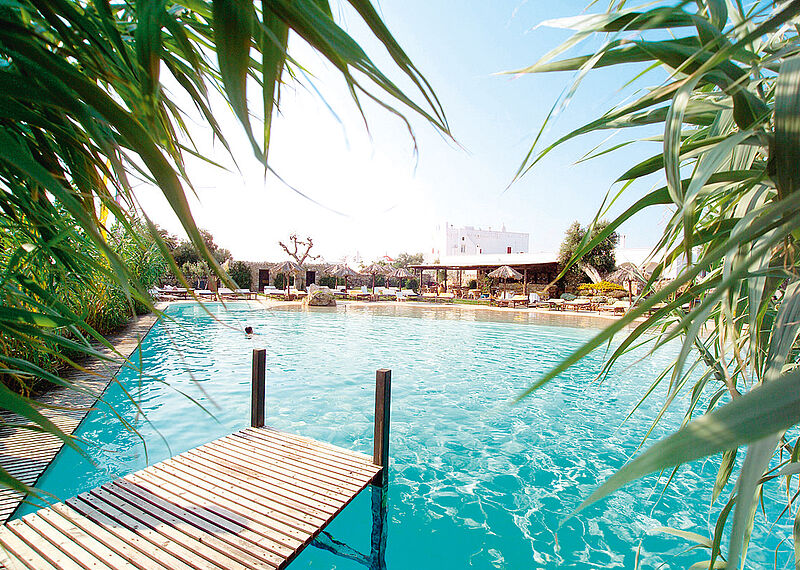
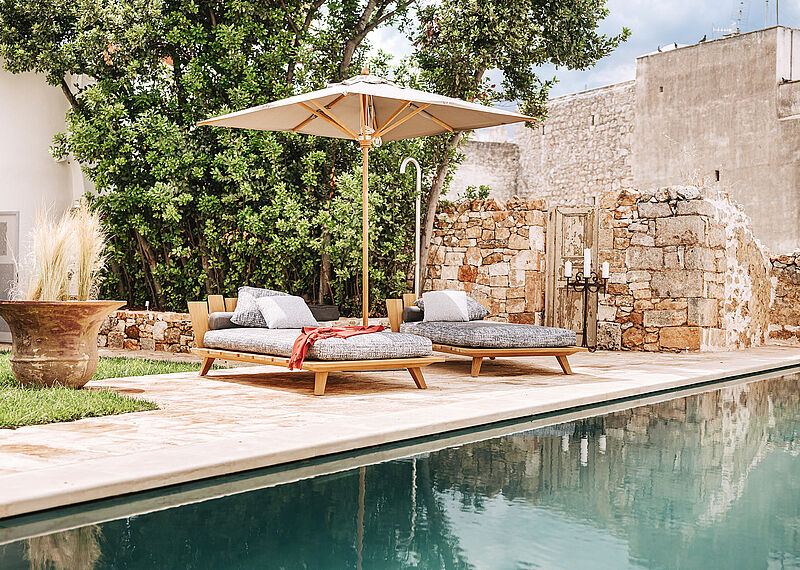
Today, however, they emanate something profoundly peaceful. Surrounded by plenty of private land and equipped with pretty balconies, terraces, fountains and arcades, they serve as private residences - or as temporary holiday hideaways. It is also chic to rent them as exclusive event locations: With all the bells and whistles for weddings with fireworks, parties, golf tournaments or birthdays. An American real estate tycoon recently forked out around 25 million dollars for his daughter's wedding - in a single masseria, mind you. Life in the countryside - and yet not far from the sea - is now also appreciated by sophisticated city dwellers, who are increasingly drawn to Puglia this year due to the coronavirus pandemic. Around Savetrelli, with its characteristic fishing port, old buildings on rocky outcrops, sandy beaches and romantic restaurants, there is a veritable nest of luxurious masserias.
But Puglia is also extremely diverse in other respects: after all, there is hardly anywhere else in the world with centuries-old olive groves and vineyards as far as the eye can see! Here you drive through small villages and fertile, green plains and watch as the cornfields of the Tavoliere region alternate with the karstic landscape of the Murge limestone plateau. Then there are the rolling hills of the Valle d'Itria and, to the north, the mountainous Gargano peninsula. As the spur of Italy and the "most beautiful spot on the Adriatic coast", Puglia also offers magnificent forests right down to the sea, beautiful beach bays and small clifftop towns that are really buzzing in summer. And speaking of summer vacations: Puglia not only offers holidaymakers 300 days of sunshine a year, but also two seas - the Adriatic in the east and the Ionian in the west. All in all, this results in 837 kilometers of coastline along the azure Mediterranean! If you don't find your favorite beach between Gargano and Capo Santa Maria di Leuca or between Gallipoli and Taranto, it's your own fault. Incidentally, most of the beaches are allowed to fly the Blue Flag all year round for the very best water quality - and can certainly be compared with Sardinia or Formentera.
Jewel between the seas
The most famous and popular beaches in Puglia include the sandy beaches in the east and south of Salento, which have an almost Caribbean feel. They are also very shallow and therefore ideal even for children. Here you can still find picture-book Italy with very little mass tourism. Unfortunately, this has been gradually changing since low-cost airlines discovered Puglia ...
The Baia Verde (Green Bay) in the south of Gallipoli, where the beach is surrounded by dunes and pine trees, is a highlight for hip young people. This is also the hotspot for beach parties, which start in the afternoon and are fired up by DJs playing the latest hits. This sometimes approaches the Ballermann border, and corona seems to be non-existent here. It's just as well that there are fantastic cultural landscapes with a remarkable history in between: The Greeks, Romans and Hohenstaufen left their mark on Apulia. Relics from this period can still be found today in the form of castles, cathedrals and no fewer than 20 castles in Salento alone. But Frederick II was also so impressed by the beauty of the landscape that he had fortresses built here and made Puglia his adopted home. His Castel del Monte, which is one of today's sightseeing hotspots, is impressive proof of this.
A true tourist stronghold is also the small town of Alberobello, which was named a UNESCO World Heritage Site in 1996 for its trulli. Hundreds of the white, round stone houses with pointed roofs that look like pointed caps stretch up the hillside between narrow alleyways - characteristic of Puglia and unique in the world.
Do you also need to have seen last year's European cultural capital Matera? Yes, even if you only have time for a short detour. However, anyone visiting Matera should be good on foot, as you have to climb a lot of stairs to get to the most important sights: The Chiesa di Santa Maria dell' Idris with its wonderful frescoes, the Museo di Palazzo Lanfranchi - and of course the town itself, which is bathed in a sea of lights in the evening - with houses, alleyways and staircases jumbled together.
Unfortunately, the cave dwellings, where 30,000 Materans lived until the 1950s, remain invisible to most visitors. Many of the caves have recently been transformed into luxurious and very intimate hotels. On the way back, don't miss the Cripta del Peccato, probably the most beautiful of all cave churches, which is located just under half an hour outside the town of Matera in the direction of Metaponto. It is often referred to as the "Sistine Chapel of rock art", and not just by the locals.
Finally a very tasty tip: Locorotondo! Firstly because of the spectacular location of the white village on the hilltops of the Valle d'Itria, secondly because of the old town, with its densely packed gabled houses and pointed roofs, which, arranged in a circle, was given the name "Locus Rotundus" by the Romans. And thirdly, because Locorotondo, as "La Citta del Vino bianco", the city of white wine, boasts beautiful vineyards, the oldest winegrowers' cooperative in Apulia and particularly fine wines. Salute!
arrivals & rum trips
The international airports of Bari and Brindisi are served by both scheduled and charter flights from Germany, Austria and Switzerland. A rental car is actually a must on site!
APULIA TIP FROM SUNNY CARS--
Enjoy the wild beauty of the Adriatic region - that's the motto for car rental vacationers on a round trip through the region on the heel of the Italian boot. You can immerse yourself in the world of the Greeks, Romans and Byzantines. Whether strolling through the historic old town of the capital Bari, a detour to the famous caves of the Grotte di Castellana or a stroll through the baroque city of Lecce - Puglia is a true paradise for history buffs. At around 800 km, the region also boasts one of the longest coastlines in Italy and numerous dream beaches. With the car rental expert Sunny Cars, which offers comprehensive all-round carefree protection, the road trip is possible with an Alfa Romeo Giulia vehicle, for example, and can be booked at www.sunnycars.de
Location
Die Region erstreckt sich entlang des Adriatischen und des Ionischen Meers.
Area
19.365,8 km²
Population
207 inhabitants/km²
Language
Italian
Largest city
Bari
Capital city
Bari
Appetite for Puglia
The pure joie de vivre in Puglia is not only evident in the baroque architecture - the cuisine is also a firework of aromatic delights!
Typical Puglia?
These are the aromas of rosemary, fennel, mint, oregano and wild rocket. They are used in the popular lamb and goat meat dishes known as "Turcinieddrhi". Salsiccia, a coarse sausage, is just as much a part of home cooking as
"Bombette di Maiale", thin pork fillets topped with cheese and cured ham. Puglia's producers list around 300 local products alone that bear award-winning designations of origin such as DOP, DOC, DOCG, IGT or Presidi del Gusto. There are also dozens of foods that have been awarded the Slow Food label: Caciocavallo-Podolico cheese made from the milk of the Podolica cow, Gargano citrus fruits, the Capocollo sausage specialty, Carpino beans, Toritto almonds, Acquaviva red onions, Altamura bread... And of course the typical orecchiette! You can find them on almost every "primi piatti", and not so long ago you could still watch the housewives in Bari preparing them. They are traditionally served with the local cabbage stems, but also with tomato sauce, meat sauce or a strict sheep's milk ricotta.
First-class olive oil, the "gold of Apulia", always plays an important role. It is as old and as valuable as the land itself and is subject to the strictest regulations: extra virgin olive oil from Puglia must not have more than one percent acidity. There are essentially three types: delicately fruity, medium fruity and strongly fruity - depending on the region of origin and the prevailing soil conditions. At least one bottle is on the table in every restaurant, and sometimes you can even sample the individual flavors at will. It goes without saying that Puglia is an Eldorado for fish lovers thanks to its 800 kilometers of coastline: Sea bream and dentex, grouper, sea bass and mullet in their traditional preparations - namely grilled, baked, wrapped and deep-fried - can be found on almost every menu, as well as oysters, prawns and polpo. In Taranto, you should definitely try mussels together with other fish in the tasty and rich zuppa alla tarantina - the mussel beds are just outside the town.
It goes well with a chilled "Bianco d'Alessano" or a spumante, which is also served here as an accompanying wine. Puglia can look back on a long wine tradition that has its roots in Greek civilization. Homer himself described the region as a place of "eternal spring". Its special climatic conditions have produced a wealth of fine wines.
Whether Salento, Daunia or Manduria, you can taste wonderfully full-bodied wines throughout the region. Negroamaro, Primitivo di Manduria and Nero di Troia are the three highly acclaimed Apulian grape varieties with a large fan base. With a bit of luck, you can enjoy them on a cozy night in a masseria, at a gourmet festival or simply in the evening by moonlight on your terrace. But even in Puglia, no meal, however sumptuous, is complete without the "dolce". Extremely popular are the so-called "cartellate" - cookies spiced with cinnamon and honey, made from a dough with olive oil and white wine. The crowning glory is the "pasticcini", small tarts served with a mixture of coffee, ice cubes, almond milk and almond syrup to sweeten them.
Text: Elsa-Maria Honecker
Food in Alberobello
Il Poeta Contadino
A tasteful rustico divided into two spacious rooms with Art Nouveau furnishings. The creative cuisine is based on traditional recipes from the region.
www.ilpoetacontadino.it/en Cisternino
Located 15 km from Fasano on a hill, this small town with an oriental feel is considered one of the jewels of the Valle d'Itria;
Food in Cisternino
We recommend the Osteria Bell'Italia. Advance booking is recommended. Otherwise, you can also eat well in one of the "Fornello pronti". These are butcher's shops where you can choose your own grilled meat.
www.osteriabellitalia.com LECCE
The town flourished from the 16th century onwards and is still famous for its baroque architecture today.
www.mustlecce.it Eating out in Lecce
A Michelin star adorns the superbe Bros restaurant with fusion cuisine of Mediterranean and Asian flavors that are boldly combined. www.brosrestaurant.it NightliFe in Lecce
Popular bars and hangouts include the 300mila Lounge Bar and the Caffé Letterario, a cultural meeting place
with live music.
www.300mila.com Shopping in Lecce
The high-quality textile design by Epiphany Society and the trendy Café Doppiozero, where the ham for the panino is cut directly at the bar, are just a stone's throw away from the art museum.
www.epiphanysociety.com GALLIPOLI
A sea of houses in all shades of white, criss-crossed by alleyways, small squares and courtyards - full of southern Italian flair. All this is spread out on a limestone plateau that rises above the sea as an island off the coast, surrounded by a fortification wall that is now the promenade. The old town is connected to the mainland by a causeway
Eating out in Gallipoli
Freshly caught oysters and small purple prawns are available in the evening directly under the old town bridge with an ice-cold rosé wine. Perfect for a wonderfully relaxed and also very romantic dinner.
Le Macàre
Located just outside Alezo Trattoria, which has also been recommended by the Slow Food Association. First-class traditional Salentine cuisine. www.lemacare.it
Blanc Café & Living Store
Ceramics and clothes with Mediterranean chic. Daytime café, lounge bar in the evening.
www.blancgallipoli.com
GETTING THERE & TRAVELLING
The international airports of Bari and Brindisi are served by both scheduled and charter flights from Germany, Austria and Switzerland. A rental car is actually a must when you are there!
APULIA TIP FROM SUNNY CARS
Enjoy the wild beauty of the Adriatic region - that's what rental car holidaymakers can do on a round trip through the region on the heel of the Italian boot. They can immerse themselves in the world of the Greeks, Romans and Byzantines. Whether strolling through the historic old town of the capital Bari, a detour to the famous caves of the Grotte di Castellana or a stroll through the baroque city of Lecce - Puglia is a true paradise for history buffs. At around 800 km, the region also boasts one of the longest coastlines in Italy and numerous dream beaches. With the car rental expert Sunny Cars, which offers comprehensive all-round carefree protection, the road trip is possible with an Alfa Romeo Giulia vehicle, for example, and can be booked at ATTR 1__" data-htmlarea-external="1">.
Beaches
Puglia has more than 800 km of coastline to offer. Most hotels have their own sections of beach and beach clubs with restaurants.
■ Spiaggia bella
A recommendation south of Brindisi: this fine white sandy beach stretches for several kilometers between Torre Chianca and Torre Rinalda.
■ Torre dell'Orso
26 km south-east of Lecce, near the village of Sant'Andrea, you will find crystal-clear water. At the southern end of the beach are two limestone rocks, the "Due Sorelle".
■ Porto Badisco
South of Otranto and not far from Santa Cesarea Terme lies the seaside resort of Porto Badisco on the
Adriatic coast. The beach is flanked by two mighty granite rocks. Nearby, you can visit the Grotta dei Cervi with its ancient wall paintings.
■ Torre Lapillo
North of Gallipoli on the Ionian coast. Well frequented beach with fine, pure white sand.
Holidays in Puglia during the pandemic
The boot spur was lucky at the beginning of the corona crisis: only 4,700 infections were counted, and from June onwards the numbers went steadily downhill. The rural population in particular was therefore optimistic about the summer season. Face masks are compulsory for all hotel employees. This also applies to guests when entering the buildings. Some hotels have reduced their occupancy rate to 70 percent in the hope of being able to comply with social distancing rules.
When it comes to young people partying in the cities, the situation is similar to everywhere else in Europe: the streets and bars are full at night. It is therefore advisable to have a mask with you when strolling through the city in the evening.
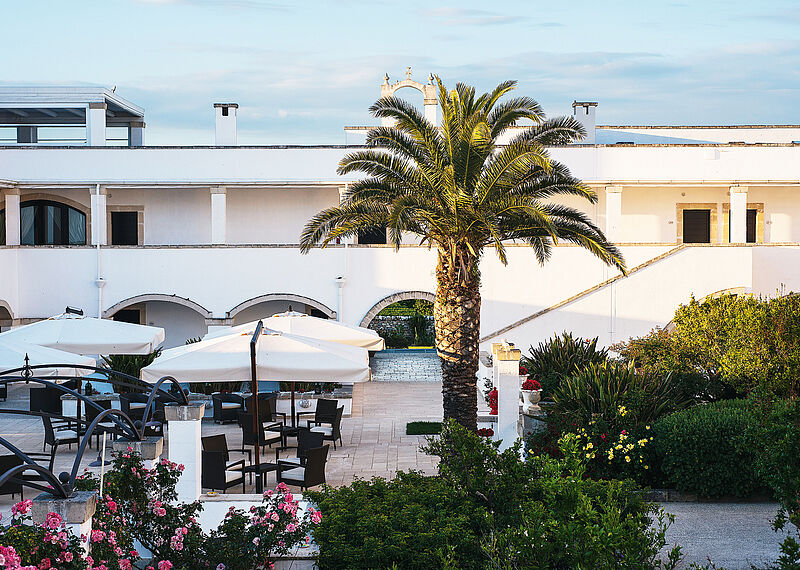
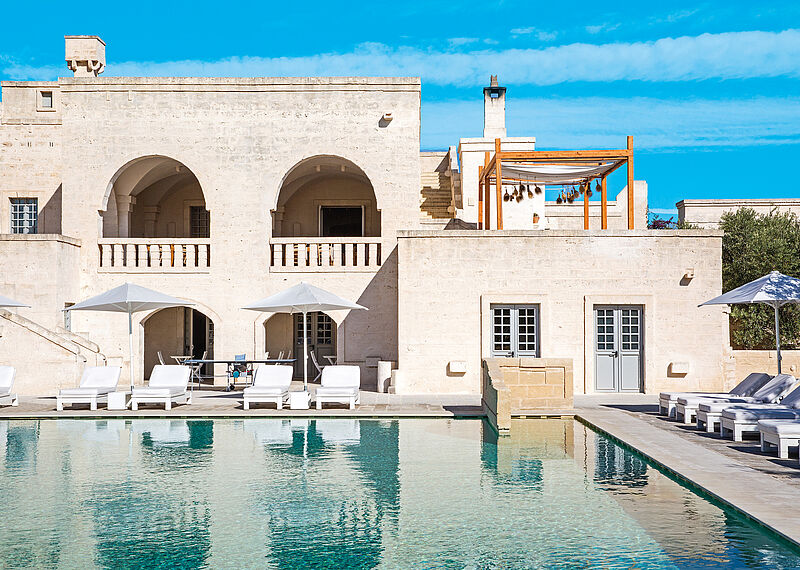
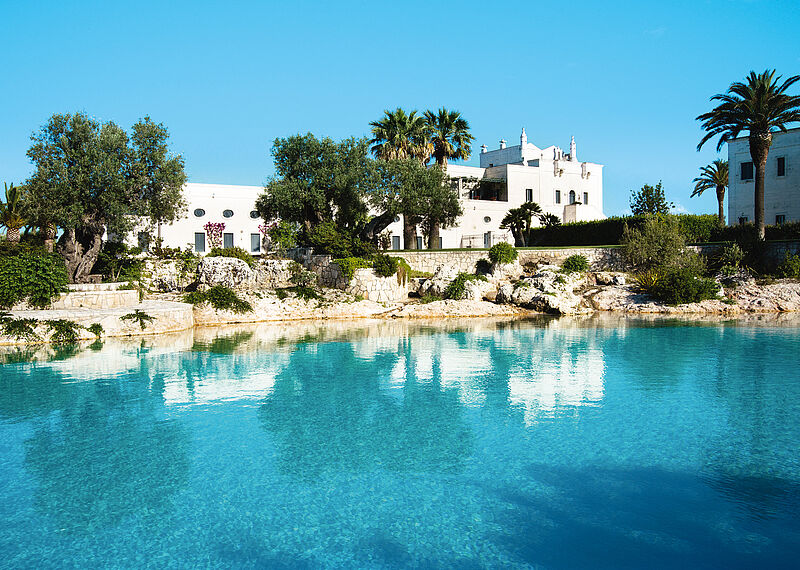
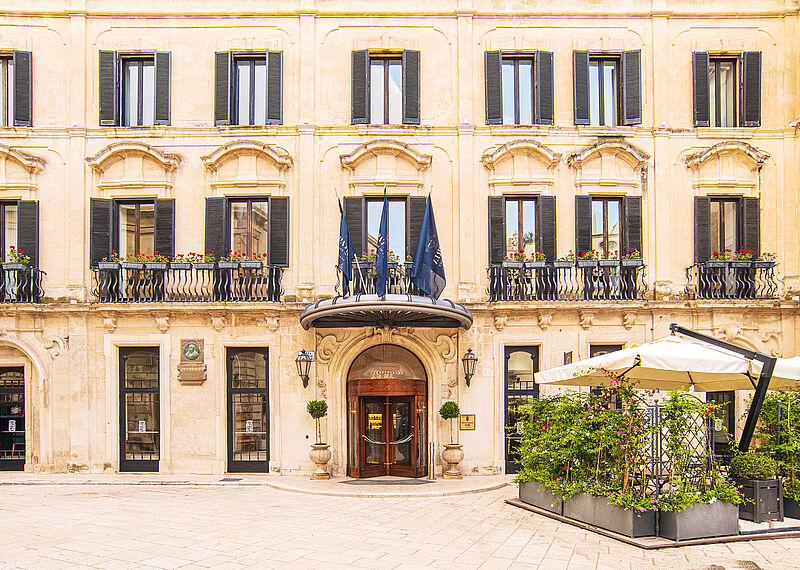
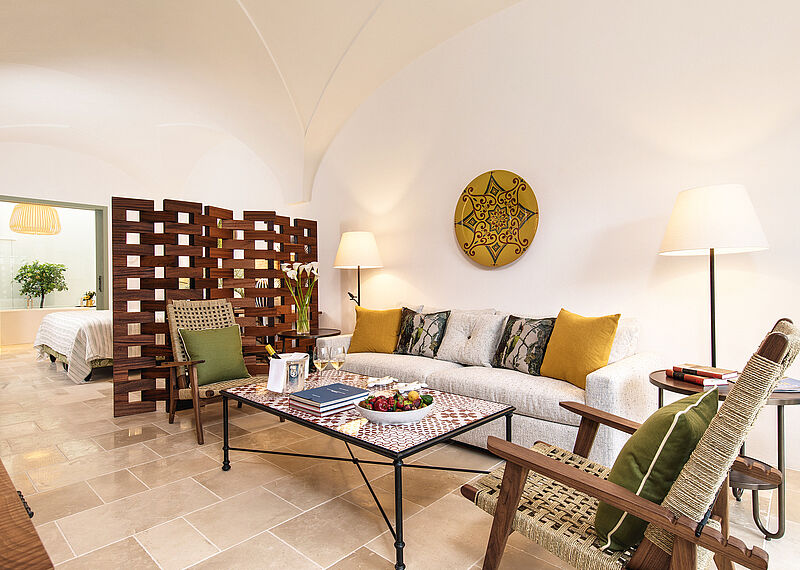
Hotels


![[Translate to en:] AMADEUS Riva (c) Lüftner Cruises](/fileadmin/_processed_/d/e/csm_AMADEUS_Riva_ebdf4c2c55.jpg "[Translate to en:] AMADEUS Riva (c) Lüftner Cruises")








































![[Translate to en:] AMADEUS Riva (c) Lüftner Cruises](/fileadmin/_processed_/d/e/csm_AMADEUS_Riva_64c1995e26.jpg "[Translate to en:] AMADEUS Riva (c) Lüftner Cruises")