


Malaysia
Sometimes it is as bright as the extensive oil palm plantations, sometimes as bright as the endless rice fields or as dark as the jungle in the mountainous interior. The federal states of Sarawak and Sabah on the island of Borneo are dominated by forests, many of which are tens of millions of years old and blessed with an incredible wealth of flora and fauna. On the coasts, a total of 5,000 kilometers long, the country boasts beaches along both the Strait of Malacca and the South China Sea. Malaysia is one of the boom states in the Far East, the so-called "little tigers". These are countries that have developed rapidly in recent decades. This can be seen in metropolitan areas such as the capital Kuala Lumpur, or KL for short, George Town on Penang or Kuta Kinabalu, or KK, on Borneo. Modern architecture, many skyscrapers and a modern infrastructure characterize the picture here. This also applies to the well-developed roads and highways as well as the train lines throughout the country. The luxury train "Belmond Eastern & Oriental Express" is now running on the tracks again.
Modern & multicultural
For visitors, whether from neighboring countries or western climes, the historic districts in the cities always have a very special charm. They are remnants of the British Empire, enriched with architectural accents from immigrants from China and India, who also built their temples, churches and mosques here. The state religion is Islam, a tolerant religion that has accepted other faiths since the 15th century. Religious freedom still applies today. Around 60 percent of the population are Sunni Muslims, followed by Buddhists, Christians and Hindus. The majority of the female population wears headscarves. Tourists are not expected to wear headscarves unless they are visiting a mosque. Arms and legs should also be covered. This also applies to men. Too much bare skin is not welcome anywhere, not even on the beach or by the pool. Topless or nude bathing is forbidden throughout the country. Public displays of affection are just as frowned upon as emotional outbursts are embarrassing. Losing face is very unpleasant for locals. It is better to "do as the locals do", i.e. always smile sympathetically. Even if neither beer nor wine is served in a restaurant. Alcohol consumption is not forbidden, but the serving of alcohol is largely restricted to hotels and restaurants with an international clientele.
to hotels and restaurants with an international clientele.
Ever been to Malaysia decades ago?
Then you might be surprised at how well everything works today. Malaysia is not only green and multicultural, but also high-tech. Means of transportation are
transportation is state of the art, women's power and digital communication are the norm. 90 percent of the population own a cell phone. And there is a high probability that you will have reception with your own even on remote beaches and in the jungle. White sandy beaches combined with rainforest and mangroves are mainly found on Langkawi in the northwest of Malaysia.
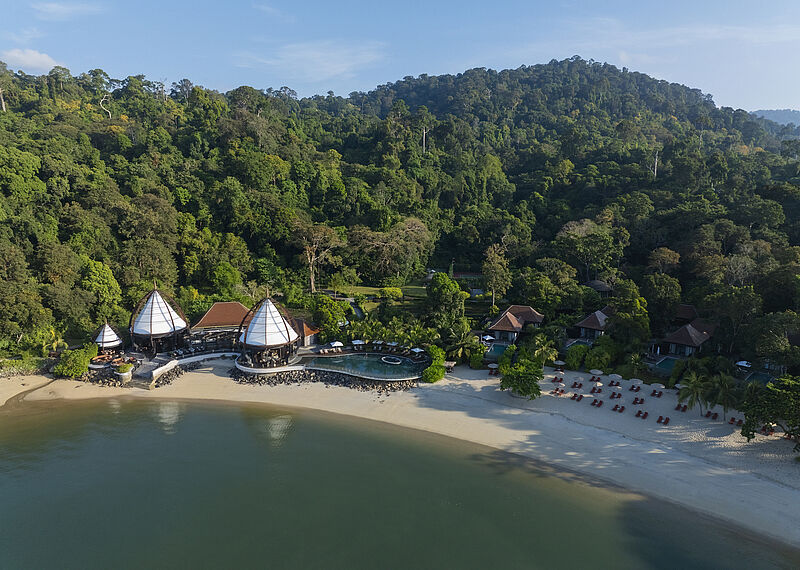
of Malaysia. The island is considered a luxury destination and is duty-free. A dozen exclusive resorts are spread across the bays. These include the ones we tested: "The Datai", "Ritz-Carlton" and "Four Seasons". The "St. Regis" and SLH hotel "The Danna Langkawi" are also available. In 2007, Langkawi was awarded UNESCO Global Geopark status - the first destination in Southeast Asia to do so. This protects the mangroves and 500-million-year-old limestone formations from encroachment. As a hotel guest, you are sitting in the habitat of wild animals. It is not uncommon for a monkey or even a whole lively clan to cross your path.
More than just beach in Borneo
Sabah and Sarawak on Borneo are completely different worlds. It would be a shame to jet off to the 5-star resort "Shangri-La Tanjung Aru" just to enjoy the beach. Because then you would miss out on the breathtaking jungle landscapes. The untouched rainforests of the national parks are home to endemic proboscis monkeys, orangutans, elephants, crocodiles and hornbills. It is better to book two- or multi-day excursions before your trip and make sure that wildlife watching is on the program in the morning and evening. This is because the animals are most active at these times. We recommend a tour to the Danum Valley Conservation Area with 125 mammal and 300 bird species. Or to the Sepilok Orang Utan Rehabilitation Center. At the sanctuary, orphaned animals or animals released from captivity are prepared for life in the wild. Getting close to man's closest relatives in the jungle is a moving experience. Goosebumps are virtually guaranteed.
www.malaysia.trael
Food in Malaysia - A culinary adventure
Malaysia is a gourmet destination with many different cuisines. The diversity has to do with the many ethnic groups as well as the influences of surrounding countries.
For guests from the West , the first question is: what to eat? And secondly: Where to eat? Because very few restaurants offer a mixed menu with a variety of regional cuisines. The situation is different in luxury hotels, where even the breakfast menu is geared towards both Western and Eastern tastes. Rice and noodles are staple foods in Malaysian cuisine. Combined with meat, vegetables and spices, they make curries (kari). An indispensable ingredient for Malays is sambal, a chili paste flavored with garlic. Once you have taken a liking to the spiciness, you can't do without it. Curries are made with beef (lembu), chicken (ayam), lamb, goat (kamping) or fish (ikan). They are cooked in various sauces, for example with fresh coconut milk, ginger, lemongrass, garlic, chili, shrimp paste and many other exotic spices. As Malays are predominantly Muslim, pork is generally taboo. Depending on the consistency of the curry, it is eaten with a fork or spoon in the right hand. The left hand is considered unclean.
A specialty are the restaurants of the local Peranakan with their so-called
Nyonya cuisine. The delicious dishes combine Chinese cooking techniques with local ingredients. Typical is laksa, a hearty soup cooked on a base of coconut milk and chili with rice noodles and a choice of egg, prawns, chicken and vegetables. The widespread Chinese cuisines are just as varied as the Malaysian ones. There is the mild Cantonese cuisine, which includes dim sum, the hearty Hokkien and the spicy Sichuan cuisine. Clear,
broths with garnishes are on the menu in all Chinese restaurants, often including
fresh fish and seafood. Good if you know how to use chopsticks. Otherwise
forks and knives are often served. For vegetarians, South Indian Tamil cuisine, with its large selection of vegetables, is ideal. This includes lentil dishes and dosa,
large crispy pancakes made from rice and legume flour, which are served with a potato and lentil filling and all kinds of side dishes.
and all kinds of side dishes. North Indian restaurants use a lot of ghee (clarified butter) and meat. Served with the delicious flatbread naan, people here usually eat with their fingers.
Malaysia's night markets are real "snack markets" for the curious
Food courts or the so-called hawker stalls at the night markets are ideal for sampling all kinds of cuisines. We Europeans, who are usually only familiar with imported exotic fruits in their unripe state, should be delighted by the rich and ripe selection. Whether mangoes, pineapples, parrot fruit, guavas, rambutans or mangosteen, they all provide a completely new, incomparably richer taste experience. Summer is durian season. The flesh of the spiky giant fruit tastes sweet and creamy. Okay, the smell is strong, but freshly broken open it's fine. Anyone who dares to try it should remember this: Don't wash it down with beer or other alcohol. Otherwise your stomach might actually turn.
Culture Malaysia - Experience Malaysia's cultural heritage Malaysia has a rich and colorful cultural heritage. Many of the traditional arts, culture and crafts are kept alive with care by the various communities. Traditional dances and music have a special significance and each community has special features to showcase at festivals and other special occasions.
Apart from religious festivals, Malaysians find many other opportunities to celebrate. There are many state festivals and parades throughout the year. Some examples are the "Penang Street Festival", known as "Chingay", the National Day or "Merdeka" is celebrated every year on August 31 in Kuala Lumpur and the "Colours of Malaysia", which showcases the cultural heritage of Malaysia's 13 regions.
Getting there
Both Singapore and Kuala Lumpur are destination airports for
Malaysia. Turkish Airlines offers daily connections from all major German airports via Istanbul. Within Malaysia, Air Asia and Malaysia Airlines connect all cities regularly, as do some low-cost airlines. In KL, you should allow at least four hours between landing at the international airport and your onward flight with Air Asia from the domestic airport. They are about 45 minutes apart by shuttle bus or cab.
Best time of year
The best time to visit is determined by the monsoons, which bring a lot of rain. On the west coast, the least rainfall occurs from November to March and June to August, on the east coast from March to October. In the states of Sabah and Sarawak on Borneo, you can expect heavy rainfall from October to January.
On the road
The best way to cover long distances is by plane. However, roads and highways are very well developed and signposted, so traveling by rental car is easily possible. An international driving license must be presented when renting a car. The country can also be explored comfortably and reliably by train.
Belmond Eastern & Oriental Express
The luxury train travels for four days in Malaysia from/to Singapore, winding through the rainforest of Taman Negara National Park and up to Butterworth. Guided nature walks, an excursion to Penang and excellent full board are included in the price.
www.belmond.com
West Coast
■ Kuala Lumpur
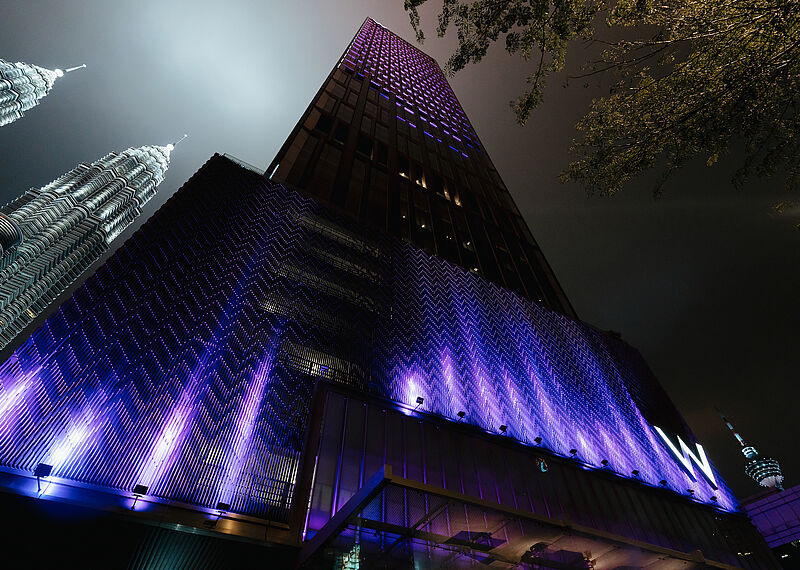
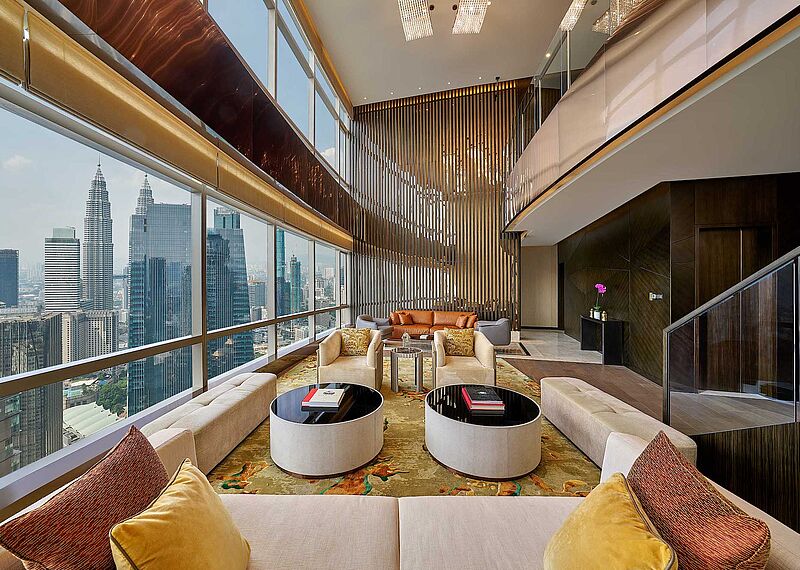
In the capital, it is mainly the so-called "Golden Triangle" where visitors move around. Around the spectacular Petronas Twin Towers are skyscrapers with hotels and offices as well as modern shopping malls, such as the Pavilion Mall. All the top names are represented here on three floors. There is also a highly recommended Chinese restaurant, the "Jade Pavilion". Berjaya Times Square, with 1,000 stores, 65 restaurants and the largest indoor amusement park in the Far East, attracts around one million tourists a month. The best view of the city is from the 421-meter-high Menara KL Tower. For a more traditional and authentic experience, visit Petaling Street in China Town and the flashy "Little India". An exciting evening experience
experience is a stroll along Jalan Alor, the food street. This is where the country's culinary specialties are gathered.
■ Langkawi
This quiet, mountainous island surrounded by rainforest lies in the far north of the country. It is a true tropical paradise, as around three quarters of the area is protected. Monkeys roam almost everywhere. The maritime mangrove forests are also part of the UNESCO Geo-Park. The flat interior of the island is characterized by agriculture such as rice cultivation. There are also a number of large luxury resorts in a relatively small area. Numerous uninhabited islets with limestone hills are attractive excursion destinations. One of the few man-made sights is the Langkawi Sky Bridge. The suspension bridge swings over the 687-metre-high Mount Mat Cincang, offering great views over the Andaman Sea. The most beautiful beaches are in the north - Datai Bay and Tanjung Rhu Beach.
■ Penang
While the western and central parts of the island are dominated by green mountains and agriculture, the eastern coast with the capital George Town is completely urbanized. The colorful, multicultural metropolis was once an important trading center on the maritime Silk Road. Today, the colonial quarter attracts visitors with its cheerful street art and is the city's main attraction. Outside the old town, modern districts with many skyscrapers dominate the picture. The best view is from Penang Hill, which can be reached by funicular. Also worth seeing are the Clan Jetties, water communities that were built by Chinese clans more than 150 years ago. At the end of the Tan Jetty you can visit a colorful floating temple. Penang is famous for its many Far Eastern cuisines. If you want to get an overview of the culinary cultures, go to the "Wonderfood Museum", kitschy but not without charm. The "Kek Lok Si Temple" on a hill is the largest Buddhist temple in Malaysia. The highlight here is the huge Lady Buddha statue. Shopping fans will love the Gurney Plaza mall with its 400 stores on nine floors.
East coast
■ Desaru
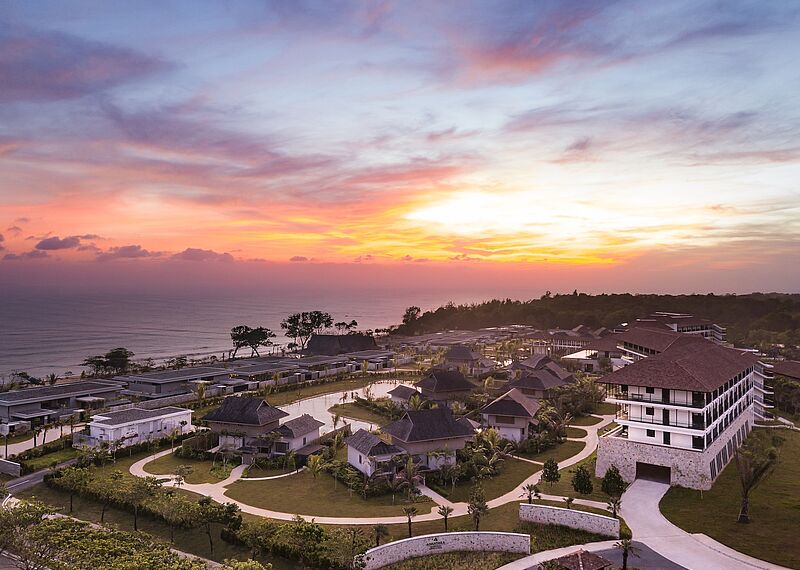
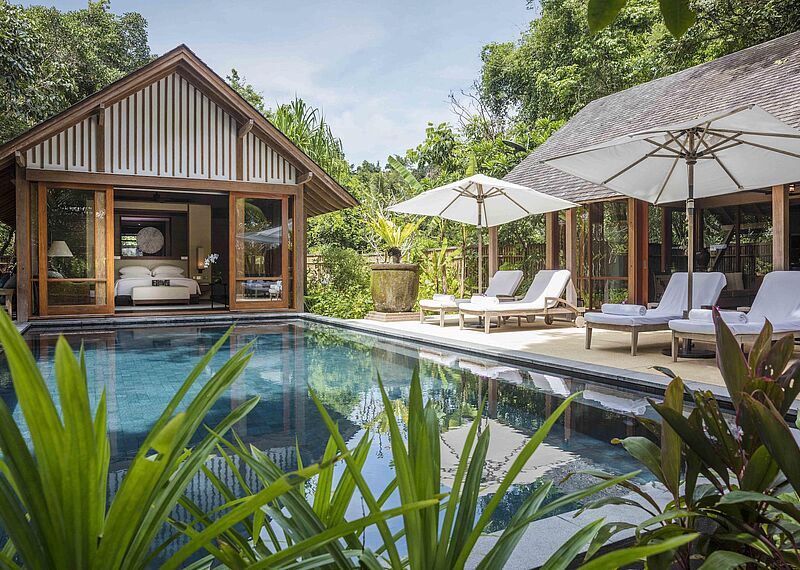
In contrast to the west coast, miles of white sandy beaches stretch along the mostly clear South China Sea in the east of the peninsula. In the south, Desaru has developed into a manageable tourist mecca with golf courses. As it is close to Singapore, the majority of guests come from there. Here, the architecturally charming luxury resort "One&Only" www.oneandonlyresorts.comis hidden in the coastal rainforest, as is the beautiful, extensive complex of the "Anantara" www.anantra.com In the hinterland, you mainly drive through oil palm fields. There is still some remaining rainforest. An excursion to the Belungkor mangrove forest and the organic fruit farm is exciting.
■ Tioman
This hilly island, overgrown with rainforest, is located 50 km from the south-east coast near Mersing. Ferries cross over from there. Jungle, beach, crystal-clear sea, fine snorkeling and diving spots are the attractions. There is no major tourism here. This gem became famous thanks to the movie "South Pacific", which was filmed here in 1958 based on the South Sea romance musical of the same name. If anything, you will find backpackers from all over the world on Tioman's beautiful sandy beaches. The accommodation options are correspondingly "low key". However, there is one 4* beach hotel, the "Berjaya Tioman Hotel".
tioman.berjayahotel.com
Borneo
■ Kota Kinabalu
Named after the highest mountain in Southeast Asia, the 4,000-metre-high Mount Kinabalu, the city spreads out in the north-east of Borneo. Although it does not offer any major highlights, it is the starting point for tours to picturesque beaches such as Tanjung Aru and the offshore islets in the Tunku Abdul Rahman Marine Park. The diving and snorkeling grounds here are absolutely legendary! The best local hotel is the 5-star "Shangri-La Tanjung Aru" www.shangri-la.com
About two hours from KK is the "Weston Wetland Park", an exciting mangrove swamp area where you can observe proboscis monkeys - and thousands of glow worms in the evening. If you want to learn more about Borneo's ancient cultures, the Mari Mari Cultural Village is the perfect setting. Want to meet our closest animal relatives once in your life? A flight to Sandakan to the "Sepilok Orangutan Rehabilitation Center" makes it possible! You should plan at least one night for this, as the semi-wild "forest people", as the orangutan is translated, usually only come out of the jungle to feed in the late afternoon.
GENERAL INFORMATION
www.malaysia.trael
Hotels



![[Translate to en:] AMADEUS Riva (c) Lüftner Cruises](/fileadmin/_processed_/d/e/csm_AMADEUS_Riva_ebdf4c2c55.jpg "[Translate to en:] AMADEUS Riva (c) Lüftner Cruises")












































![[Translate to en:] AMADEUS Riva (c) Lüftner Cruises](/fileadmin/_processed_/d/e/csm_AMADEUS_Riva_64c1995e26.jpg "[Translate to en:] AMADEUS Riva (c) Lüftner Cruises")