


Vietnam
The Vietnamese like to describe their country as a bamboo cane with a basket of rice at each end. The rice baskets refer to the large deltas of the Red River and the Mekong. In between lies the approximately 1,500 kilometer long "bamboo tube" with its narrow coastal strip and the mighty Truong Son Mountains. On my journey, I am constantly amazed by the countless rivers, watercourses and canals that feed the rice fields.
The rural regions radiate peaceful tranquillity. In contrast to the big cities. Like large parts of the entire country, they have undergone incredible development. Vietnam is booming again, and tourist resorts are also growing, even though the country had completely sealed itself off during the pandemic - or perhaps precisely because of this?
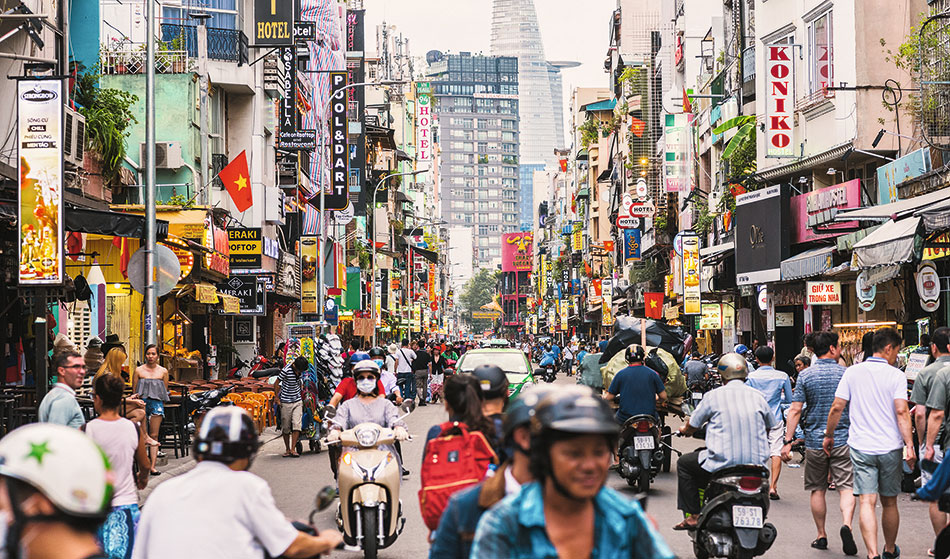
I'm visiting for the first time in eight years. Fishing villages have now become small towns like Quy Nhon. The rural character of the Mekong Delta has been transformed into industrial areas, and where there was once a beach idyll, there are now high-rise hotel buildings and residential and apartment districts like on Phu Quoc. Ho Chi Minh City, where the economic power of Vietnam is concentrated, seems to have doubled in built-up area. Incidentally, the old city name Saigon is still frequently used in common parlance. What has not fundamentally changed is the motorized traffic on two wheels. At rush hour, an army of mopeds and scooters jets along the main streets in dense crowds. There are said to be 7.6 million of them in Saigon alone. It could be frightening. But the drivers maneuver their vehicles through the hullabaloo in a calm and friendly manner. Nevertheless, I hold my breath every time I set foot on the road ...
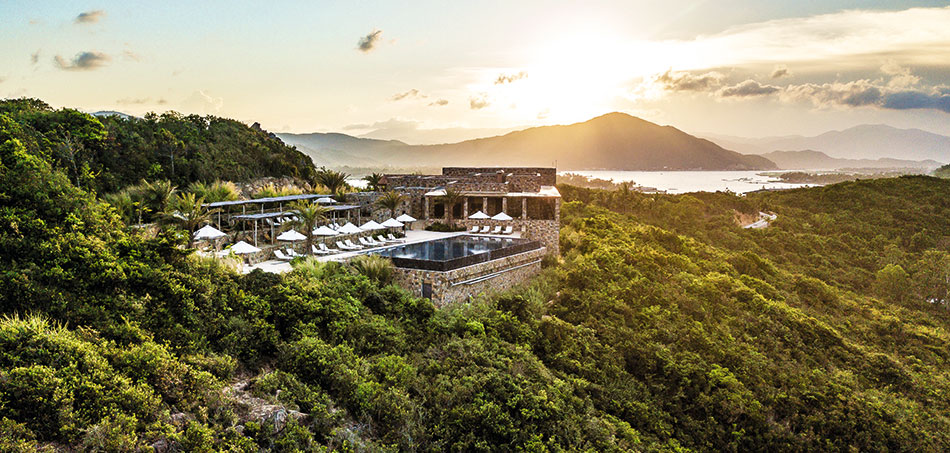
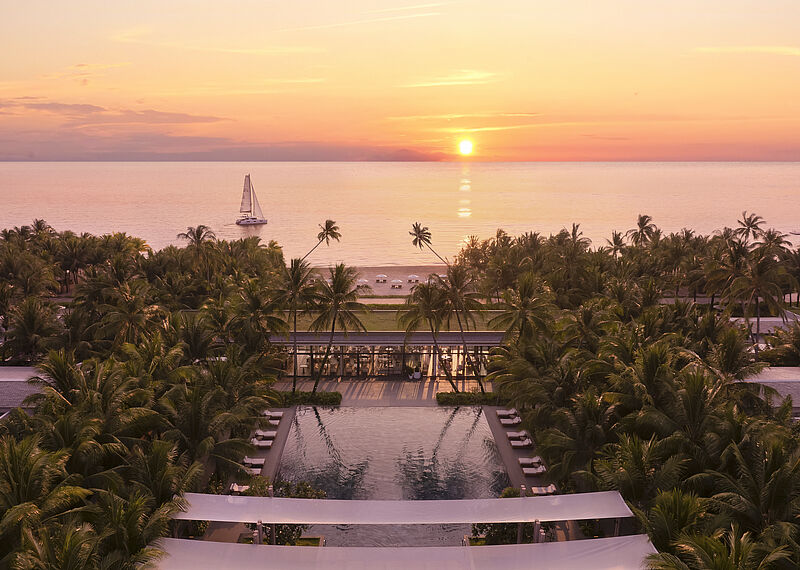
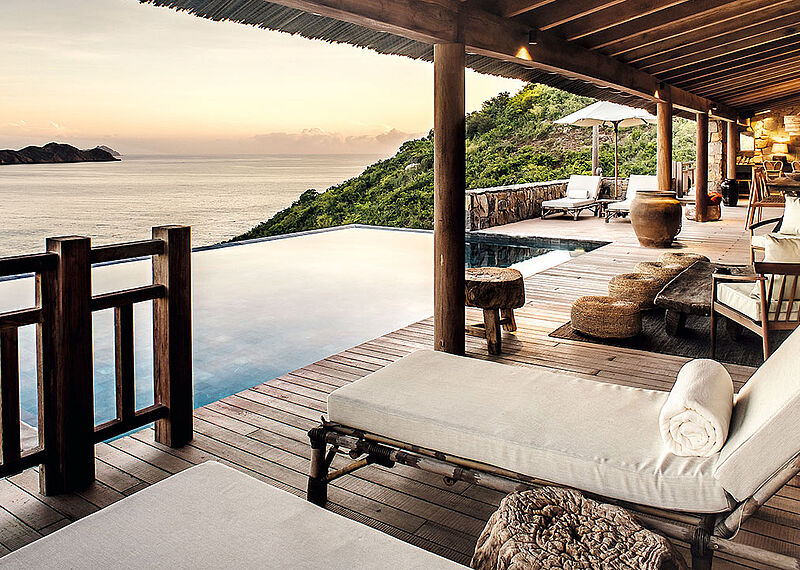
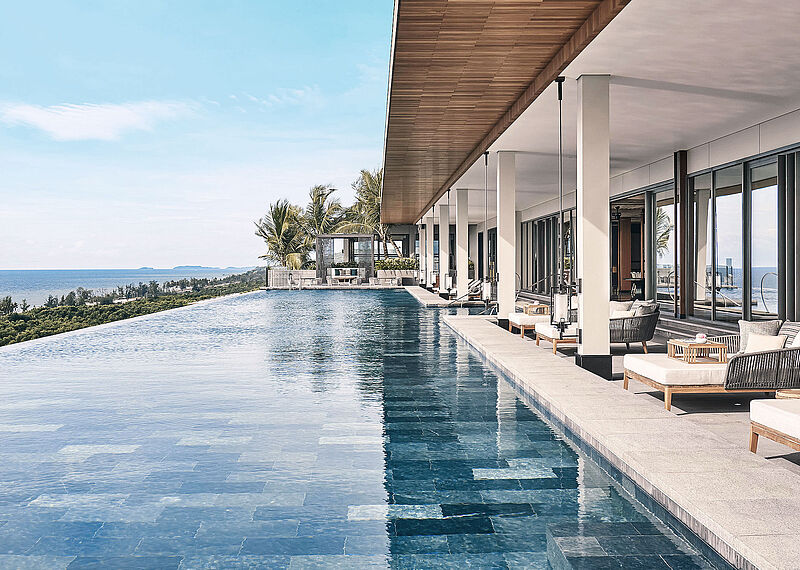
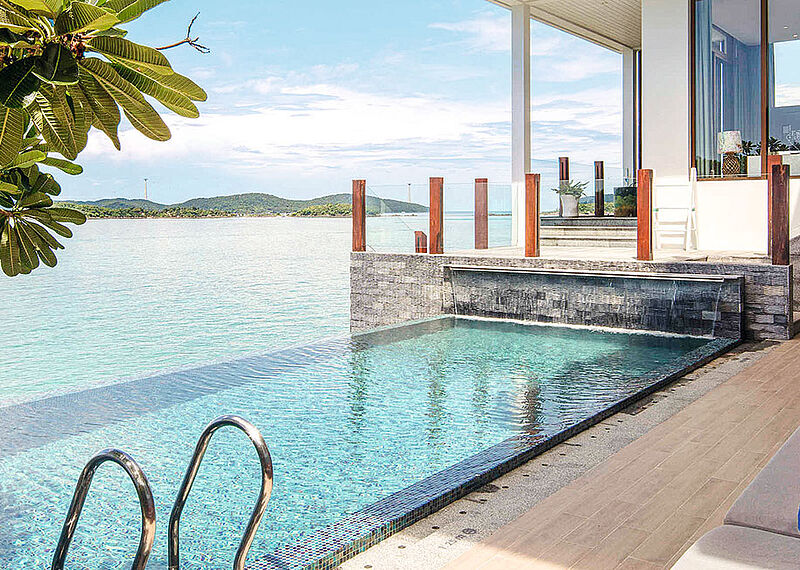
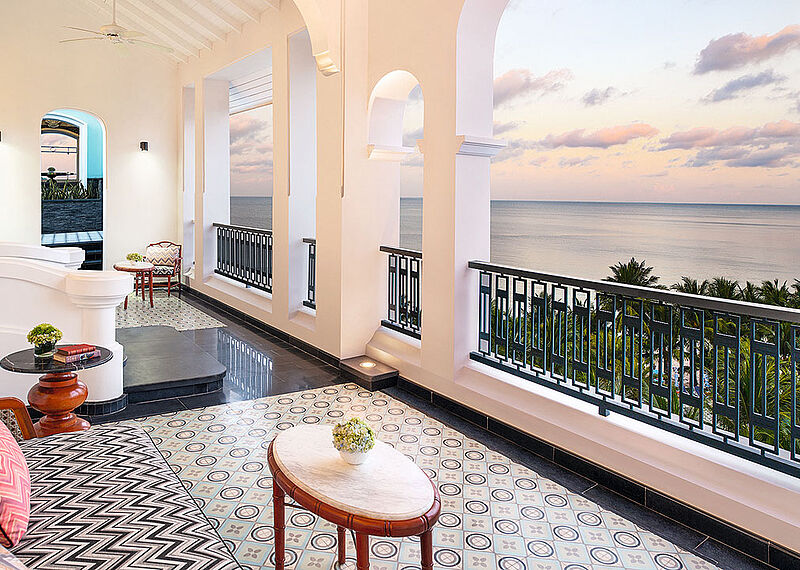
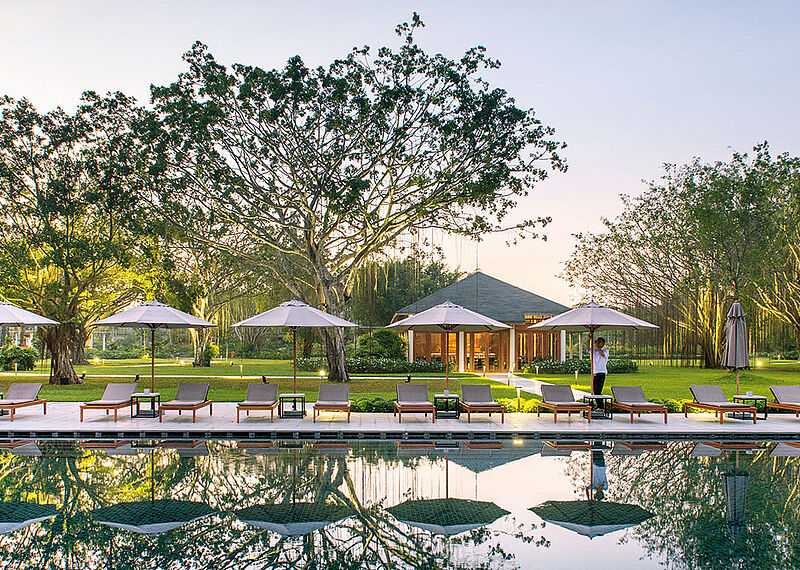
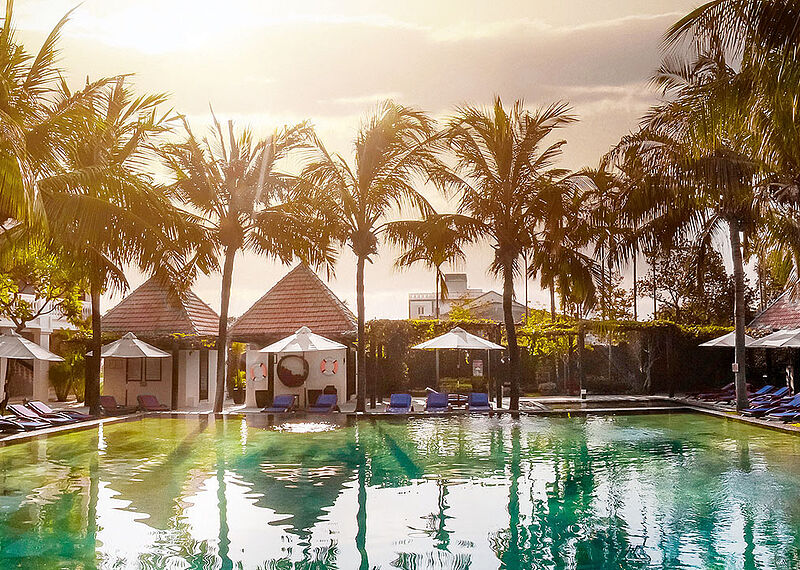
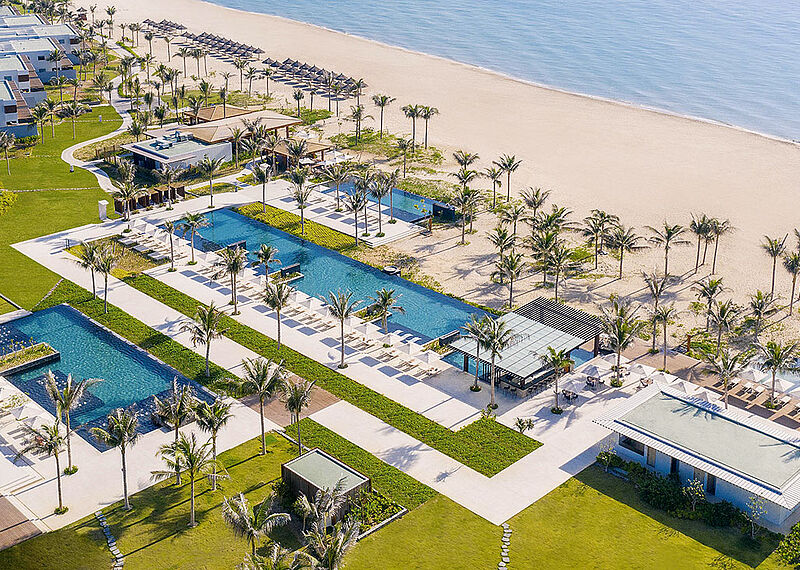
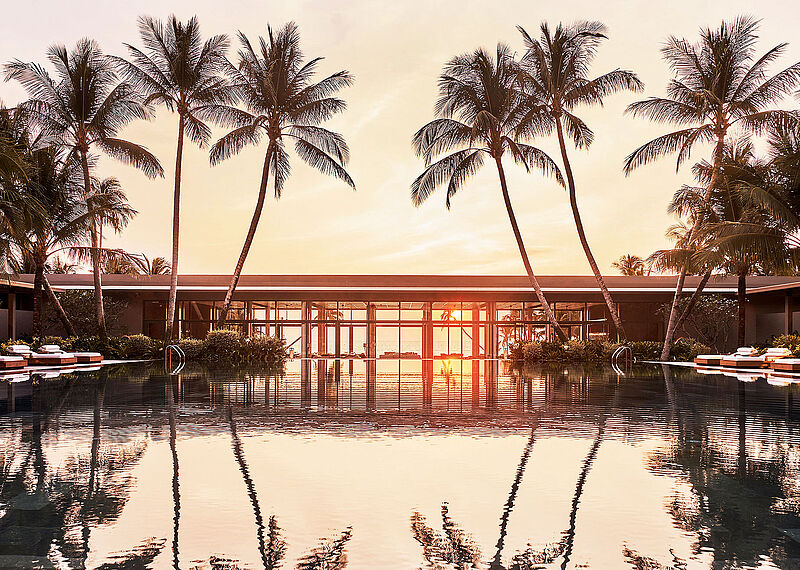
The new luxury hotels are generally shielded from the lively hinterland. They have their own carefully tended sections of beach or, like the "Zannier Bãi San Hô", even their own bay. The "Azerai", on the other hand, is spread out on a private island in the southern Mekong Delta, and the Phu Quoc complexes are located in a gated community. What I really enjoyed at all the hotels were the personalized excursions. It has been recognized that guests from the West in particular love authentic experiences of the country and its people. And that they are reluctant to join groups.
The best time to travel? There is no such thing!
Which time of year is the best? It depends, I would say. The central and southern parts with the aforementioned luxury resorts are influenced by different monsoons. It can sometimes rain for days on end, which often leads to flooding. Typhoons also sweep across the country from time to time. Central Vietnam, where Danang, Hoi An, Quy Nhon and Cam Ranh are located, is hit by the northeast monsoon between the beginning of October and the end of February. This is not the best time for travelers who want to play golf, for example. In the south, the southwest monsoon rages between May and September. Then it can be uncomfortable not only in the Mekong Delta, but also on Phu Quoc. A small consolation: the tropical rain is warm. And if you want to devote yourself entirely to wellness during this time, you will find excellent spas in all luxury resorts.
DIPLOMATIC MISSIONS
Vietnamese Embassy in Austria
Felix Mottl-Straße 20, 1190 Vienna
Phone: +43 1 368075510
Fax: +43 1 3680754
E-Mail: office@vietnamembassy.at
www.vietnamembassy.at
Vietnamese Embassy in Germany
Elsenstrasse 3, 12435 Berlin
Phone: +49 30 53630108
Fax: +49 30 53630200
E-mail: sqvnberlin@t-online.de
www.vietnambotschaft.org
Area
331.210 km²
Population
89.71 million
Language
vietnamese
Arrival
Turkish Airlines flies to both Ho Chi Minh City and Hanoi from 16 airports in Germany, Austria and Switzerland via its Istanbul hub. The airline's highlights include the Business Class suites and the magnificent lounge at Istanbul's new airport.
www.turkishairlines.com
Capital city
Hanoi
Weather
Vietnam can be roughly divided into three regions: the hot and humid south with a rainy season from around June to October; the north with hot summers and cool and humid winters in which temperatures in the highlands can reach freezing point at night; and the central region with heavy rainfall, sometimes lasting for days, from October to around January. Due to the southeast monsoon, the beaches between Da Nang and Hoi An are then washed over by high waves. Typhoons are also to be expected.
Climate
| Jan | Feb | Mar | Apr | May | Jun | Jul | Aug | Sep | Oct | Nov | Dec | |
| Max. Temperature | 20 | 21 | 23 | 26 | 32 | 33 | 33 | 32 | 32 | 28 | 26 | 23 |
| Min. Temperature | 13 | 14 | 17 | 21 | 24 | 26 | 26 | 25 | 24 | 22 | 17 | 15 |
Time difference (to MEZ)
+7 Stunden
Visa
Travelers from Germany do not require a visa for stays of up to 45 days (including arrival and departure days); Austrians and Swiss nationals require a visa.
vietnamembassy.at/de/visum-fuer-vietnam
Vaccinations
There are currently no country-specific safety instructions for Vietnam.
Gourmet food from the cookshop
Beef broth for breakfast and rice paper rolls from your hand: Vietnam's cuisine is as delicious as it is uncomplicated.
Unpronounceably good: "Pho", the Vietnamese national dish, won't come out of my mouth without an accent, even after much practice. The pronunciation of the open, almost breathy vowel at the end is too tricky. My bowl of soup, on the other hand, is filled with beef broth that is full of flavor and refined with various spices, vegetables, meat or prawns. And in hotels, there is usually already a bubbling pot on the breakfast buffet, surrounded by small bowls with side dishes and condiments. Guests can add a little fish sauce, lime, chili and coriander to taste. It tastes delicious and is healthy. On my trip, I sip the strong broth every morning and feel well fortified for a day's program in the humid heat;
But many other typical local dishes are also incredibly good and varied. No wonder, as they are inspired by many different influences: China, Mongolia, Thailand, Cambodia, Laos and of course France all left their culinary mark! Today, Vietnamese cuisine is certainly less spicy than Thai cuisine, but also richer in flavor than southern Chinese cuisine. What they all have in common is the staple food rice, which can also be found as rice noodles in soups and salads, in hearty porridge or as rice flour crêpes in spring rolls.
Journey to rice
On my trip, I noticed that the menus of tourist hotels and restaurants up and down the country are pretty much the same. Variety is provided by the food stalls, where the Vietnamese also eat for little money. After tasting at least ten of them, I learned that they work carefully and hygienically, and the aromatic dishes taste delicious.
Vietnam is a paradise for fish and seafood fans. A visit to the market, which is offered in many hotels together with a cooking course, provides an initial insight into the extensive range on offer. However, there is no question of sustainable fishing, and caution should be exercised with regard to the pollution of coastal waters and rivers. To be on the safe side, luxury hotels import their seafood from reliable sources or cooperate with hand-picked aquacultures. Cooking courses usually include the preparation of Vietnamese spring rolls - another national specialty. Wafer-thin sheets of rice paper are moistened and filled with boiled prawns, sprouts and spring onions. Whether cold or deep-fried, wrapped in lettuce leaves and fresh herbs - they are always a tasty bite to eat!
Sightseeing
■ Hanoi
Thanks to its historic center and night market, Vietnam's capital is considered the most charming city in the country. Worth seeing are the Temple of Literature- & Van Mieu National University, the Ngoc Son Temple in Turtle Lake and the Ho Chi Minh Mausoleum. In addition, a day trip to Ninh Binh with its
overgrown karst hills.
■ Halong Bay
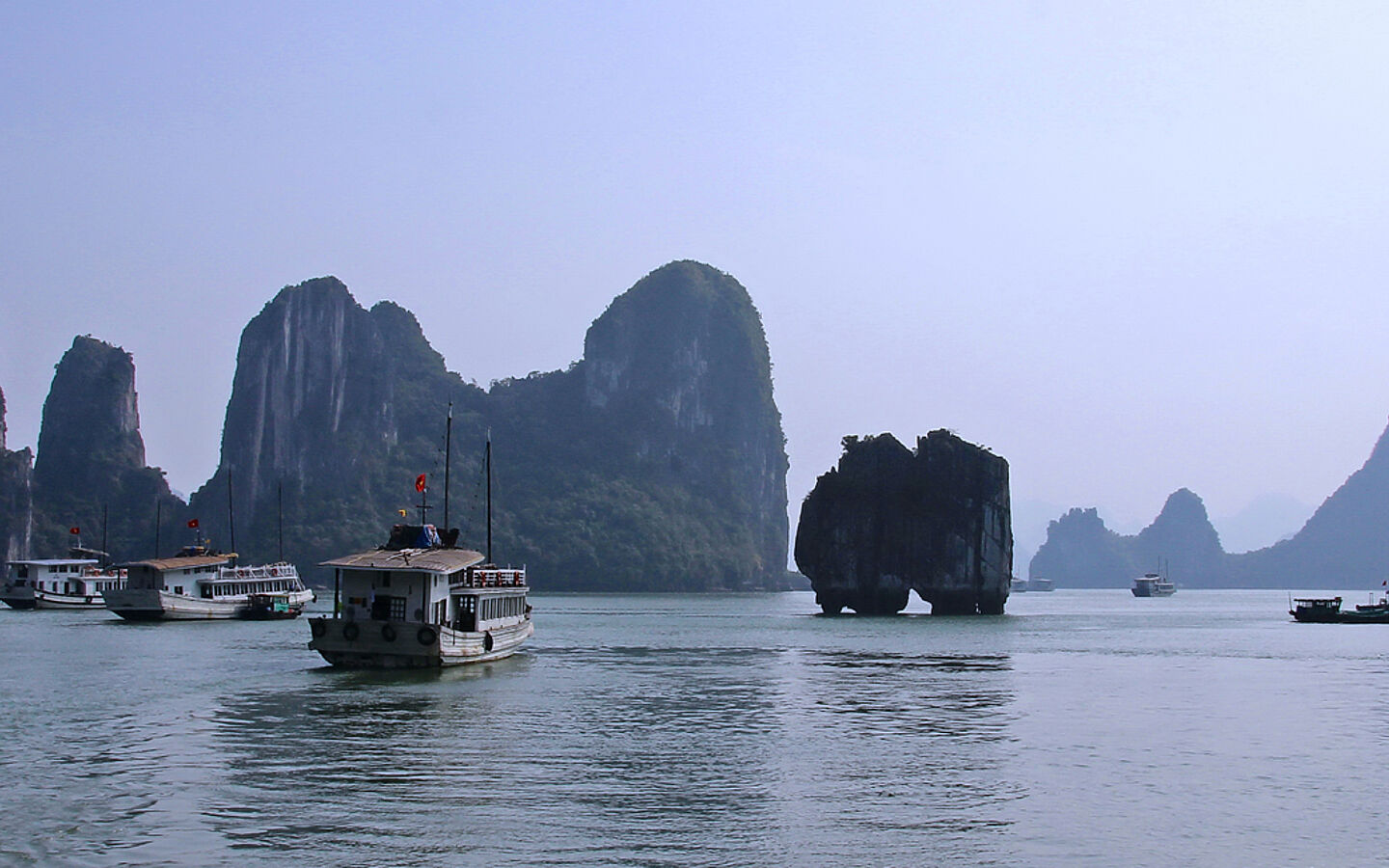
More than 3.000 bizarrely shaped islands rise out of the bay, some with floating villages clinging to them. This is truly stunningly beautiful - which is why, unfortunately, around 200 fully occupied ships cruise through this natural wonder every day.
■ Hue
13 kings have shaped the citadel with an imperial palace modeled on the Forbidden City in Beijing. Largely destroyed during the Vietnam War, Hue is now a UNSECO World Heritage Site after extensive renovation. The so-called Imperial Tombs and the Thien Mu Pagoda are also worth a visit. With a private car and chauffeur, it is worth taking the less frequented route via Da Nang directly along the coast - with lunch and a dip in the sea at the Banyan Tree Hotel Lang Co. Afterwards, winding over the Cloud Pass is more exciting than taking the tunnel.
■ Hoi An
The picturesque former Chinese-Japanese trading city, which is also a UNESCO World Heritage Site, has become a party stronghold in recent years. However, a street food tour, where you can immerse yourself in the secrets of the local cuisine, remains appealing.
[www.eathoian.com
■ My Son
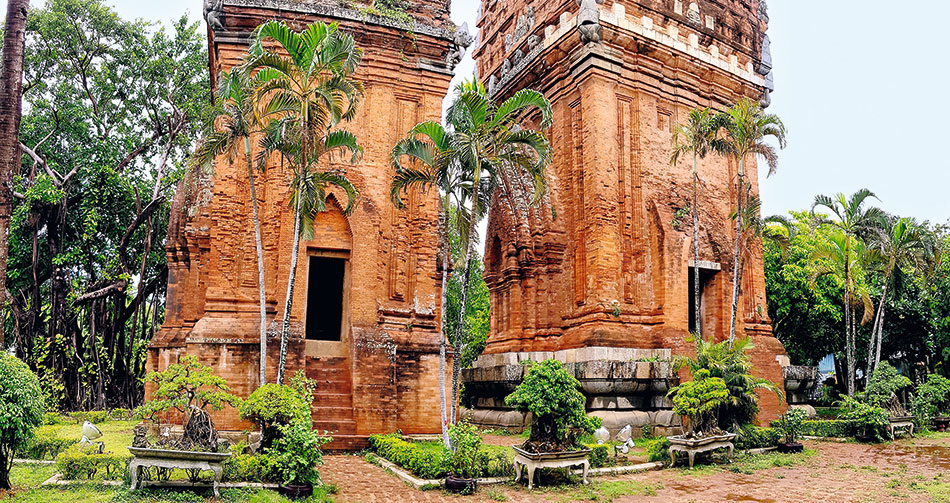
The largest, partly still preserved temple city from the time of the Champa Empire has a similar historical significance for Vietnam as Angkor for Cambodia or Pagan for Myanmar.
■ Ho Chi Minh City / Saigon
Without a doubt, the economic power of Vietnam is gathered here. Skyscrapers stretch up into the sky. Good restaurants, rooftop bars and shopping streets in the historic center as well as the Ben Thanh market are attractions for visitors.
■ Dream Beaches
In principle, there are countless beaches lined up along the coast and on the islands like pearls on a string. Almost all of them are dangerous due to high Pacific waves and currents, with the exception of the sheltered bays. Pollution is alarming in many places if beach hotels or communities do not clean the beach daily.
■ Lang Co
Nestled in an elongated bay and about 50 km north of Da Nang, this palm-fringed beach is mostly deserted apart from the guests of the Angsana and Banyan Tree hotels.
■ My Khe/An Bang
Over 20 km, the wide sandy fringe stretches from Da Nang to Hoi An. In the city, beach bars liven up the scenery, while the other end is (still) quiet and secluded. Caution: often flooded from October to the end of January!
■ Quy Nhon
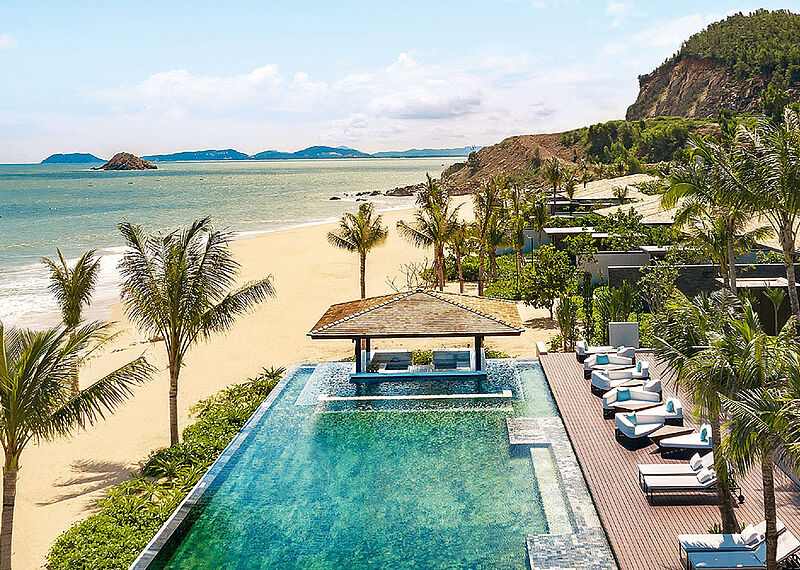
The wide beach in front of the Anantara Quy Nhon Villas Resort on one side appears
no less paradisiacal than the idyllic bay of the Zannier Hotel Bai San Ho on the other.
■ Mui Ne
The tourist hotspot is a paradise for water sports enthusiasts - especially surfers and kiters. The dune landscape in the hinterland is spectacular, where you almost feel like you're in the Sahara.
■ Cam Ranh
The more than 20 km long private beach of the Hotel Alma delights with light, powder-soft sand that feels like velvet under your feet.
■ Phu Quoc
Multiple attractive beaches line the west coast of this island. At the southern tip, there are bays such as those at the JW Marriott and Premier Village. Long Beach at The Regent is a large-scale development area with several monumental buildings. At White Beach, once a backpacker's paradise, more and more large hotels are replacing the small hut complexes. With sometimes strong winds and lots of rainfall in the summer months, the bathing pleasure is limited, and the heavy pollution of the sea makes it less enjoyable.
Shopping
Of all the cities in Vietnam, Hanoi offers the greatest shopping pleasure. The Old Quarter is packed with stores selling handicrafts, silk and paper goods and home accessories. There is also a lively night market with lots of kitsch and junk. Hoi An, on the other hand, is particularly popular with young women who have elaborate evening or wedding gowns made by the local tailors. It should be clear in advance that this requires several fittings and several days. If you are looking for international fashion labels, you will find them in the historic center of Saigon. There are also some excellent men's tailors here. It is best to ask the hotel concierge for the best addresses.
Enjoy
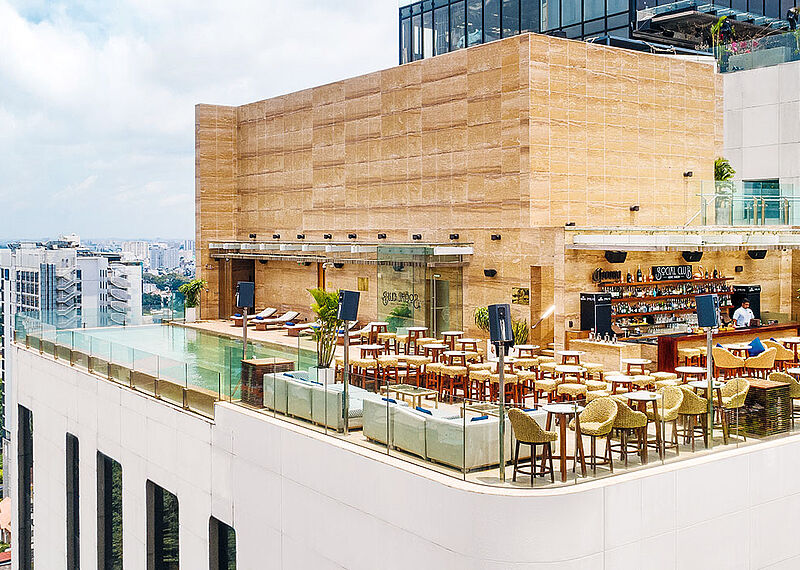
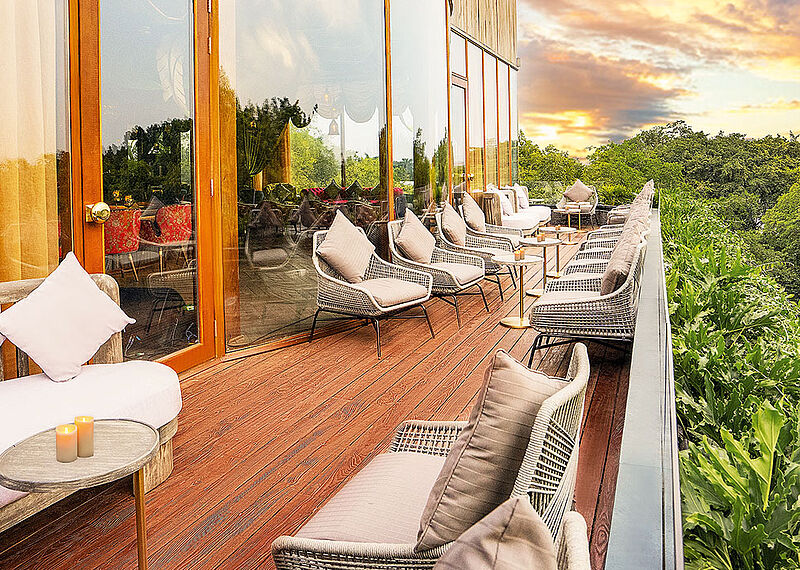
Top restaurants are mainly found in Saigon, because that's where the money is and eating out is part of the social life. Outside the monsoon season, there are also numerous rooftop bars here. The rooftop terrace of the Hôtel des Arts with its fantastic infinity pool is particularly popular at the moment.
■ Å by Tung Sounds like a village in the Lofoten Islands, but it is Saigon's latest gourmet hotspot, which has also made it into the "Asia's 50 Best Restaurants" ranking. Chef Hoang Tung trained in Scandinavia's Michelin-starred kitchens and conjures up the finest creations from local produce. In Hanoi, his "T.U.N.G. dining" is the place to eat.
■ Anan In Vietnam's best restaurant, Peter Cuong Franklin acts as the chef. He uses French cooking techniques to transform recipes from his Vietnamese mother into delicious 12-course menus. Two floors above his gourmet temple in Saigon, his soups are the real stars at "Pot au Pho".
■ Square One At the Park Hyatt Saigon Hotel's gourmet restaurant, the "Plateau de Fruits de Mer" is a must. The signature dish is the Wagyu veal cheek in coconut milk broth.
Hotels



![[Translate to en:] AMADEUS Riva (c) Lüftner Cruises](/fileadmin/_processed_/d/e/csm_AMADEUS_Riva_ebdf4c2c55.jpg "[Translate to en:] AMADEUS Riva (c) Lüftner Cruises")













































![[Translate to en:] AMADEUS Riva (c) Lüftner Cruises](/fileadmin/_processed_/d/e/csm_AMADEUS_Riva_64c1995e26.jpg "[Translate to en:] AMADEUS Riva (c) Lüftner Cruises")