


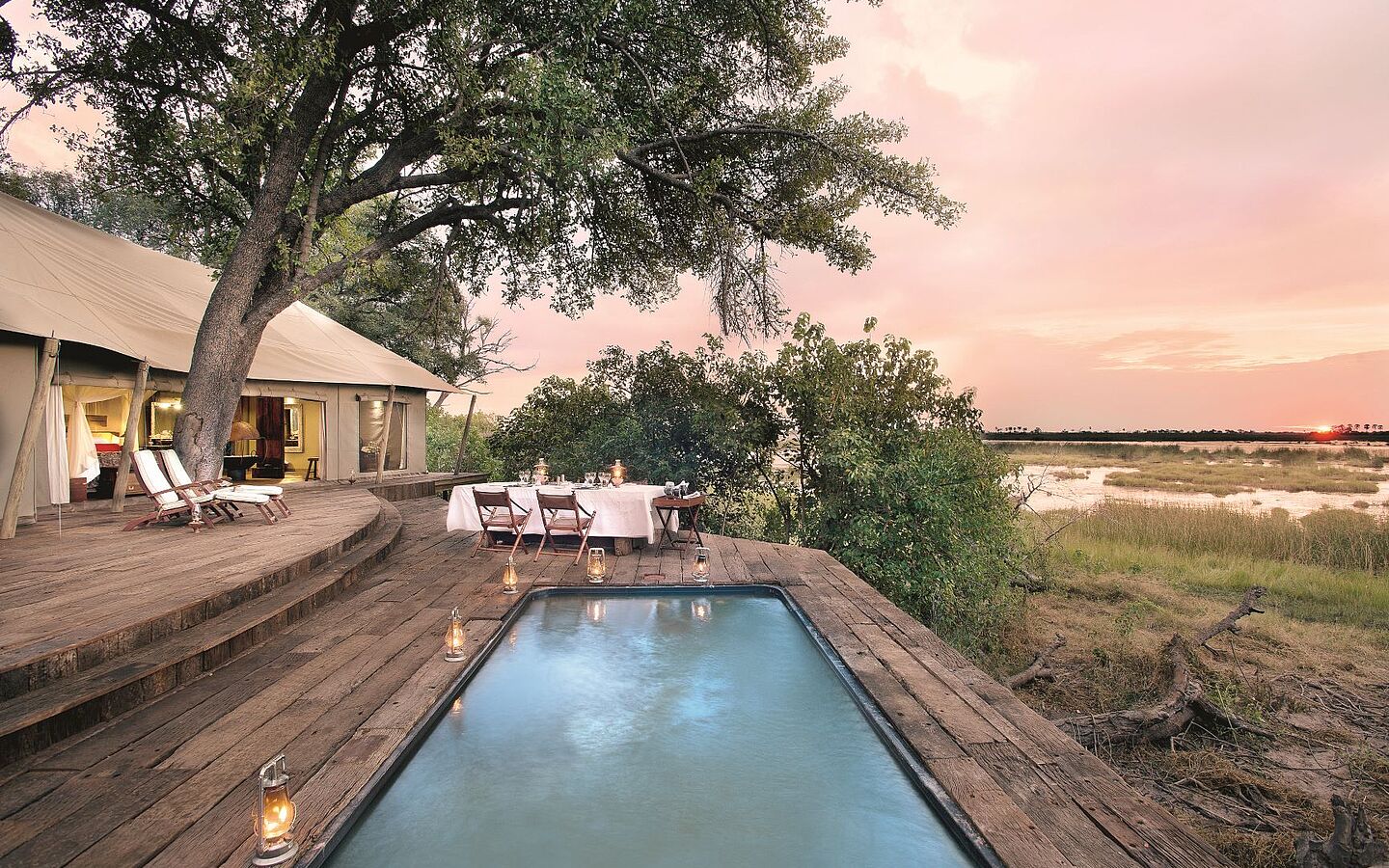
Wild Life Wild Love
A sustainable luxury oasis in the middle of Africa's wilderness
07/24/2024 Reading time: 9 Minutes
Dereck Joubert founded the Great Plains Conservation Camps in Botswana, Kenya and Zimbabwe together with his wife Beverly. The unique concept combines luxury tourism with sustainability and animal welfare.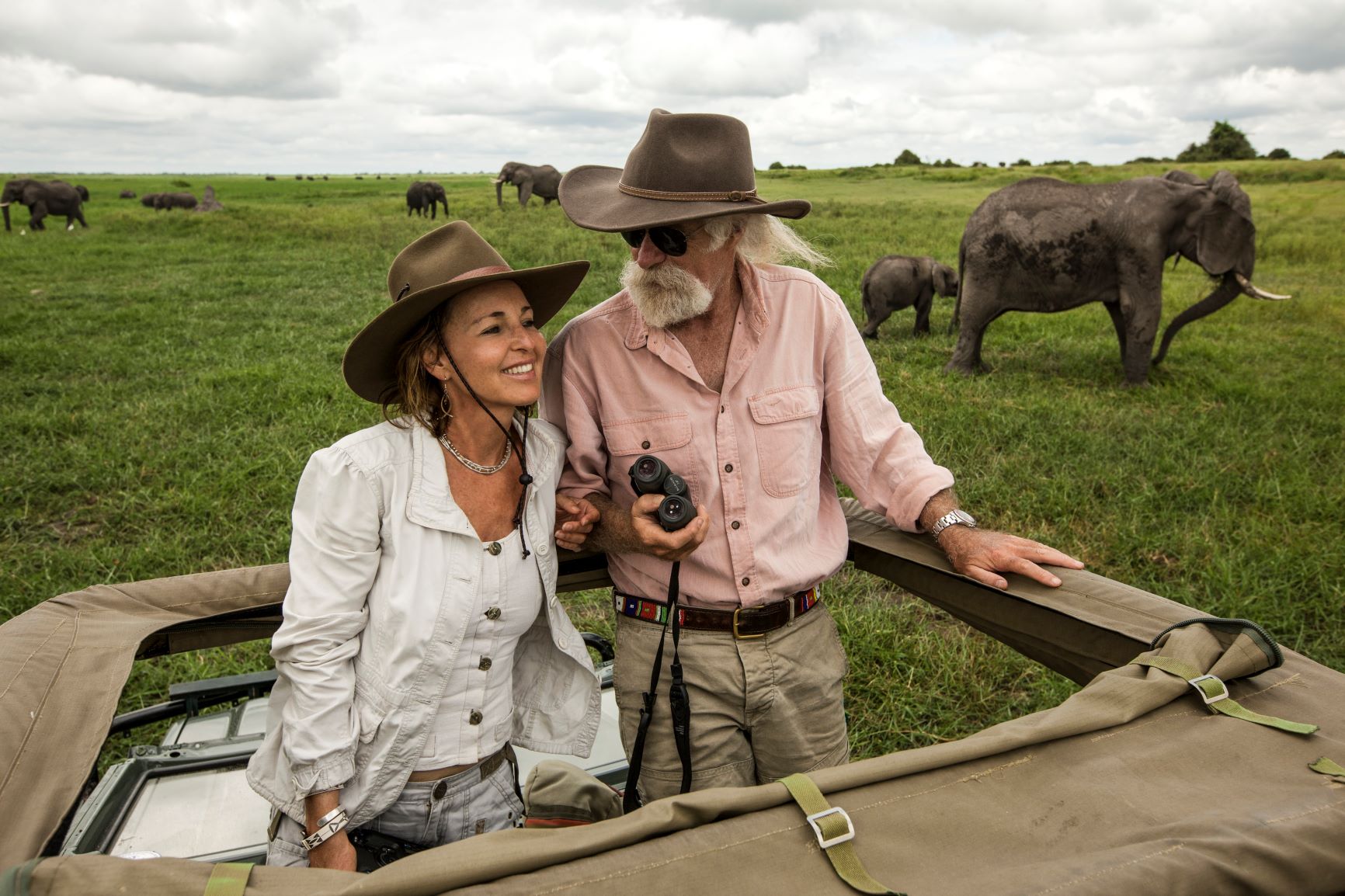
The global pandemic was a reset for the entire travel industry. What are your new plans now?
We have so many plans that have not been stopped by the pandemic. Our 25-year plan for conservation and community tourism is still in place. What we need to focus on right now are the big cats and other animals that have a huge impact on the ecosystem. They must be protected immediately! In the longer term, we are very interested in further expanding our educational work in our communities. We are also developing a tourism concept to bring tourists closer to the great ape experience. So it's all about cautious expansion.
You currently own and operate 13 lodges in Kenya, Botswana and Zimbabwe with Great Plains Conservation. These include Tembo Plains Camp, which will open in August. Why did you decide to develop luxury design camps - and what sets you apart from other providers?
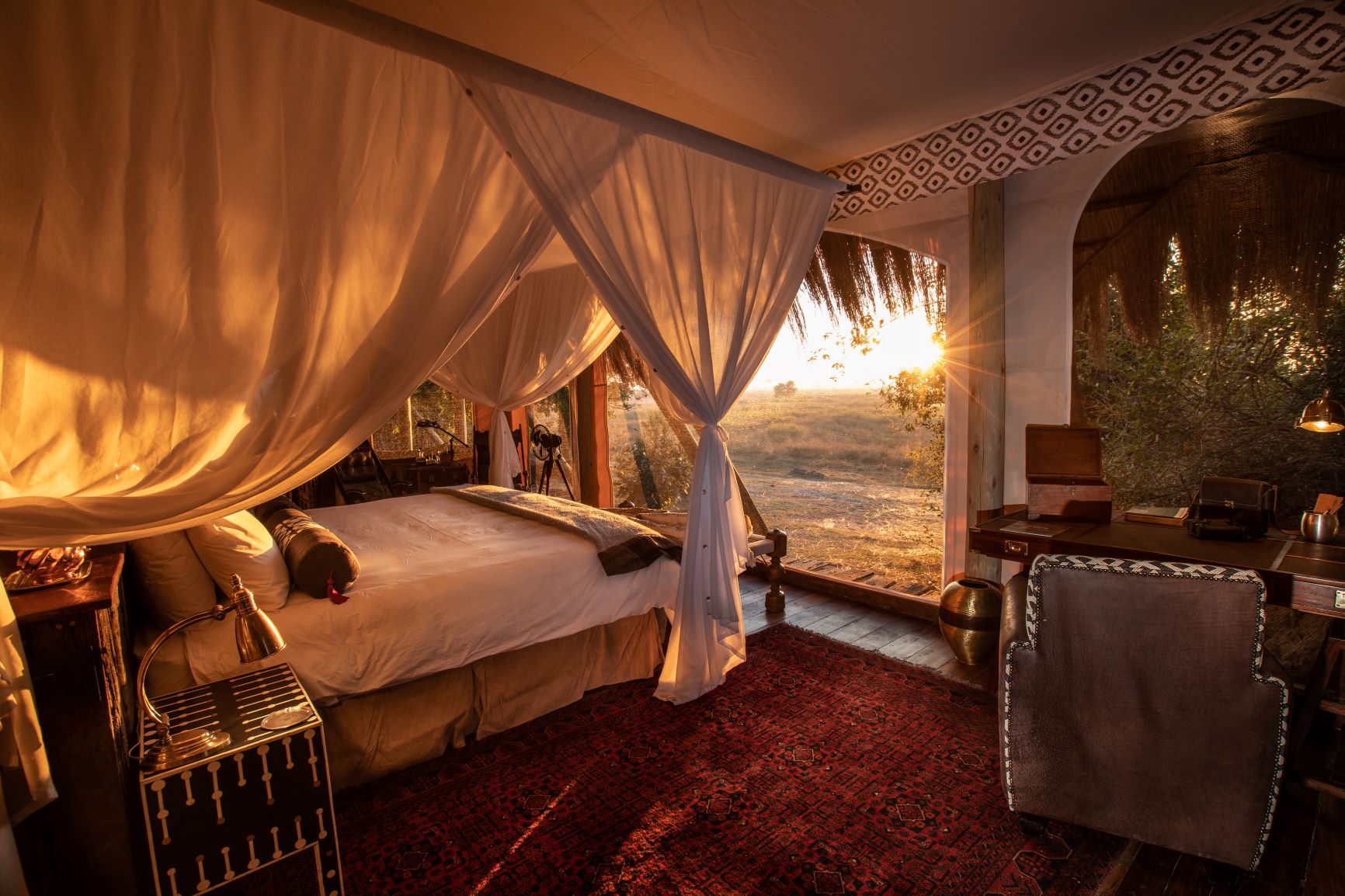
Before we founded Great Plains in 2006, we commissioned a study from Duke University to find out what the big cat populations were like 15, 10 and 5 years ago and how they might evolve over the next 5, 10 and 15 years. We then overlaid a human population map to determine the bottlenecks in vital corridors and to identify critical wildlife areas. This is an area we have invested in and will continue to do so. To finance our project, I have designed a model for high-value tourism revenue. It is mainly based on minimizing the environmental impact of travelers. Then I thought about how I could involve the locals in the best possible way. This resulted in the Great Plains Models, which are based on three types of camp stays: our Reserve Collection at the top end, the Explorer Level Camps, which are designed to attract young people in particular, and the Expedition Camps. Every year, the offer is adjusted and reviewed to ensure that our concept continues to work.
© Beverly Joubert
When will all camps have reopened and what important steps and the pandemic used?
We have staggered the openings, partly due to demand, but also to rebuild and renovate five of our camps. Once this construction work is complete, we will be able to reopen this summer. During the pandemic, I immediately assigned all my hospitality staff to conservation tasks. We didn't need waiters, drivers and guides after all, so we changed staff roles to keep everyone busy. We really need these men and women on the ground. Without them, we will lose everything. It has become apparent that we actually have a massive poaching problem as a result of the pandemic and many parks are struggling. Some reserves have lost 80 percent of their wildlife in one year. That's why we started the "Project Ranger" program to raise money for rangers working across Africa. In one year, we were able to distribute about one million dollars to nine countries, and we have expanded this effort. 500 dollars is enough for one ranger for one month.
You recently sold your photos in an international auction to raise money for your wildlife projects. Can you tell us more about these projects such as "Project Ranger", "Rhinos without Borders" and "Solar Mamas"?
Sure, when someone buys a picture, the proceeds go to a ranger, for example. So it's a wonderful way to support someone directly and have a memento at the same time. "Solar Mamas" is a project we are running with Barefoot College in India. We sent nine women to India for six months to learn more about sustainability. We selected women who had no traditional education. They come from communities where there is no electricity and they live in complete isolation. We bought solar kits for them for around 250,000 dollars, which the women installed at home. A "ray of hope" - in the truest sense of the word ... And with "Rhinos without Borders" we have been able to record a quite spectacular success despite the recent poaching in Botswana: We are very proud of the birth of over 60 babies from 87 adult animals that we have relocated. This project will also be continued.
Tell us about the main objectives of the Great Plains Foundation and the Great Plains Conservation Academy.
Rhinos are a big focus of our work at the Great Plains Foundation, but we are also implementing amazing reforestation programs with the Foundation to re-vegetate areas that have been impacted by elephants as they move across the landscape. We currently have over 10,000 seedlings on site, almost ready for planting. The Academy, on the other hand, was set up to create a kind of "educational bridge". School leavers can be prepared for university in local schools. Many are stuck in an educational rut because the villages are too far away from higher education institutions.
Everyone is talking about sustainability in luxury travel. What is your opinion on this?
We have been committed to consistent sustainability since we started in 2006. We reuse, we recycle, we buy locally and we have a team of people working on new technologies to make us even more sustainable. We do an audit every year for every area of our business - from transportation to fuel consumption to carbon footprint. And we also conduct social justice surveys. Where the corporate culture allows, we promote women to key positions. My senior management is 57 percent female, the operation in Botswana is 41 percent female, and our head office is 94 percent female. This is absolutely extraordinary for a safari company and a conservation organization that is traditionally heavily male-dominated. I am therefore very proud of these figures.
What kind of experience would you like to offer your visitors as a lifelong memory?
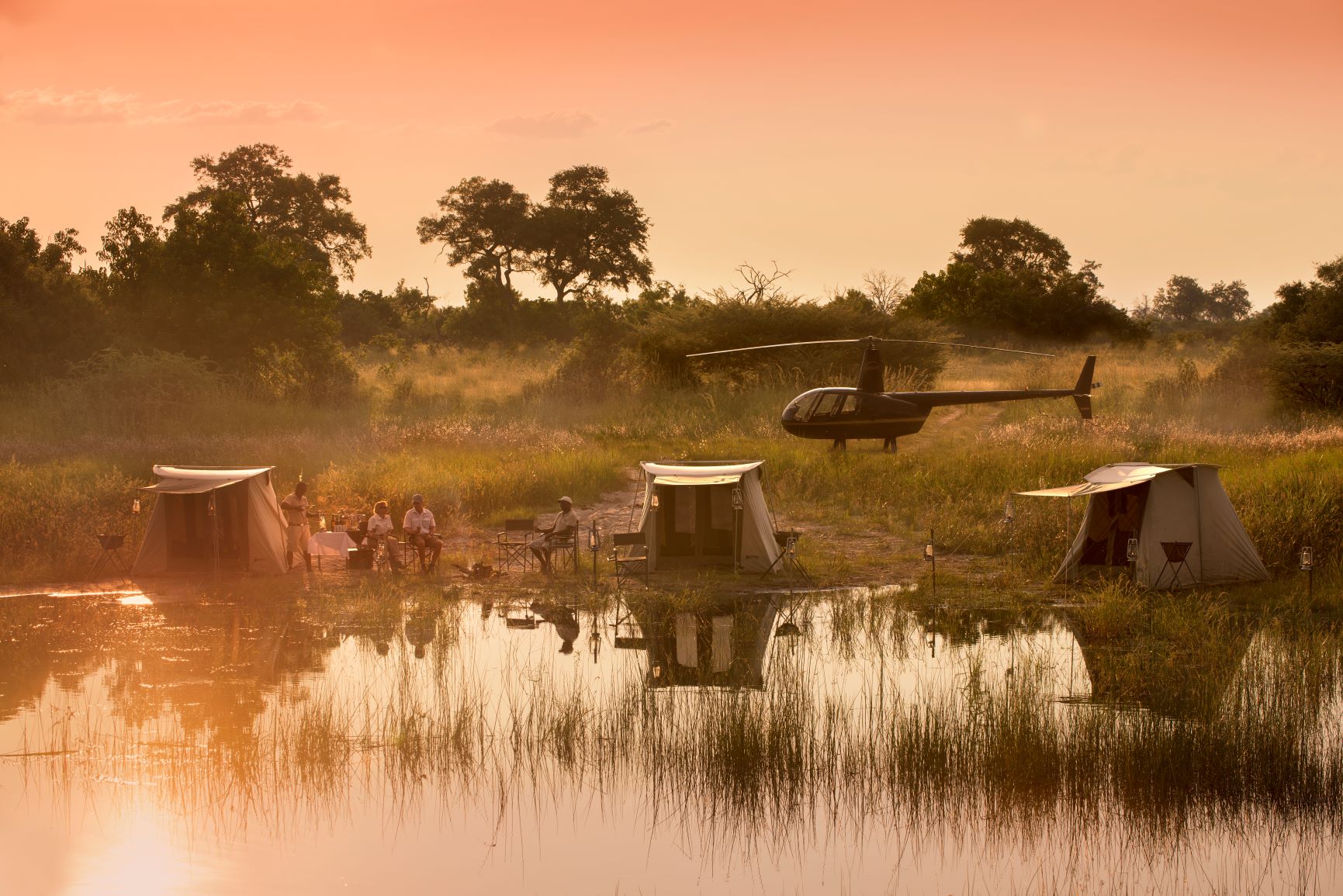
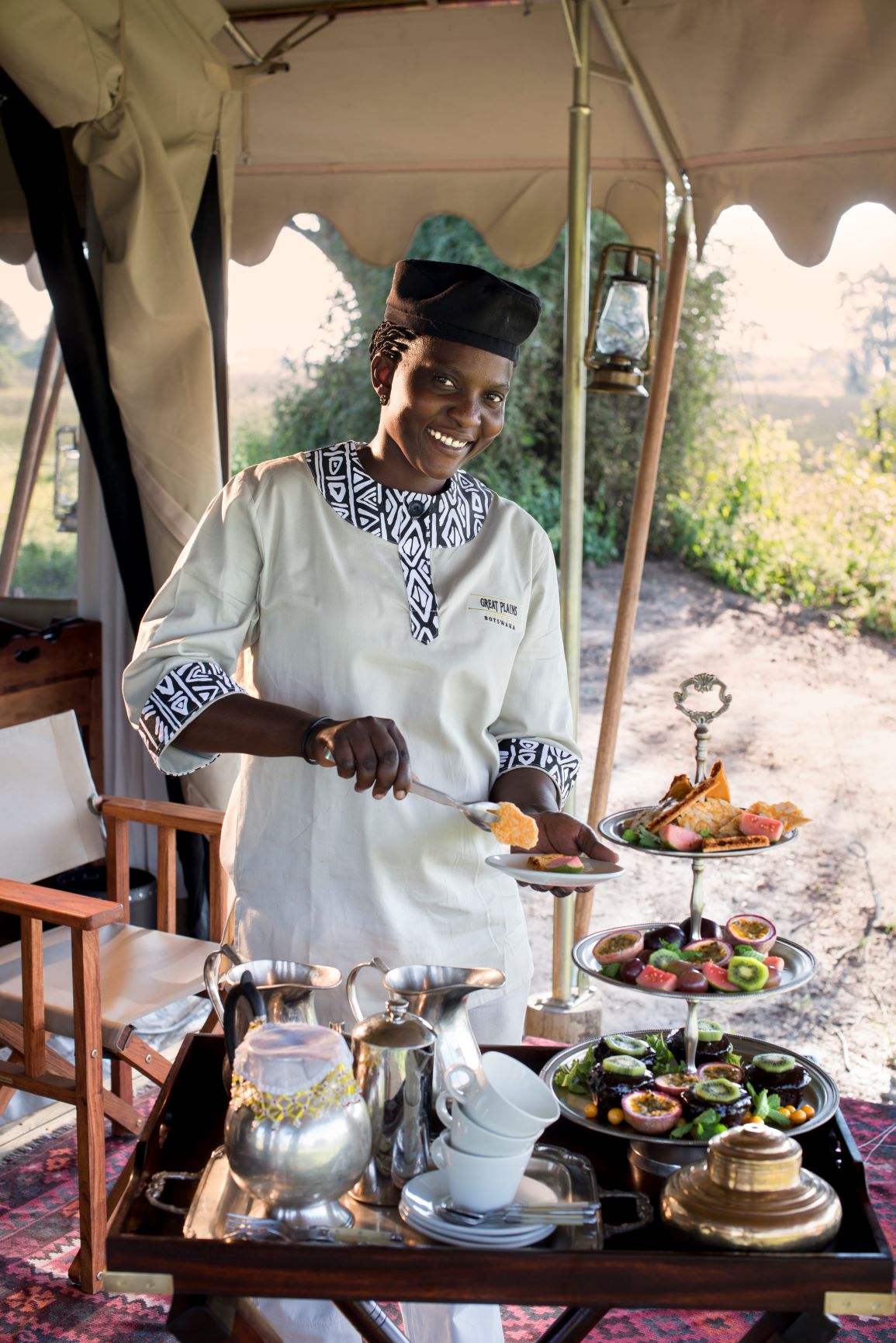
We are primarily a conservation safari company - but of course we also offer great lifestyle experiences that go far beyond just ticking off species seen on the guest wish list. For us, it's about raising awareness of nature, conservation and the environment and showing that a healthy mind, a healthy body and a healthy environment are closely linked. You can have great gourmet experiences with us, vegan if you wish, so purely plant-based, which may change your lifestyle. You can taste our own distilled honeybush botanical gin. You can observe animals, meditate to the sounds of elephants - or in some places even with the real elephants - and be close to them. With us, you'll learn that a third of the profits from your stay go to conservation and a third to the communities. That is life-changing!
© Beverly Joubert
What is your definition of wellness in safari lodges, and how do you integrate the spa theme into your lodges?
For us, wellness is not just a room with massages. Because they can also take place in your room, outside by your own private pool or on the riverbank. For us, wellness is instead a holistic offer, where we also offer healthy meals, juices, exercise and discussions with the chefs about healthy eating. We want you to leave feeling different, better and ready to be the best version of yourself.
What fills you with the most pride?
Growing employees who fully understand the Great Plains DNA so they can go out into the communities and spread it. Only through trustworthy words will we be able to change things.
Can you tell us more about the collaboration with Relais & Châteaux? Which of your lodges belong to the exclusive association and what do you offer there?
We love everything that the Relais & Châteaux association stands for: the best, but also responsible cuisine, the finest level of service, great sensory experiences, but also the opportunity to share values in a group and help each other as like-minded people, just like in a family. There is never a lack of passion at Relais & Châteaux. That is why we have included so many of our properties in the collection: Zarafa and now Selinda, Duba Plains, Tembo Plains, ol Donyo Lodge, Mara Plains and Mara Nyika - all our five-star Relais & Châteaux Collection camps in fact.
© Beverly Joubert
In addition to adventures such as helicopter flights, diving into lava caves, mountain biking, canoe and mokoro excursions or safaris on horseback, you also offer "workation" stays in your lodges. Is this part of a new lifestyle concept in tourism?
I've never felt particularly comfortable with safaris where you change camps every two days. What can you experience in two days per location? Sure you'll see animals, but you can do that at Disney's Animal Kingdom. But what do you feel, what do you experience, what senses are activated when a leopard hunts or an elephant gives birth? These are the things you will stumble across at most during a two-day flash safari. You will only have a truly meaningful experience if you slow everything down and take your time. That's why we also offer our guests the opportunity to stay longer, perhaps even work from camp and feel at home with us.
What are your next plans? Can visitors expect to meet you in person at one of your lodges?
We are currently building in three countries, so we jump back and forth between all the destinations. I never promise my guests that I will lead a safari myself. But when we are in one of our camps, we often host dinner or drinks together. Because we love entertaining guests and finding out from them what their lives are like.
Where is your favorite place in the world and why?
I love Duba Plains in Botswana, it's usually our home base. The Mara ecosystem is spectacular all year round and I am in love with our places there - Mara Plains, Mara Toto, Mara Expedition Camp and Mara Nyika. Okay, I know I might not be able to choose: But I also like the big herds of elephants around Selinda Camp in Botswana, in ol Donyo in Kenya and in Tembo Plains in Zimbabwe. There is something very special about being in the company of two incredible forces of nature: elephants and my wife Beverly!



![[Translate to en:] AMADEUS Riva (c) Lüftner Cruises](/fileadmin/_processed_/d/e/csm_AMADEUS_Riva_ebdf4c2c55.jpg "[Translate to en:] AMADEUS Riva (c) Lüftner Cruises")





























![[Translate to en:] AMADEUS Riva (c) Lüftner Cruises](/fileadmin/_processed_/d/e/csm_AMADEUS_Riva_64c1995e26.jpg "[Translate to en:] AMADEUS Riva (c) Lüftner Cruises")