


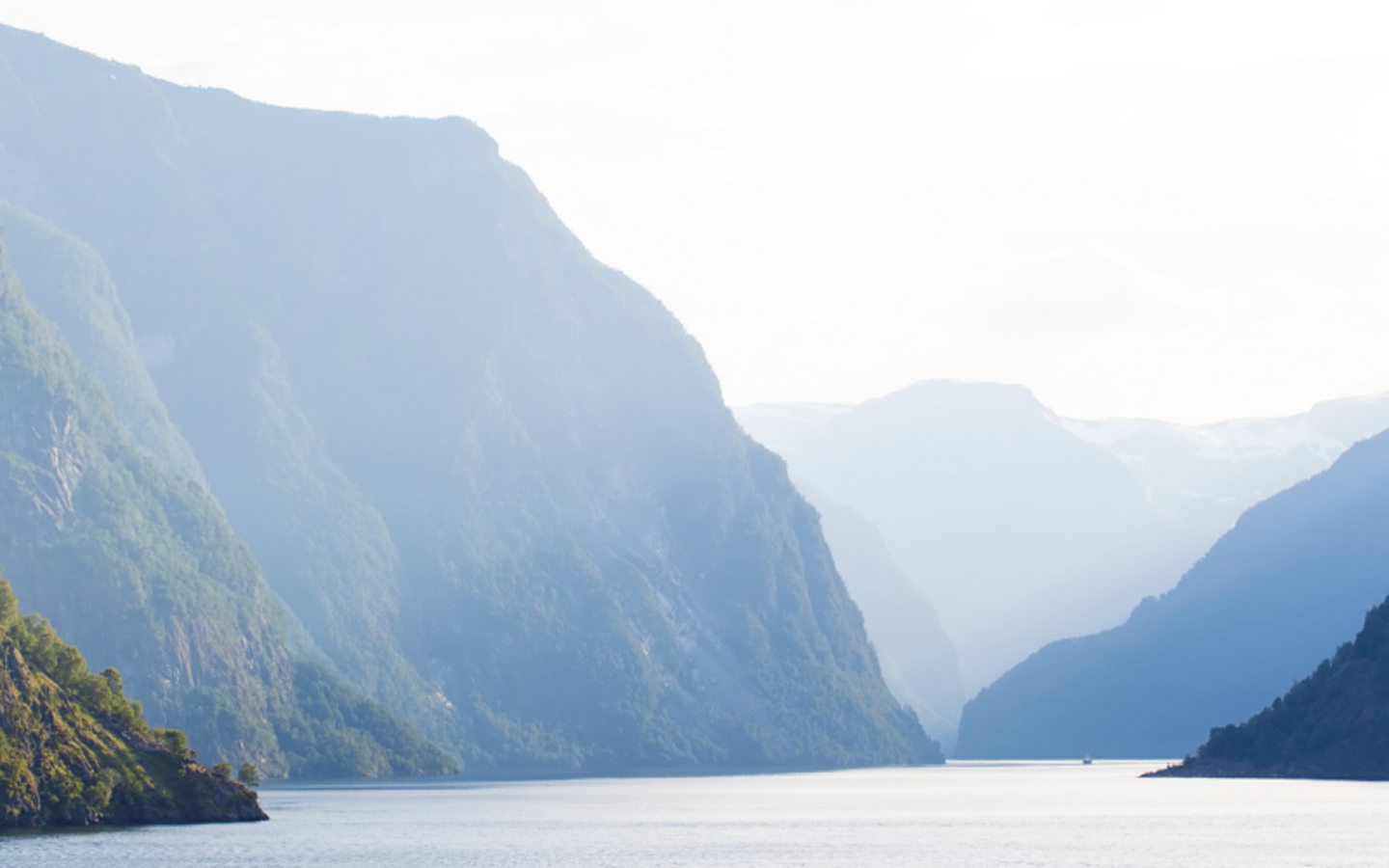
"From having to being"?
Marc Aeberhard and Thomas P. Illes on the true values of luxury travel
07/24/2024 Reading time: 4 Minutes
What constitutes the so-called new luxury in travel? What challenges determine the (post-corona) course of luxury tourism? And what opportunities are opening up for an entire industry in light of the current crises - from Covid-19 to climate change? Questions like these dominated the discussions at HOME OF LUXURY by ITB Berlin, masterfully discussed by Marc Aeberhard and his changing panelists. We were there for you.Yes, the digital version of HOME OF LUXURY by ITB also made it possible to philosophize about the paradigms of the luxury travel industry over a hot cup of coffee and to discuss the big issues of (future) luxury travel in a small but exclusive circle. And indeed, it is precisely these big issues and fundamental values that are the winds of change. And they have the potential to reshape our definition of luxury.
At its core, the question revolves around the well-known dichotomy: to have or to be? According to Marc Aeberhard, the new luxury leads us back to the predominance of the "to be" over a mere "to have". Within this concept, people - especially travelers - are "members" and no longer "masters of the universe", characterized by a certain mindfulness or even humility towards their surroundings: travel as a privilege, not a consumer good.
The specifically luxurious nature of travel is perceived - and not only for this reason - as a meaningful experience that touches the essence of the self and allows an honest examination of one's own self and one's surroundings. Our material understanding of luxury has long since been democratized, but even immaterial values such as time, space, individualization, etc. alone can no longer meet the demands of true luxury, Aeberhard continues. They are part of and, to a certain extent, already a prerequisite for an even more far-reaching, more exclusive vision of luxury, which seems to seek its fulfillment in a kind of symbiosis of meaning and sensuality.
Sense, insofar as the luxury traveler wants their experience to be meaningful and sustainable in the truest sense of the word. What they do should be meaningful for them or for the world. Sensuality, on the other hand, is to be understood as a kind of sensory luxury that allows you to get involved with the destination, nature or being in general. An actual switching off from everyday sensory overload, a relaxation from daily tensions, a slowing down of the frantic pace, a deceleration of the present. What is meant is not a snapshot-like collection of amusing experiences without regard for losses. What is meant is a meaningful experience of being with the claim to lasting impact.
Paradoxically, according to Aeberhard and his discussion partner Thomas P. Illes, it is precisely these intangible values that hold the immense potential for the design of new luxury products and the development of new luxury markets. It is up to luxury tourism and its specific possibilities to set an example here, to be aware of its exemplary effect on the entire travel sector and thus also to ensure a gradual democratization of new travel values in the sense of responsibility towards our world.
The key? A rethink on the one hand, communication on the other. Appropriate advertising and marketing measures must be taken to take people by the hand and open up these new spaces for them, the two discussion partners agree.
One example: Thomas P. Illes, cruise analyst and maritime journalist, points out two diametrically opposed approaches to the subject of cruises: one makes you forget where you are - you could just as well be anywhere else on land or water. The bar, store and other consumption options can be found more quickly in the moving city than the deck or a window that can simply be opened to allow a fresh sea breeze to flow through the room. The actual special feature of shipping, namely the immediate proximity to the sea and water, is literally lost from view.
The other approach, on the other hand, embraces precisely this special feature: the sea as a natural spectacle, its specific dynamics, the weather phenomena at sea and the proximity to the element of water are seen as an integral part, even the actual USP of the cruise experience. The focus is not on oblivion of place and self (i.e. not on merely having a cruise experience), but on reconnection with the self and its surroundings as well as being present in the experience of the world.
Illes' very illustrative example can be read as paradigmatic for a promising reinterpretation of our understanding of travel luxury. Only when we have learned, according to Aeberhard, that purely consumer-oriented tourist offers no longer satisfy the new understanding of luxury, only then will the immense potential for the entire industry that underlies this vision become apparent.



![[Translate to en:] AMADEUS Riva (c) Lüftner Cruises](/fileadmin/_processed_/d/e/csm_AMADEUS_Riva_ebdf4c2c55.jpg "[Translate to en:] AMADEUS Riva (c) Lüftner Cruises")










































![[Translate to en:] AMADEUS Riva (c) Lüftner Cruises](/fileadmin/_processed_/d/e/csm_AMADEUS_Riva_64c1995e26.jpg "[Translate to en:] AMADEUS Riva (c) Lüftner Cruises")