


Nocturnal spectacle
Star shows in the first UNESCO-certified Starlight Reserve
07/24/2024 Reading time: 2 Minutes
While even the most luxurious hotel has to make do with five stars, the island of Palma can offer billions of them. Every now and then, one falls - there are particularly many during the so-called Perseids showers between July 17 and August 24. At their peak on the night of August 12-13, up to 110 shooting stars can be seen per hour. Fans can look forward to excellent stargazing conditions this year: the light of the moon will not outshine them. Speaking of conditions: the Canary Island of La Palma is investing heavily in astrotourism and is an ideal place for all astronomy fans.Meteorite showers and more
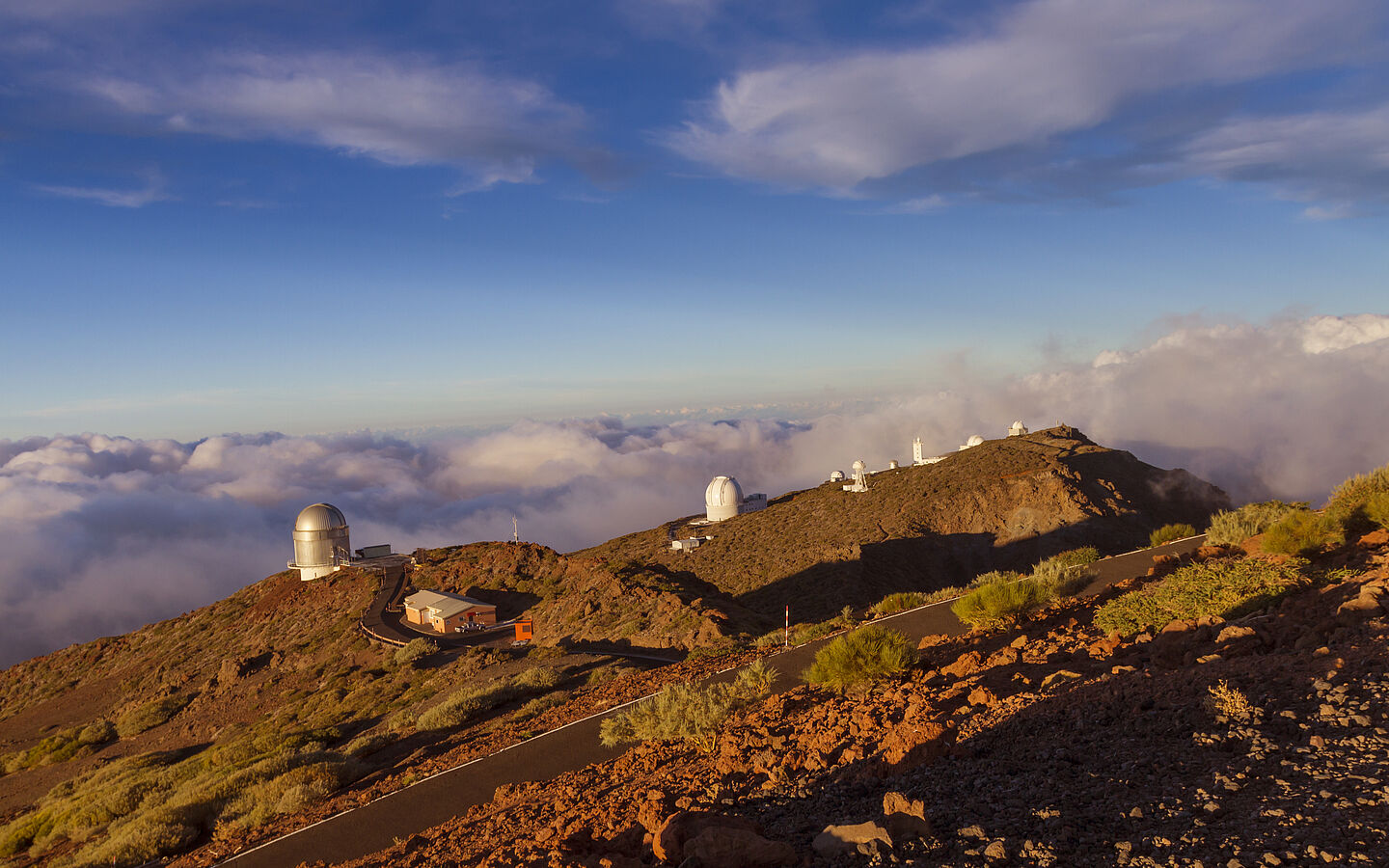
The geologically youngest Canary Island has the best conditions for a particularly clear night sky. Its altitude of often over 2,000 meters plays a role, as does the "sky law" passed in 1988, which prohibits aircraft from flying over the island. Another contributing factor is the special street lighting, which ensures that light pollution is kept to a minimum. All these measures led to La Palma being officially certified as the first Starlight Reserve by UNESCO in 2012. A lot has happened since then. Numerous astronomical viewpoints have been created, as well as paths and signage. Most hotels provide guests with telescopes for stargazing at night. A visitor center is soon to be built at the Roque de los Muchachos observatory, and an observatory is also planned at the Mendo viewpoint.
The Roque de los Muchachos observatory at the highest point on the island has been in operation for a long time. Thanks to one of the most extensive fleets of telescopes in the world, you can not only enjoy perfect panoramic views of the universe from here, but also take in the gigantic Caldera de Taburiente volcanic crater. The Instituto de Astrofísica de Canaris is one of the world's best-equipped centers for astronomical research for scientists from all over the world.
Further information: www.starislandpalma.es/de/





![[Translate to en:] AMADEUS Riva (c) Lüftner Cruises](/fileadmin/_processed_/d/e/csm_AMADEUS_Riva_ebdf4c2c55.jpg "[Translate to en:] AMADEUS Riva (c) Lüftner Cruises")













































![[Translate to en:] AMADEUS Riva (c) Lüftner Cruises](/fileadmin/_processed_/d/e/csm_AMADEUS_Riva_64c1995e26.jpg "[Translate to en:] AMADEUS Riva (c) Lüftner Cruises")