


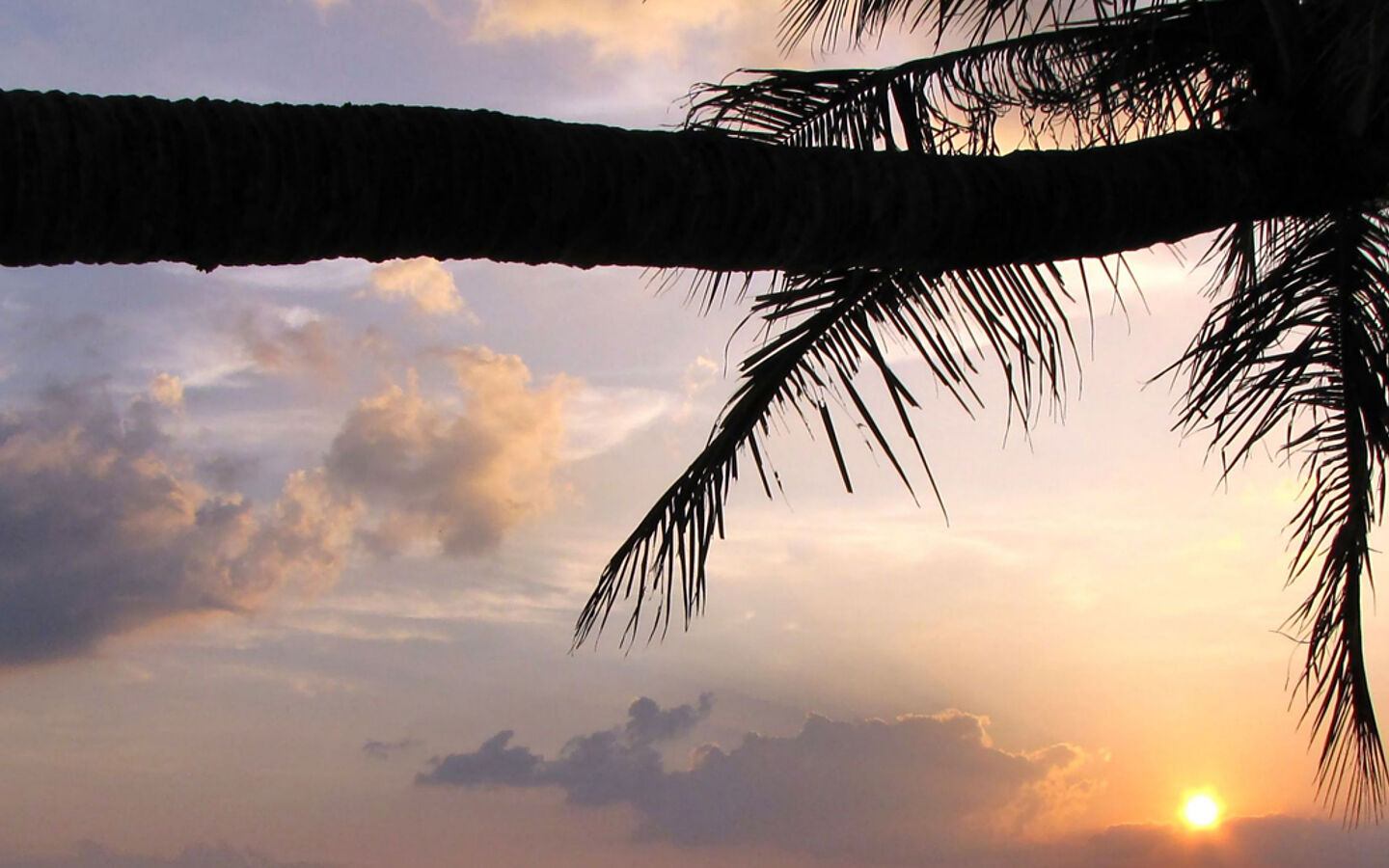
Koh Samui
Just 40 years ago, Koh Samui was discovered by Western tourists. The miles of snow-white sandy beaches initially attracted mainly hippies and globetrotters to the tropical paradise. When the airport was built in 1988, the package tourists arrived. At the time, many feared the total demise of the unspoiled natural environment, but the pessimists were only partly right. In the meantime, around 1.1 million tourists visit every year. And because Koh Samui was not affected by the tsunami disaster on December 26, 2004, which devastated large parts of Thailand's south, the number of tourists has even increased considerably.
The big boom in recent years has changed the island - but in many ways for the better. The famous and infamous nightlife area on Chaweng Beach - Koh Samui's tourist center on the east coast - is still as lively as it was ten years ago, with street vendors, mobile food stalls, massage studios, booming disco beats and ladyboys courting suitors - but some of the cheap beer bars with pink neon signs have been replaced by stylish restaurants and cocktail bars.
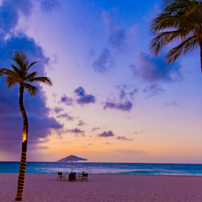
Koh Samui is suddenly chic. For example, it is now increasingly being used as a weekend getaway by the wild young royals of the Thai monarchy. A very similar impression is created by the accommodation: of course you can still find them, the huts on the beach without air conditioning for a ridiculous price - but now many exclusive resorts have also settled here. Most of them are in the north of the island, where life is still as idyllic as it was before the tourist conquest and in the evenings you can only hear the waves of the sea or the singing of exotic birds.
Small island with a great climate
With its 274 square kilometers, Koh Samui is not even half the size of Ibiza. To date, just ten percent of the island has been populated. The 40,000 islanders live in three dozen villages, which are often no more than a handful of stilt houses without walls scattered under palm trees. The capital Nathon is by far the largest settlement with 5,000 inhabitants. In the right spot, it is therefore still no problem to claim a 100-meter stretch of beach all to yourself, even in the high season. Thanks to a special microclimate, the island is spared the nationwide monsoon season, which peaks from August to October. Heavy rainfall can only be expected on Koh Samui in November and partly in December. The rest of the year, holidaymakers can expect sunshine, and with temperatures of around 30 degrees throughout the year, even the occasional downpours typical of the tropics are no drama.
Rites - from beautiful to strange
Visitors should not expect any major cultural highlights. One of the few "historical landmarks" is the "Big Buddha Temple" built in 1972 in the north-east of the island on the beach of the same name with a twelve-metre-high golden Buddha statue. However, you are compensated for this by the wonderful tropical nature with flat beaches, rainforest and extremely hospitable people. For example, the largely untouched Ang Thong National Park with its more than 40 islands is only a one-hour boat trip away and its countless coral reefs will make the hearts of enthusiastic snorkelers and divers beat faster.
Why Koh Samui used to be called "The Coconut Island" by the Thais is explained by the huge coconut plantations that still cover the entire island today. Before tourism, these were the main source of income for the islanders, apart from fishing. With specially trained monkeys, it was possible to harvest hundreds of the tasty and nutritious fruits per day. Today you can see this tradition for yourself at the "Samui Monkey Theatre" in the north of the island, where several monkeys have to perform tricks three times a day for the amusement of tourists.
The second island attraction, which is only partially suitable for the faint-hearted, is the Thai boxing evenings at Chaweng Stadium. Here, up to ten fighters are pitted against each other three times a week, with the youngest having only just reached primary school age. Muay Thai is the oldest martial art in the world and is still the national sport of the Thai people today. The spiritual ceremonies at the beginning of each fight alone are a very memorable experience for tourists. The boxer enters the ring and bows first in the direction of his birthplace, then to the north, south, east and west. He then begins to move to the beat of the music - a ritual, slow dance with which he tries to attract the attention of the audience and demonstrate his strength and stamina to his opponent.
A more pleasant and far less dangerous way of coming into contact with the cultural heritage of the Thais is the classic Thai massage, which is a standard service both on the beach and in luxury hotel spas: In its traditional form, it takes place clothed on a floor mat and lasts two and a half hours. Work is carried out along the body's meridians, which are stimulated by stretching or rhythmic pressure from the balls of the hands, thumbs, knees or feet. It is usually petite women who perform this extremely dynamic and powerful type of massage. How they can muster such strength seemingly effortlessly is one of the many mysteries that this wonderful island still holds for Western tourists today. It's high time to rediscover the beauty of this island in the Gulf of Siam.
Photo: © Dr.H.Hoppe (www.Photoart-Nord.com) / pixelio.de
How time flies. The former low-budget paradise of Koh Samui has grown up and managed to do what so many other island destinations have failed to do: attract luxury travelers.
Highlights
Samui Villas and Homes
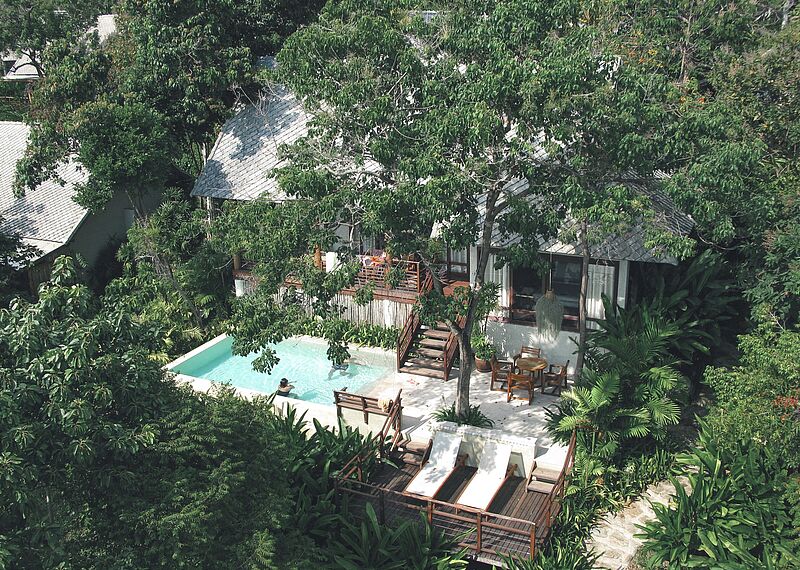
If you would like to stay in a private villa with full amenities, a private chef and house staff, there are many providers. Particularly good are the "Samui Villas and Homes", which offer a large selection of boutique, garden, beachfront or signature villas. Ideal for families with children who need their privacy and don't want to be tied to hotel meal times. The villas of various categories are scattered all over the island and can be booked for stays of at least 3 days.
www.samuivillasandhomes.com
DIPLOMATIC MISSIONS
in Germany
Thai Embassy
Lepsiusstrasse 64/66,12163 Berlin
Phone: +49 30 794810
Fax: +49 30 79481511
www.thaiembassy.de
in Austria
Thai Embassy
Cottagegasse 48, 1180 Vienna
Phone: +43 1 47833350
Fax: +43 1 4782907
E-Mail: embassy@thaivienna.at
www.thaiembassy.at
in Switzerland
Honorary Consulate General of Thailand
Löwenstrasse 42, 8001 Zurich
Phone: +41 43 447000
Fax: +41 43 3447001
E-Mail: info@thai-consulate.ch
www.thai-consulate.ch
info@thai-consulate.ch
Location
Thailand
Area
513.120 km²
Population
67.01 million
Language
Thai
Arrival
about Bangkok
Capital city
Nathon
Religion
80% Buddhists and approx. 20% Muslims
Weather
Thanks to a special microclimate, the island is spared the nationwide monsoon season, which peaks from August to October. Heavy rainfall can only be expected on Koh Samui in November and partly in December. The rest of the year, holidaymakers can expect sunshine, and with temperatures of around 30 degrees throughout the year, even the occasional downpours typical of the tropics are no drama.
Best time to travel
January to September
Climate
| Jan | Feb | Mar | Apr | May | Jun | Jul | Aug | Sep | Oct | Nov | Dec | |
| Max. Temperature | 31 | 32 | 32 | 33 | 33 | 32 | 32 | 31 | 31 | 30 | 30 | 30 |
| Min. Temperature | 24 | 23 | 24 | 24 | 24 | 25 | 25 | 24 | 24 | 24 | 23 | 23 |
| Hours of Sunshine | 9 | 10 | 10 | 10 | 8 | 8 | 7 | 7 | 7 | 6 | 7 | 7 |
| Rainy days | 8 | 4 | 3 | 5 | 9 | 16 | 15 | 16 | 15 | 17 | 18 | 11 |
Time difference (to MEZ)
MEZ: +6 Stunden, während der europäischen Sommerzeit +5 Stunden
Currency
Baht (1 Baht = 100 Stangs, 1 Euro = 52 Baht)
Visa
Entry and residence conditions
Visa-free for a stay of 30 days. Required: passport valid for 6 months, confirmed return or onward travel ticket, sufficient funds/credit card.
Vaccinations
Hepatitis A, polio and tetanus. Additionally for individual travelers typhoid. Further information at the Tropical Institute. Information without guarantee.
Restaurants Koh Samui - Our gourmet tips
You'll never go hungry on Koh Samui, that's for sure! From delicious Thai food to international 5-star cuisine, the island offers something for every taste. No matter where you come from or what kind of food you prefer, you ll find it on Samui. The choice of local restaurants, cafes, street stalls, bakeries and eateries is huge. You can even eat on the beach.
Nightlife Koh Samui - Our bar tips
From sophisticated gourmet restaurants to the famous full moon parties, Koh Samui has some of the best nightlife in Thailand. Discos, clubs, concert halls, beer bars, classic Thai dancing, mud wrestling and even weekly Thai Lady Boxing, as well as a wide selection of excellent restaurants scattered around the island.
Koh Samui activities - golfing and diving
From mini golf to real golf. The Samui golf scene is on the move. The island's first and only professional standard golf course opened in 2003 and offers a beautiful location in the hills above Maenam. If you prefer something less challenging, there are also mini golf courses.
Sightseeing Koh Samui - The most beautiful places on the island
Koh Samui is a residential and working island with distinctive local customs and traditions. The first settlers to land here were Chinese traders and Muslim fishermen, and these two groups still inhabit the island peacefully alongside their Thai cousins. Local markets such as the one in Lam Din, behind Chaweng, the Nathon fresh food market and the Hua Thanon fishing village are perfect places to get an authentic taste of local life. Tourism is the main source of income on the island of Koh Samui, but you will still find a proud and vibrant local culture.
Thai festivals are an important part of daily life on the island of Koh Samui. The bigger celebrations are Chinese New Year in February, Songkran (Thai New Year) in April and Loi Krathong (Festival of Lights) in November. These all include processions, temple festivals, food fairs and live performances;
Shopping on Koh Samui - Typical souvenirs
You shouldn't expect luxurious stores or appealing shopping streets on
Koh Samui should not be expected. If you have such cravings, you should plan a stop in
Bangkok should be planned. In the larger towns on the island there are mostly
typical souvenir stores and a few street vendors selling clothes.
clothes. That's it. Even the new open-air shopping
open-air shopping mall at the airport could not change much.


![[Translate to en:] AMADEUS Riva (c) Lüftner Cruises](/fileadmin/_processed_/d/e/csm_AMADEUS_Riva_ebdf4c2c55.jpg "[Translate to en:] AMADEUS Riva (c) Lüftner Cruises")










































![[Translate to en:] AMADEUS Riva (c) Lüftner Cruises](/fileadmin/_processed_/d/e/csm_AMADEUS_Riva_64c1995e26.jpg "[Translate to en:] AMADEUS Riva (c) Lüftner Cruises")