


Home
Friends of the Caribbean
Curaçao: Where the Caribbean bathes in color
Life is a Beach
11/07/2025 Reading time: 5 Minutes
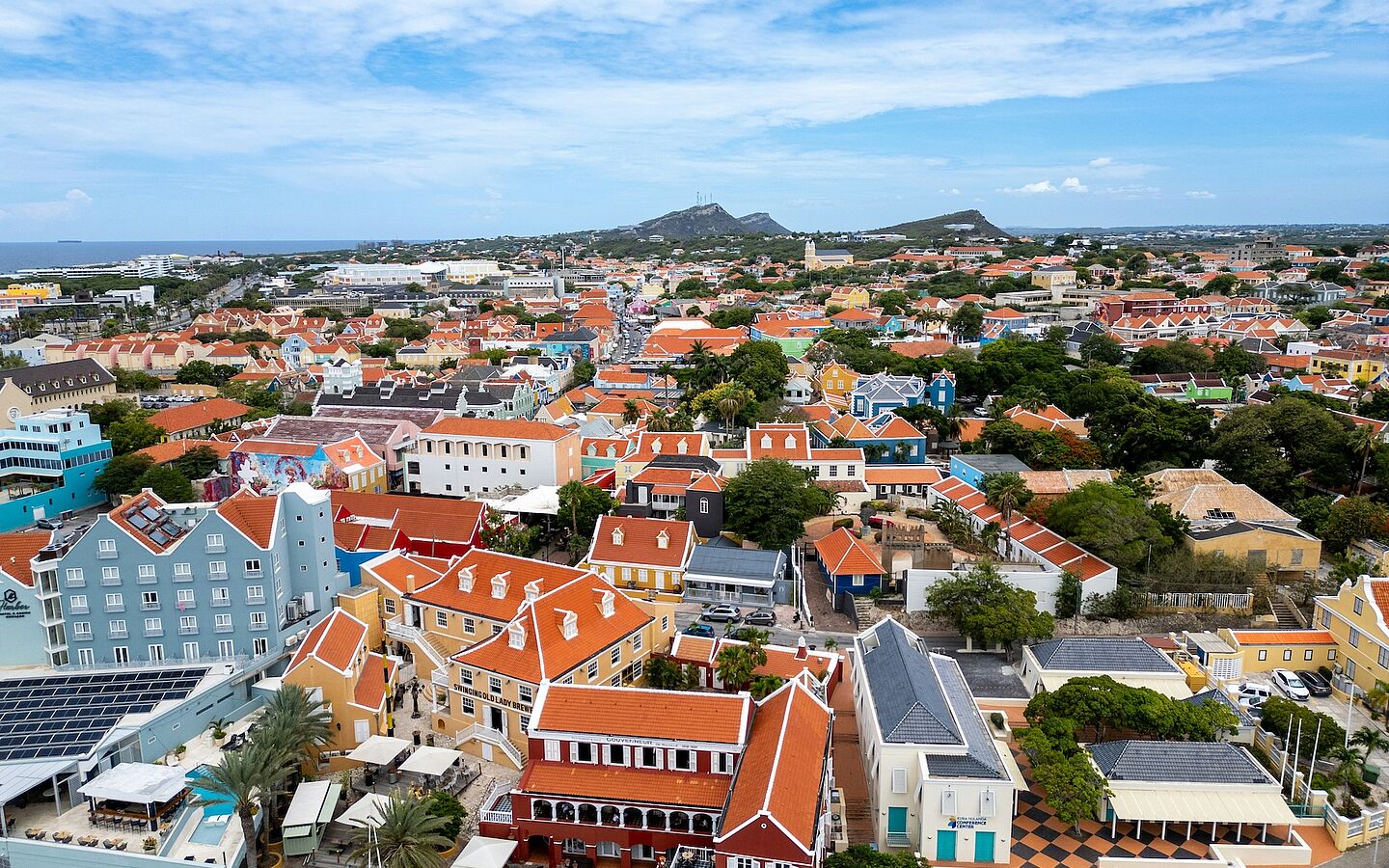
Turquoise-blue sea, pastel-colored colonial houses and gaudy street art: Curaçao's blaze of color never fails to enchant even Caribbean connoisseurs.As soon as I glide into the warm, crystal-clear water of Mambo Beach, I lose all sense of time while snorkeling. A yellow-purple king fairy bass floats gracefully past, a shoal of yellow-black striped sergeant majors changes direction in fright when
a child's foot kicking at the surface of the water. A shimmering red and silver parrotfish nibbles on the coral of the artificial rock wall that stretches along the one-kilometer-long beach. Such a natural stretch of coastline in the middle of a Caribbean capital is rare. From here, it is only 15 minutes to the old town of Willemstad, which has been declared a UNESCO World Heritage Site. With its 300-year-old, finely chiseled gabled houses, the city is reminiscent of Amsterdam - only the houses here are much more colorful. The Queen Emma Bridge connects the historic districts of Otrobanda and Punda and shines in rainbow colors in the evening - a perfect backdrop for an "instagrammable moment".
But Curaçao has much more to offer. A rental car takes you to some of the 37 beaches. You won't find endless coastlines here; the island relies on small, pristine bays, often hidden behind limestone cliffs. Cas Abao is one of these oases - with sun loungers, shady gazebos and a beach bar. An ice-cold Blue Lagoon cocktail tastes particularly good under the palm trees. In addition to white rum and lemonade, the famous Blue Curaçao liqueur is of course a must. It is made from the peel of the local Lahara oranges, which are too sour to eat but perfect for drinks. The fact that it is bright blue is thanks to a colorant - a relic from the 1980s when drinks were supposed to be as neon-colored as possible.
700394

700394

A completely natural blue awaits visitors in the Blue Room Cave, an underwater cave around 20 minutes north of Cas Abao. Snorkelers dive through a narrow gap into a rock formation in which a dome has formed over millions of years. Underwater photographers love the cave because they can capture the whole spectrum of blue and green tones. A day trip takes me by catamaran to Klein Curaçao, an uninhabited island 25 kilometers off the main island. Today the sea is calm and warm. Before relaxing on one of the whitest beaches in the Caribbean, I walk to the red lighthouse from 1850, which stands alone in the middle of the island. It once warned ships of reefs - not always successfully, as the stranded wrecks on the shore prove. Sea turtles have also discovered the island for themselves: both hawksbill and green turtles nest here. While snorkeling, I'm lucky and come across one that seems to be waving its flipper at me.
But the island also has a dark past: during the colonial era, Klein Curaçao served as a quarantine site for slave ships from Africa. Today, the history of the Dutch West India Company is reappraised in several museums. Slavery on Curaçao lasted until 1863 - 30 years longer than in the British colonies. The Kurá Hulanda Museum in the Otrobanda district documents this chapter particularly vividly. The miniature of a slave ship illustrates the cruel conditions under which the people were transported. The museum is embedded in a restored ensemble of colonial buildings, with cobbled alleyways and winding courtyards.
There I discover the store "Kas Lila", which is run by young people and offers fashion by local designers - from colorful caftans to T-shirts. I decide on one with my vacation theme:
Follow the Sun
I experience Curaçao's culinary delights at Rustiq, a restaurant with an earthy ambience. Deep-fried balls of chopped snail shells are served with an okra soup that reminds me of New Orleans - with herbs, spices and pieces of barracuda. There is even iguana stew on the menu, but I prefer to skip it. Willemstad is also a hotspot for street art. Around 750 brightly painted houses characterize the cityscape. In the Pietermaai district, the "Soho" of the island, murals glow in all colors. At the Avila Beach Hotel, I discover Curaçao's first "augmented reality" mural: green parrots and pink flamingos come to life virtually with my smartphone. Whether real or digital - Curaçao is always colorful.
Hotels
Sandals Royal Curaçao
The adults-only all-inclusive resort, opening in 2022, is located in the prestigious Santa Barbara Estate and spans 44 picturesque acres. It offers 351 rooms and suites spread across 18 buildings. Highlights include culinary diversity with 8 exclusive restaurants, the innovative island-inclusive dining program for butler suite guests, Sandals' first two-story infinity pool complex and a wide range of leisure activities such as PADI diving, water sports, spa and entertainment - all included. The transfer from the airport is also included and takes around 40 minutes.
www.sandals.com
Baoase Luxury Resort
This intimate beachfront retreat offers just 23 spacious villas and suites and was named the third best resort in the Caribbean by Travel + Leisure magazine in 2024. The accommodations combine Asian elegance with Caribbean flair: king-size beds, open terraces, lush gardens, private pools and a zen-like atmosphere characterize them. Guests enjoy a high level of personal service, including spa, yoga and Pilates classes, hot tub and access to their own idyllic stretch of beach - ideal for relaxing and snorkeling.
www.baoase.com
Avila Beach Hotel
Charming and historic: This resort is located in Pietermaai in the heart of Willemstad - on the grounds of a former governor's villa from the 18th century. It is particularly popular for its warm atmosphere and central location. The Avila has two small beaches, a spa with aromatherapy, an outdoor pool and comfortable rooms with balconies. Diving packages can be booked in cooperation with renowned providers.
www.avilabeachhotel.com
Art Hotel Curaçao
This elegant, adults-only design hotel is located in the hip Pietermaai district and was designed by hip studio Piet Boon - for guests looking for modern luxury paired with style. It offers 32 rooms, a restaurant called The Lemon Tree, a spa, outdoor pool, fitness center and even its own private beach area. Its central location makes it the perfect base: just a few minutes' walk from Queen Emma Bridge and the city center, making it ideal for cultural and beach combos.
www.arthotelcuracao.com
further information: www.curacaotouristboard.com
700394

700394



![[Translate to en:] AMADEUS Riva (c) Lüftner Cruises](/fileadmin/_processed_/d/e/csm_AMADEUS_Riva_ebdf4c2c55.jpg "[Translate to en:] AMADEUS Riva (c) Lüftner Cruises")








































![[Translate to en:] AMADEUS Riva (c) Lüftner Cruises](/fileadmin/_processed_/d/e/csm_AMADEUS_Riva_64c1995e26.jpg "[Translate to en:] AMADEUS Riva (c) Lüftner Cruises")