Mr. & Ms. Connoisseur | #13
Stranded, fleeced, adored: This time, we observe cruise passengers disembarking in Cambodia, grow irate over Lufthansa’s relentless cost-cutting, and discover Istanbul’s embrace of modernity at the Hilton Bosphorus. For Santa, there is a cookbook with an Alpine soul.
Stranded in Cambodia
The Cruise Crash
Have you heard of Sihanoukville? Should you? Probably not. What was once a fairly laid-back coastal and backpacker enclave was transformed by Chinese investors from the 2010s into a concrete and casino wasteland (“Little Macau”). Today, the cityscape is dominated by abandoned construction sites and dilapidated high-rises. Crime, gambling, and scam syndicates have taken over.
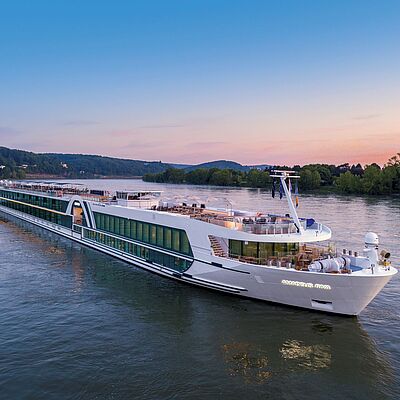
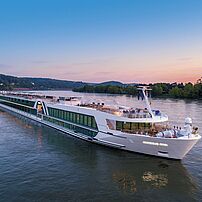
That is precisely where the cruise ship “Odyssey” recently disgorged its passengers—there is no other way to put it. The guests had actually paid for their trip through 2027—but due to sharply rising fuel costs, the voyage was halted. The operator, Villa Vie Residences, had planned to take 200 passengers and 150 crew members on a tour of seven continents. Long-term guests had paid as much as 400,000 euros for suites—even as permanent residences—aboard the vessel. In an effort to conserve fuel, the “Odyssey” had already been spending more time in ports than at sea and was sailing more slowly than planned. Eventually, however, the voyage ground to a halt—final stop: Sihanoukville. Here, the crew and passengers were disembarked without further ado. It is not known whether the exasperated guests recouped their losses in Cambodian casinos. It goes without saying that one shouldn’t take chances when choosing the right cruise line, and that Connoisseur Circle, with its 20 years of expertise, helps separate the wheat from the chaff.
700394

(Not) something to be proud of.
Customers are left to foot the bill—the crane’s erratic flight
.
Lufthansa has also embarked ona
route into the unknown—specifically targeting its most loyal customers: frequent flyers, Senators, and HON Circle Members. Lufthansa CEO Carsten Spohr is now taking a heavy-handed approach toward his valuable frequent flyers. The surcharges for Lufthansa award flights—already exorbitant compared with other loyalty programmes—have been raised for the fourth time in a year. Since the end of October, Senators have no longer been able to make free reservations on long-haul flights booked under the Economy Light fare. A surcharge of 400 to 600 euros applies—even for those who presumably spend the most money with LH: HON Circle Members—for the Allegri Business Suite. “Privacy Seats” and “Extra Long Beds” have carried a 170-euro surcharge since September; the more comfortable bed for stretching out now comes with an additional fee for Senators. If a competition for sheer ingenuity had broken out within Lufthansa over how to most effectively annoy long-time loyal customers, the Crane couldn’t have hit the mark any more precisely. Yes: Germany now accounts for only 20 percent of the group’s revenue. Yes: Location, takeoff, landing, and security costs are too high, and German taxes put the airline at a disadvantage compared to other carriers. But does that really mean they have to loudly proclaim that they’re now cutting corners even on cabin cleaning (which was already obvious to us on recent flights)? Must we truly gauge just how much passengers will endure if restrooms are cleaned only upon request and trash from seat pockets is removed as needed? As DER SPIEGEL reported, must the carry-on luggage of Senators and HONs be remeasured at the gate down to the nearest one or two centimeters? Ryanair sends its regards.
When coupled with the drastic reduction in flight frequencies and routes—especially within the domestic network—scant attention is being paid to the most lucrative target group for a premium airline. Earning status with Lufthansa, of all carriers, may soon become a thing of the past. Whether frequent flyers maintain their status out of appreciation or out of necessity may not matter in the short term. In the long run, such parsimony is not a foundation on which a premium airline can thrive.
700394

Beloved.
The Hilton Bosphorus—where Istanbul invented modernity
. A hotel as a grand stage, a setting for deep emotions, and a “must” for high society: Since 1955, the Hilton Istanbul Bosphorus has told a story of new beginnings, sophisticated elegance, and a determination to catch up with Western modernity. A touch of melancholy sets in if you’re familiar with Orhan Pamuk’s books and travel through them. Hardly anyone has captured the atmosphere of those years more vividly than the Nobel Prize-winning author. In his novel *The Museum of Innocence*, the Hilton becomes the setting for a fateful engagement party: Kemal, the son of Istanbul’s wealthy bourgeoisie, celebrates his engagement to Sibel here, even though his heart has long belonged to the beautiful Füsun. Amid social traditions, champagne, and unfulfilled longing, the conventions of a privileged world shatter. At the real Museum of Innocence in the Çukurcuma district, historic Hilton postcards preserve the memory of this vanished society—and of the fragility of happiness. Literature, hotel history, and personal memory merge into a fascinating chapter of Istanbul’s cultural heritage. And the Hilton was—and remains—a part of it.
When Conrad Hilton opened his first hotel outside the United States on June 10, 1955, it was more than a glamorous debut; the new luxury property became an architectural manifesto for a Turkey eager to align itself with Western modernity. Hollywood stars, industrialists, and diplomats attended the opening—big money on a grand stage. Olivia de Havilland made the journey; later, Grace Kelly, Sophia Loren, and Louis Armstrong were among the illustrious guests. James Bond made an appearance: in 1963, the hotel was featured in “From Russia with Love.” And when Muhammad Ali announced his retirement at the Hilton in 1976, the hotel had long since become an international institution: over the decades, it had evolved into the city’s social hub. Here, weddings were celebrated, business deals were negotiated, and the Western way of life was experienced. In 1972, Cloud 9—the city’s first nightclub—opened its doors. To this day, a touch of history can be felt in every corner of this beautifully renovated hotel, which never denied its Ottoman past but looked to the future with curiosity. Brilliant.
https://www.hilton.com
700394

700394

700394

700394

700394

700394

700394

Spotted.
Under the Christmas tree: Recipes with
soul. Cooking with regional and seasonal ingredients and then enjoying the results: This isn’t just a catchphrase at the Culinarium Alpinum in Stans, Switzerland—it’s the signature statement of this extraordinary hotel. We also highly recommend the new book *Culinarium Alpinum – Recipes with an Alpine Heart and a Regional Soul* because, in addition to creative and easy-to-follow recipes for all four seasons, it focuses on the most important aspect of enjoyment: the people behind it. Their passionate work in the fields and alpine pastures, in gardens, bakeries, cheese dairies, and fisheries of Central Switzerland. And those professionals who make it possible to cook with high-quality, regional ingredients and serve them to their guests.
Across 200 elaborately designed pages, the ideas of Executive Chef David Zurfuh and his kitchen team come to life: “An invitation to cook along, think along, and savor together.” The fact that Culinarium Alpinum’s personal relationships with the producers enrich the book is what makes this illustrated volume so compelling. Through authentic photographs and evocative background stories, we discover, for example, how Martin Waser smokes his pike in Beckenried on Lake Lucerne; how the Zumbühl family in the Engelberg Valley tends to cows, Buren goats, and rare Alpine pigs from birth through processing; and how Alex Lussi and Reto Hurschler cultivate their Gotthard mushrooms in caves in Stansstad.
Beda Röthlisberger, deputy executive chef, explains why a book can also bring joy to its authors: “Perhaps because our daily work is so fleeting. In the evening, once the guests have gone home satisfied and full, hardly anything remains to remind us of the many hours of work. A cookbook preserves memories, ideas, and experiences that can be passed on and relived time and again.”
Culinarium Alpinum – Recipes with an Alpine Heart and a Regional Soul. Hardcover 208 pages Odermatt
700394

700394

700394

700394

700394

700394

700394

Publishing