



David Ruetz, Head of ITB Berlin in an interview with Connoisseur Circle
Director of the world's largest travel trade fair expects the industry to recover by 2023 at the latest
02/22/2021 Reading time: 10 Minutes
ITB is the world's most important showcase for the travel industry and is regarded as a reliable barometer of industry sentiment. You and your team have your ears to the market 365 days a year - you are in constant contact with partners around the globe. What moves your exhibitors more in these weeks: despair, confidence or uncertainty?
The effects of the global pandemic have undoubtedly led to a serious crisis in the global tourism industry. Nevertheless, we sense a great deal of confidence in the market, which is also supported by the start of vaccinations in many countries. Vaccination at least gives the industry a much-needed perspective - even if the start of vaccination is still bumpy, as in Germany. We can also see this confidence in the more than 2,800 exhibitors from 120 countries who have registered for our ITB Berlin NOW platform so far. In addition to exhibitors from abroad, the 16 German federal states have already registered. The ITB Buyers' Circle - a group of 1,000 top buyers - is also traditionally an important indicator for us. We have received a similar number of applications for it as in previous years. This is a strong indication that there is noticeable confidence in the market and in our trade fair concept. We are also currently expecting the main exhibitors at ITB Berlin NOW to bring many more sub-exhibitors with them. We are currently in the onboarding phase, in which exhibitors and co-exhibitors are setting up their brand cards and maintaining their profiles. We are excited to see how many exhibitors will ultimately use the virtual opportunities for networking, business, content and news. We are still accepting registrations from exhibitors until March 8.
According to Lufthansa CEO Carsten Spohr, it will be "many years" before his airline returns to its former strength. Do you share his assessment for the entire global travel industry?
The global travel industry has already proven its strength and ability to innovate in many crises. Although the coronavirus pandemic has certainly led to an existential slump worldwide, I am convinced that the industry will recover in large parts by 2022 or 2023 at the latest. The desire to travel and people's innovative spirit will certainly contribute to this. The desire to travel again has grown among many of us worldwide after the months of lockdown. Much now depends on scientific progress and cooperation worldwide.
Even without looking into the crystal ball: will the pandemic - should it be over - fundamentally change people's travel behavior in the medium to long term?
People's travel behavior has changed during the pandemic. This is evidenced by the boom in travel to Germany and the need for more distance, which has benefited vacation home providers, for example. Together with the data and market research institute Statista, ITB has published a study that predicts that the travel and tourism market is set to recover by 2023. The desire to discover foreign countries and immerse themselves in other cultures will remain with many people. I therefore do not expect a fundamental and lasting change in travel behavior. Another factor that needs to be taken into account is certainly the future economic development worldwide. Possible financial losses among consumers could influence travel behavior.
Luxury tourism has experienced a real boom in recent years: hotels and resorts with offers for the particularly discerning clientele have practically sprung up in almost all relevant travel destinations. Your assessment: Is this "top" market saturated? Or will this market segment continue to grow?
We continue to see great growth potential in the luxury tourism market, which is why we are offering the "Home of Luxury by ITB" segment at ITB Berlin NOW. This is precisely where these topics will be discussed. The desire for distance and seclusion was fulfilled in the luxury segment in many cases not only before, but also during the pandemic. Many hotels and resorts are already very well positioned in this respect. In addition, luxury holidaymakers are often not affected by the economic impact of the crisis to the same extent as, for example, skilled workers. We therefore see good growth opportunities for this market segment in the future.
With the "Home of Luxury by ITB", you wanted to devote more attention to luxury tourism even before the pandemic broke out. What changes do you expect from this segment?
A paradigm shift was already emerging in the luxury segment before the coronavirus pandemic. Luxury is increasingly defined in immaterial terms. Instead of opulence and abundance, self-discovery, simplicity and authenticity are in demand. This trend is currently intensifying. With the "Home of Luxury by ITB", we are also creating a (now digital) place for the global luxury industry in 2021 to talk about the needs of top-end travelers and how providers can successfully tap into this segment. Incidentally, this area is called "Café" on our platform.
ITB Berlin was canceled for the first time in 2020 and will be organized as a virtual exhibition in 2021. Hand on heart: Will we experience an ITB Berlin as we remember it? All halls fully booked and in some cases even with waiting lists - and with visitors crowding the exhibition grounds and generating business in the capital's hotels, restaurants and stores? Is the familiar format "old school" and therefore dead? Is it "business as usual" or will ITB Berlin have to reinvent itself?
For next year, we are planning a physical ITB Berlin live on site from March 9 to 13, 2022, and at the same time we are keeping all options open to expand ITB Berlin with an additional online event in terms of content and time. For us, hybrid trade fair planning means combining the essential building blocks of a real and digital industry event in the best possible way - this includes ITB Berlin's character as an international marketplace and think tank on the one hand and its importance as a networking platform, news source and catalyst for business networks on the other.
The good thing about this solution is that it gives all target groups the best possible opportunity to take part in the trade fair and congress experience, both participants on laptops in remote corners of the world and visitors on site at our exhibition grounds - regardless of where they are. The opportunities for this are all the more diverse if we supplement the business and personal encounters online by expanding them in terms of content and time.
We are now seizing the opportunity to make lasting changes to the concept of the world's largest travel trade fair and lead it into a new era. For example, a digital launch of the trade fair with a subsequent physical concept is conceivable.
ITB is not only present in Berlin, but has also firmly established itself as the leading trade fair for the travel industry with ITB Asia in Singapore and ITB China in Shanghai. ITB India in Mumbai is also in preparation. Virtual or traditional - what format will the upcoming trade fairs in Asia take? What do your colleagues from the region tell you? And - when do you expect travelers from Asia to return to Europe/Germany?
At ITB Asia in Singapore, which takes place next October, we will be testing the combined concept of a digital kick-off followed by a physical trade fair. ITB India in Mumbai, on the other hand, will be held purely virtually from April 7 to 9, 2021. There is also a great sense of optimism among our partners in Asia. Before coronavirus, the number of travelers from Asia to Europe and Germany was growing steadily. After the successful premiere of the ITB China Industry Meetup Events last year, we will be holding an ITB China Special Edition in 2021 - a two-day business event from May 7 to 8 in Beijing that combines trade fair and congress elements. The regular ITB China will be postponed to November 24-26, 2021, together with the ITB China Conference in Shanghai. I am convinced that Asian travelers will soon return to international and intercontinental travel as soon as circumstances allow - even if not at the same level as before the coronavirus crisis.
Should ITB Berlin take place next year in 2022 as a hybrid event or as a classic event again: will it remain a weekend for the general public? Or has this offer also become obsolete?
This year, due to the current very dynamic situation, we have opted for a purely virtual B2B trade fair - exclusively for exhibitors, trade visitors and the media. For consumers, however, our partner event, the Berlin Travel Festival, will take place again at the same time - also in purely digital form. At the same time as ITB Berlin NOW, online travel documentaries will be streamed on the festival website every evening from 7 to 10 p.m., providing travelers with fresh inspiration for their next vacation trip. It's still a little too early to make any concrete forecasts for 2022. But of course we would like to welcome the wider public back to our exhibition halls under the radio tower in the future.
Your assessment:
a) Will some kind of proof of vaccination prevail in international travel?
In order to ensure the greatest possible safety for travelers and employees and at the same time prevent possible closures due to corona outbreaks, it is quite conceivable that a large part of the industry will rely on proof of vaccination in the future. But it's not that new. In many parts of the world, proof of a yellow fever vaccination is already required. In many places in East Africa, a vaccination certificate is as much a part of traveling between countries as a passport.
b) Will the pandemic - as predicted by futurologists - herald the "swan song" of mass tourism? Keyword: Wherever crowds of people come together, it is likely to remain unpleasant and difficult in the long term. A pandemic is etching itself into people's memories and behavior, creating new 'customs and traditions' - and a little more distance is certainly part of this.
The pandemic also brings with it the opportunity to reinvent the concept of travel and vacations. Even before coronavirus, overtourism and global warming have shown us urgently that we need to change our attitude towards travel. Even though the future of our industry will be different, it won't necessarily be worse. Due to the global pandemic, many vacation destinations have so far remained very manageable to empty. At the ITB Berlin Convention, experts will also discuss the extent to which this unwanted forced break will affect or even change tourism worldwide.
c) Futurologists also assume that travel will no longer be a matter of course in the future according to the motto: travel for every class and every budget. There will be a division into "mobile and immobile population groups".
Travel will become much more valuable again. By that I don't just mean the price of a vacation. The importance of travel as a source of experiences and memories has increased during the pandemic. We have all experienced what it means when this freedom is suddenly restricted. Even if the choice of destination and the organization of the vacation has always depended heavily on the respective budget, I therefore believe it is important that all population groups continue to have the opportunity to travel.
A personal question: Where will your first trip take you and your family when travel restrictions are lifted?
First of all, we will visit my parents on Lake Zurich and then take a long-planned trip to the Jungfraujoch.

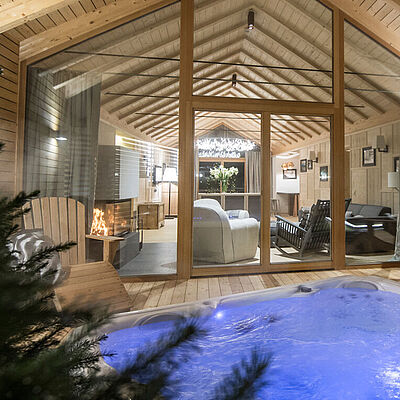
![[Translate to en:] AMADEUS Riva (c) Lüftner Cruises](/fileadmin/_processed_/d/e/csm_AMADEUS_Riva_ebdf4c2c55.jpg "[Translate to en:] AMADEUS Riva (c) Lüftner Cruises")





































![[Translate to en:] AMADEUS Riva (c) Lüftner Cruises](/fileadmin/_processed_/d/e/csm_AMADEUS_Riva_64c1995e26.jpg "[Translate to en:] AMADEUS Riva (c) Lüftner Cruises")