


Tuscany
But artists such as Konstantin Wecker and Sting have also settled in Tuscany, at least temporarily.
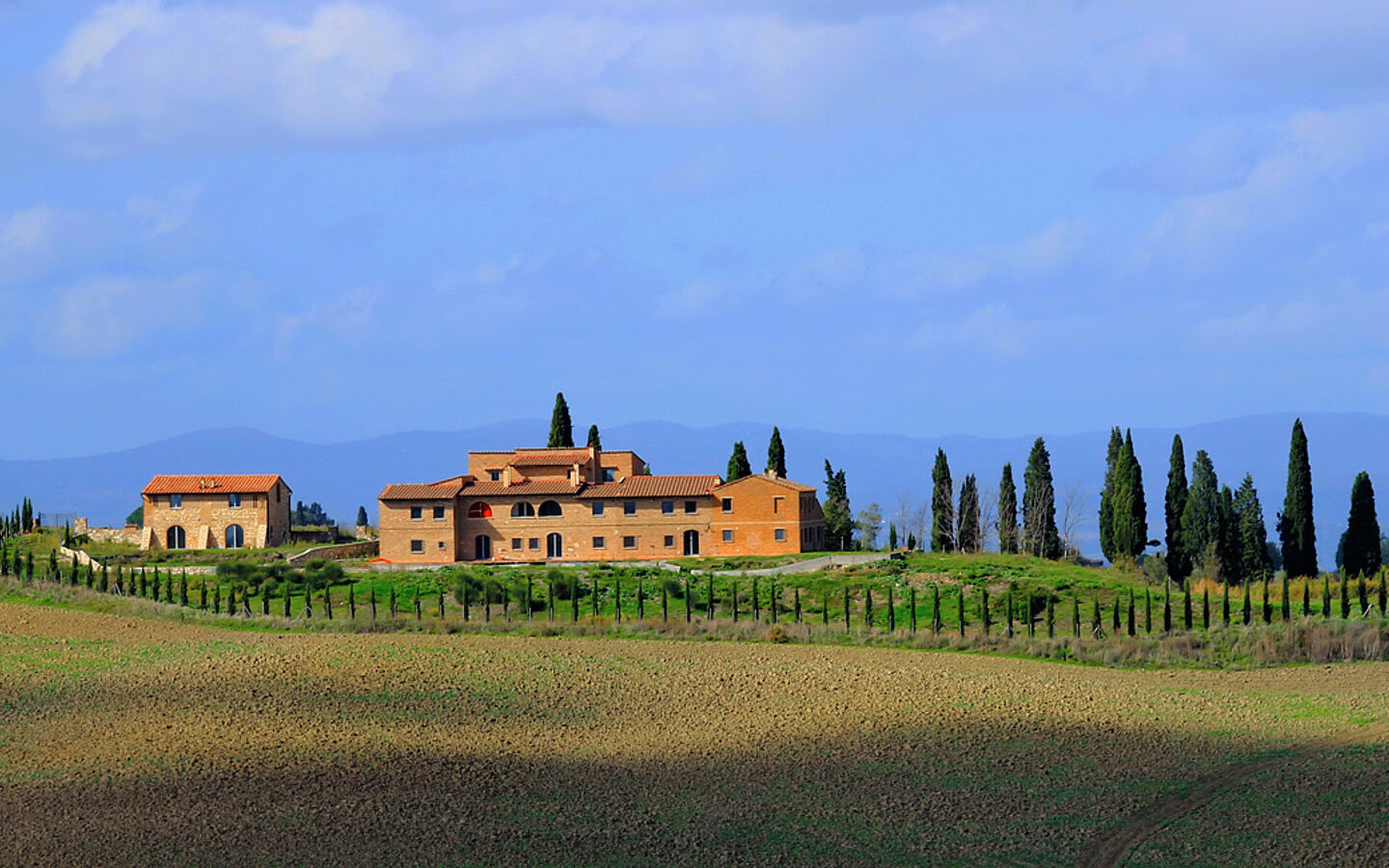
And thousands of ordinary people have made the pilgrimage. To the delight of the luxury hotel industry, Americans in particular have developed a special soft spot for "Tuscany". And for more than one good reason: the climate is mild, the landscapes with medieval towns, rolling hills, cypress avenues, olive groves and vineyards are picturesque. The central Italian region, the size of Mecklenburg-Vorpommern, forms a fascinating dream backdrop for the Farniente. This includes world-famous wines, excellent food, outstanding cultural assets and friendly people. But Tuscany is much more than the seemingly painted picture of a country estate with cypresses on a green hill. Who knows that the region also includes the Apennines, where you can go skiing in the Val di Luce ski area in winter? The wide, miles-long sandy beaches of Lido di Camaiore and Forte dei Marmi or the island of Elba do not necessarily represent the typical image of Tuscany. The Monte Argentario peninsula with its rocky coastline and the most beautiful golf course in the southernmost tip of the region is also little known here. In August, "tutto Roma" meets on the beaches in the area. Not forgetting the Maremma, the wild side of Tuscany, also in the far south. Once a malaria-infested marshland, the area was drained in the 19th century and now lives from agriculture and viticulture, and the national park is particularly popular with hikers.
The gently rolling hills of Chianti between Florence and Siena, with its restored castles, vineyards linked by cypress-lined avenues and grazing Chianina cattle, could well be considered the epitome of Tuscany. Landscapes such as the idyllic Crete Senesi south of Siena and medieval towns with winding alleyways on steep tufa cliffs such as Montepulciano, Montalcino or Pitigliano with its Etruscan archaeological sites have also shaped our idea of picture-book Tuscany. The imposing San Gimignano (UNESCO World Heritage Site), often referred to as the "Manhattan of the Middle Ages", and the Puccini city of Lucca also offer pure Tuscany. And time and again you come across picturesque, charming places where time seems to have stood still despite the tourism. If you're looking for authentic Tuscany, stand at the counter of the local bar for an espresso or a pomace and soak up the special atmosphere.
Cultural cities of epic proportions
But of course there are also the great cultural cities of Pisa, Siena and above all Florence, the capital of Tuscany, with its unique art treasures. And here's a good tip: while luxury hotels in the countryside often close their doors during the winter months, they are open all year round in Florence. Prices are lower out of season and restaurants and museums are less crowded. The atmosphere in the city is more relaxed and the weather is usually very pleasant. The pre-Christmas period, when the old town is festively decorated, is particularly charming, although not quite as crowded. January is also a wonderful time to stroll around when it is often a sunny 15 degrees Celsius. There's no doubt about it, Florence is Renaissance and the Medicis, Michelangelo, David and the Uffizi Gallery. But you should also visit the Cathedral of Santa Maria del Fiore, the Basilica di Santa Groce, Palazzo Pitti, Ponte Vecchio and Piazza del Duomo. And of course, shopping is always an issue in Bella Italia, especially for fashion victims, not only because the Ferragamo family owns boutiques, a museum and hotels here. All the big and well-known brands have stores in the old town in a very small area - but you shouldn't expect too much from the often praised outlets, which are often visited by Asian tourists. In between, it is worth making a stop at the Mercato Centrale market hall, where you can enjoy the delicacies of the region at a kind of "indoor street food market". Or you can stop off at one of the many wine bars for a glass of Sangiovese and a plate of delicious ham and salami. Incidentally, discussions about organic, sustainable cultivation and the like are not an issue in Tuscany. Florentines expect first-class quality as a matter of course and don't pay too much attention to the price. If you want to escape the city during the season, take the bus and travel 15 minutes up the mountain to Fiesole, a charming little town with Etruscan and Roman excavations, and enjoy a wonderful view over the city.
The program in Siena could be similar to that in Florence. The city lies in the heart of Tuscany and was Florence's great rival in the Middle Ages. The rivalry is still cultivated on both sides today. The big annual attraction is the Palio di Siena, a horse race that takes place in the central Piazza del Campo and attracts the whole city. The historic center around the piazza, with its cathedral and numerous palazzi, is a UNESCO World Heritage Site.
Pisa is the third of the former medieval city-states, and the world-famous Leaning Tower is its landmark. The 55-metre-high campanile made of white marble with a diameter of twelve meters still has a four-degree incline after renovation work. The Piazza dei Miracoli, the "Square of Miracles", the ensemble of the tower, the neighboring cathedral and baptistery (baptistery) as well as the Camposanto cemetery are also World Heritage Sites and among the most popular sights in Italy. The city has also become famous for the so-called Pisa study, which compares the educational level of schoolchildren across Europe. Finally, Pisa has a famous university where around 50,000 students study today. At the end of the 16th century, the famous scientist Galileo Galilei, incidentally a son of the city, also taught at the university. In summer, students like to make a pilgrimage to the Marina di Pisa, the nearby city beach. Just a few kilometers to the northwest are the lively seaside resort of Viareggio with its magnificent promenade and the fashionable Forte dei Marmi, where many celebrities meet in the high season and Tuscany shows its most lively side.
Photos: Landscape: (c) Rosel Eckstein / pixelio.de
Dolce Vita at a richly laid table
<noscript>&amp;amp;amp;amp;amp;amp;amp;amp;amp;amp;amp;amp;amp;amp;amp;amp;amp;amp;amp;amp;amp;amp;amp;amp;lt;img src=&amp;amp;amp;amp;amp;amp;amp;amp;amp;amp;amp;amp;amp;amp;amp;amp;amp;amp;amp;amp;amp;amp;amp;amp;amp;quot www.toskana-ferienhaus-urlaub.de/common/Toskanakarte_7.jpg&amp;amp;amp;amp;amp;amp;amp;amp;amp;amp;amp;amp;amp;amp;amp;amp;amp;amp;amp;amp;amp;amp;amp;amp;quot;width=&amp;amp;amp;amp;amp;amp;amp;amp;amp;amp;amp;amp;quot;amp;amp;amp;amp;amp;amp;amp;amp;amp;amp;amp;amp;quot;160&amp;amp;amp;amp;amp;amp;amp;amp;amp;amp;amp;amp;amp;amp;amp;amp;amp;amp;amp;amp;amp;amp;amp;amp;amp;amp;amp;amp;amp;amp;amp;amp;amp;amp;amp;amp;amp;amp;amp;amp;amp;amp;amp;amp;amp;amp;amp;amp;amp;amp;amp;amp;amp;ampquot; height=&amp;amp;amp;amp;amp;amp;amp;amp;amp;amp;amp;amp;amp;amp;amp;amp;amp;amp;amp;amp;amp;amp;amp;quot;240&amp;amp;amp;amp;amp;amp;amp;amp;amp;amp;amp;amp;amp;amp;amp;amp;amp;amp;240amp;amp;amp;amp;amp;amp;amp;amp;amp;amp;amp;amp;amp;amp;quot; border=&amp;amp;amp;amp;amp;amp;amp;amp;amp;amp;amp;amp;amp;amp;amp;amp;amp;amp;amp;amp;amp;amp;amp;amp;amp;amp;amp;quot;amp;amp;quot;0&amp;amp;amp;amp;amp;amp;amp;amp;amp;amp;amp;amp;amp;amp;amp;amp;amp;amp;amp;amp;amp;quot; alt=&amp;amp;amp;amp;amp;amp;amp;amp;amp;quot;amp;amp;amp;amp;amp;amp;amp;amp;amp;amp;amp;amp;amp;amp;amp;amp;quot;&amp;amp;amp;amp;amp;amp;amp;amp;amp;amp;amp;amp;amp;amp;amp;amp;amp;amp;amp;amp;amp;amp;amp;amp;amp;amp;quotamp;amp;amp;amp;amp;amp;amp;amp;amp;amp;amp;amp;amp;amp;amp;amp;amp;amp;amp;amp;amp;amp;amp;amp;amp;amp;amp;amp;amp;amp;amp;amp;amp;amp;amp;amp;amp;amp;amp;amp;amp;amp;amp;amp;amp;amp;amp;amp;gt;
In order to see this website with animations, please download &amp;amp;amp;amp;amp;amp;amp;amp;amp;amp;amp;amp;amp;amp;amp;amp;amp;amp;amp;amp;amp;amp;amp;amp;amp;amp;amp;amp;amp;amp;amp;amp;amp;amp;amp;amp;amp;amp;amp;amp;amp;amp;amp;amp;amp;amp;amp;amp;amp;amp;amp;amp;amp;amp;amp;amp;amp;amp;amp;amp;amp www.macromedia.com/downloads/&amp;amp;amp;amp;amp;amp;amp;amp;amp;amp;amp;amp;amp;amp;amp;amp;amp;amp;amp;amp;amp;amp;amp;quot;target=&amp;amp;amp;amp;amp;amp;amp;amp;amp;amp;amp;quot;;amp;amp;amp;amp;amp;amp;amp;amp;amp;amp;amp;amp;amp;amp;quot;_blank&amp;amp;amp;amp;amp;amp;amp;amp;amp;amp;amp;amp;amp;amp;amp;amp;amp;amp;amp;amp;amp;amp;amp;amp;amp;amp;amp;quotquot;&amp;amp;amp;amp;amp;amp;amp;amp;amp;amp;amp;amp;amp;amp;amp;amp;amp;amp;amp;amp;amp;amp;amp;gt;Macromedia Flash 5 PlugIn&amp;amp;amp;amp;amp;amp;amp;amp;amp;amp;gtamp;amp;amp;amp;amp;amp;amp;amp;amp;amp;amp;amp;amp;amp;amp;lt;/a&amp;amp;amp;amp;amp;amp;amp;amp;amp;amp;amp;amp;amp;amp;amp;amp;amp;amp;amp;amp;amp;amp;amp;amp;amp;amp;amp;amp;amp;amp;gt;.</noscript>Tuscans are fondly called mangiafagioli, bean eaters, by their fellow countrymen, as many dishes, especially in the Florence area, are served with beans. This seems to fit in with the image of Tuscan cuisine as a rather simple, hearty, peasant cuisine. In fact, a popular dish consists of white beans with tomatoes, garlic, sage, olive oil and often with salsicce, a type of sausage. And so, once made up, such opinions persist. If you think that Tuscan cuisine is a cucina without much chi chi, then you can only agree. However, it has long been widely established and has also found its way into local Michelin-starred restaurants. The simple, straightforward dishes such as insalata di panzanella, bread salad with tomatoes, are nevertheless a highlight in Tuscany. They live first and foremost from the special quality of their ingredients. Bread, vegetables and meat stand out. Formerly a poor man's meal, the Ribollita vegetable stew made from onions, white beans of course, cabbage, carrots, potatoes and white bread from the day before is served as a regional specialty in the best restaurants. The Chianina beef is not only served as the finest tartare, but above all as Bistecca di Fiorentina, a grilled T-bone steak weighing 800 grams. The numerous recipes with rabbit are also highly recommended, while fish and seafood such as risotto nero, black rice with squid, are on the menu on the region's coast. In addition to a basket of bread, first-class Tuscan olive oil is a must on the table and also makes an ideal culinary souvenir.
Tuscan wine
Wine and Tuscany, that means Sangiovese and Super Tuscan. Sangiovese is an autochthonous grape variety and the most important grape for Tuscan red wines such as Chianti, Vino Nobile di Montepulciano and Brunello di Montalcino. It exists in numerous varieties, the most important of which are Sangiovese Grosso (for Brunello) and Sangiovese Piccolo. The spectrum ranges from simple table wines to high-caliber wines that can be stored for a long time. The Mix 36 Rosso Toscana IGT from the Mazzei winery, which is made from 36 different Sangiovese clones, shows what is possible with just one local grape. The traditional designation IGT, Indicazione Geografica Tipica, refers to the former designation for a country wine in Italian wine law. The so-called "Super Tuscans" were created in the 1970s as a result of resistance to the restrictive regulations of this wine law. Famous wines such as Sassicaia, Tignanello, Solaia and Ornellaia are among them. Instead of continuing to bottle Sangiovese, the winegrowers created Bordeaux-style blends of Merlot, Cebernet Sauvignon and Cabernet Franc. As a result, they were no longer eligible for the high-quality DOC or DOCG classifications under wine law, but were allowed to call themselves IGT. Some of Italy's greatest and, above all, most expensive wines are therefore practically sold as regional wines.
Wine bars
Tuscan wines are best tasted directly at the winery or in one of the many wine bars in Pisa, Siena or Florence.
Sei Divino
A very pleasant wine bar in Florence with good wines by the glass, which also serves tasty snacks.
Borgo Ognissanti 42r, www.seidivinofirenze.com
Frescobaldi Wine Bar
The wine bar and restaurant of the famous Frescobaldi wine group is located in the historic old town,
which also owns the famous Ornellaia wines.
Via dei Magazzini 2-4, Florence, www.frescobaldiwinebar.com
Cantinetta Antinori
Antinori has also set up a stylish tasting room for its wines in its own palazzo in the old town, which also serves good food.
Piazza Antinori 3, Florence, www.cantinetta-antinori.com
Zest
Casual wine bar and restaurant in the heart of Siena's old town with fine wines and light, modern Tuscan cuisine.
Costa di Sant' Antonio 13, Siena, www.zestsiena.com
Restaurants
Mercato Centrale
A few years ago, a kind of "Tuscan food court" was opened on the upper floor of the central market hall to revitalize it. Various stalls offer specialties from the region, from pizza and pasta to fish, burgers and steaks of Chianina beef.
Piazza del Mercato Centrale, Florence, www.mercatocentrale.it
Trattoria 13 Gobbi
At lunchtime, this authentic trattoria is firmly in Italian hands. In the evening, an international clientele appreciates the very good cuisine and fair prices.
Via del Porcellana 9R, Florence, www.casatrattoria.com/trattoria-13-gobbi
Se Sto on Arno
Innovative Mediterranean dishes by chef Matteo Lorenzini in a pavilion on the roof of the Westin. Probably the gourmet restaurant with the best view over Florence.
Piazza Ognissanti 3, Florence, www.sestoonarno.com
Borgo San Jacopo
Peter Brunel, a Michelin star, is perhaps the most creative of Florence's top chefs. His potato menu is a delight, and the wine list is lavishly stocked with 4,600 items.
Borgo San Jacopo 62/R, Hotel Lungarno, Florence, www.borgosanjacopo.com
Il Borro Tuscan Bistro
Restaurant, wine bar and store in a pleasantly relaxed atmosphere. Exceptionally good local products.
Lungarno Acciaiuoli, 80r, www.ilborrotuscanbistro.it
Text: Uwe Lehmann, Manuela Blisse
Arriving
Many travelers to Tuscany choose to travel by car (toll freeways in Italy) or by train. From Munich it is around 650 kilometers to Florence by car, from Berlin 1,250 kilometers. Depending on the departure point, there are various options by plane via Pisa, Florence or Bologna airports. In addition to scheduled airlines, Pisa and Bologna are also served by low-cost carriers. From Florence Airport it is only about 15 minutes by cab to the old town. Rental cars can be hired at all three airports.
Climate
The climate varies in the different regions of Tuscany, both from north to south and from the coast to the interior. It is generally colder and rainier in the north than in the south. The coast has a typically mild Mediterranean climate with warm summers and mild winters. The average temperature here in July is around 25 degrees Celsius and it can get as hot as 35 degrees. In the flat hinterland towards Florence, temperatures are on average one to two degrees cooler. In the far south in the Maremma and on the Argentario Peninsula, it usually remains quite cozy and there is the least rainfall. Tuscany is said to have a total of 14 different climate zones.
View
Tuscany in one go? That's hardly possible. You should split up the experience and come back. But various combinations such as Pisa, Florence, Siena or Florence with Chianti, Siena with Maremma are very easy to do.
Museums in Florence
The capital of Tuscany has countless museums worth seeing, but some clearly stand out.
Uffizi Gallery
The Florentine museum par excellence was set up by the Medici family as a picture gallery and adapted into a museum in the middle of the 19th century. Works by Giotto, Botticelli, Michelangelo, da Vinci and Raphael, among others, are well worth seeing. If you want to avoid the queues, book your ticket online. www.uffizi.com
Accademia Gallery
A visit to the former hospital from the 14th century, which later became the Academy of Fine Arts and today houses Michelangelo's world-famous masterpiece, the "David", is a must. www.accademia.org
Palazzo Pitti
The former Medici palace is home to five museums, including the Galleria d'Arte Moderna and the opulent Galleria Palatina. But the palace itself is a feast for the eyes.
Lucca
An impressive city wall and a wealth of tradition characterize the beautiful, extensively restored medieval city of Lucca. Lucca enchants visitors with its countless churches, well-preserved houses and provincial charm.
Strada di Castelli
The beautiful castle road winds its way through the countryside in the heart of Chianti Classico. Well signposted, it connects old castles and fortresses such as the Castello di Brolio. Numerous wineries along the way are well worth a detour and invite you to taste their wines.
Val d'Orcia
The picturesque landscape of the Val d'Orcia in the south of Tuscany has been a UNESCO World Heritage Site since 2004 with its most interesting tourist sites such as the town of Pecorino cheese, Pienza, with its Renaissance architecture or the picturesque town of Montalcino, famous for its Brunello wines.
Shopping Florence
Ferragamo museum and store
In the magnificent Palazzo Spini Feroni, you can see what once made Salvatore Ferragamo famous: shoes. So it's a good thing that you can buy shoes, bags and accessories from the exclusive brand right next door.
Madova
The Donnini family has been producing the finest leather gloves in Via Guicciardini 1R in Florence since 1919. The best advice and a store filled to the brim with gloves. Also online store. www.madova.com
Officina Profumo Farmaceutica di Santa Maria Novella
Housed in a frescoed chapel in Via Scala 16, this "drugstore" was founded by monks in the 16th century. Today it sells fragrant perfumes, fine soaps, lotions and tinctures. www.smnovella.it
Calzature Francesco da Firenze
In a small alley, Via Santo Spirito 62r, Francesco produces first-class, tailor-made handmade shoes.
Pineider
Pineider in Piazza Rucellai has been considered the most exclusive stationery store in Italy for over 200 years. Here you will find handmade paper, hand-engraved stationery and even Lord Byron had his business cards designed and printed here. www.pineider.com
Via Tornabouni
Probably the most exclusive shopping arcade with boutiques by Gucci, Gianni Versace, Armani, Bulgari and Prada as well as high-end jewelry stores.
Mercato di Sant' Ambrogio
The colorful market on Piazza Ghiberti in Santa Groce is probably the most authentic market in Florence. This is where the Fiorentines shop.
The Mall
The outlet center with numerous top designer brands from Alberta Ferretti to Gucci and Versace is located in Leccio Reggello about 20 kilometers south of Florence. www.themall.it
Bespoke tailor
Anyone who has always wanted to wear a tailor-made Italian suit should go to Sartoria Vanni. The showroom is located in Florence in Via dei Fossi 51/r www.sartoriavanni.com
Furniture
Via dei Fossi (41) is also the right place for anyone who loves beautiful old furniture. First-class antiques can be found at Studio Dimore. www.studiodimorecollection.com
Design market
In the heart of the fashionable seaside resort of Forte dei Marmi. A real insider tip is the market itself, which takes place all year round on Wednesday mornings (Sundays in summer): Instead of fruit and vegetables, however, designer fashion, bags and accessories from well-known labels "made in Italy" are sold here.
Enjoy
Ice cream
Gelato, or ice cream, is said to have been invented in Florence. One of the best "gelaterias" in the city is Carraia in Piazza Nazario Sauro 25.
Antica Macelleria Falorni
The small Falorni butcher's shop in Greve in Chianti has been producing the finest Tuscan sausage specialties and hams since 1806. In the adjoining bistro, you can taste the special quality for yourself. www.falorni.it
Wine tasting
The Enoteca Falorni under the historic center of Greve de Chianti is one of the best-stocked tasting rooms in Tuscany with 1,000 wines, of which around 100 are always available for tastings - a special feature is the "wine tasting machine". There is also a nice bistro. www.enotecafalorni.it
Text: Manuela Blisse and Uwe Lehmann



![[Translate to en:] AMADEUS Riva (c) Lüftner Cruises](/fileadmin/_processed_/d/e/csm_AMADEUS_Riva_ebdf4c2c55.jpg "[Translate to en:] AMADEUS Riva (c) Lüftner Cruises")













































![[Translate to en:] AMADEUS Riva (c) Lüftner Cruises](/fileadmin/_processed_/d/e/csm_AMADEUS_Riva_64c1995e26.jpg "[Translate to en:] AMADEUS Riva (c) Lüftner Cruises")