


Tasmania
Tasmania is an absolute dream destination for nature and adventure vacationers. A large part of the island south of the Australian continent consists of rugged, wild, untouched nature and national parks, 40 percent of the island area is a UNESCO World Heritage Site. Aside from the nature experience, Tasmania also offers the typical laid-back Australian lifestyle in the island's capital Hobart.
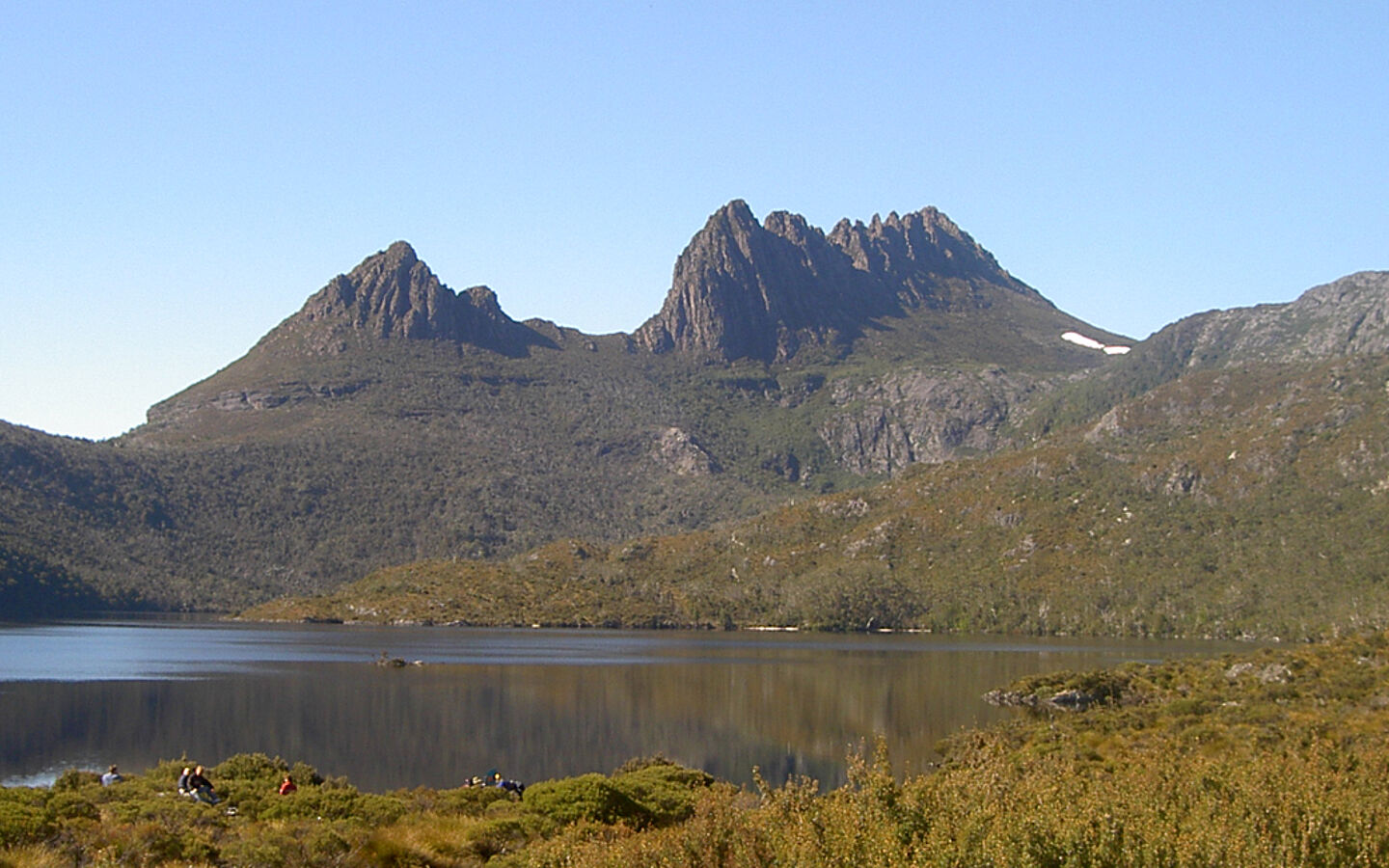
! Photo slider: Cradle Mountain; © Karl Diener / pixelio.de!
The city of 126,000 is known for its laid-back, relaxed atmosphere around the Waterfront and Salamanca Place, and Tasmanians like to go shopping in Elisabeth Street Mall. There is a lively bar and pub scene, trendy restaurants and interesting cultural venues. The newest and trendiest lifestyle location that combines all of this is The Henry Jones Art Hotel, which also exhibits contemporary works by Tasmanian artists.
Between Christmas and New Year's Eve, the whole of Australia looks forward to Hobart, as the winning yacht of the legendary Sydney-Hobart Yacht Race enters the harbor of the island's capital on December 31. Hobart's landmark is the Tasman Bridge, which was completed in 1964 and spans the Derwent River. Above the Derwent Estuary, the Morilla Wine Estate is now not only home to a well-known winery, but also to first-class accommodation, the Morilla Pavilions, and the MONA, the "Museum of old and new Art".
Unspoiled nature for active vacationers
Most Tasmanians live around Hobart on the south-east coast and on the sparsely populated north coast; the rest of the island is largely untouched nature. The only major settlement and starting point for many adventure tours is Queenstown, which has 4,000 inhabitants and was once a mining town. A large part of central and western Tasmania, including the Cradle Mountain - Lake St Claire and Franklin-Gordon Wild Rivers National Parks, is a World Heritage Site.
The national parks are considered the last untouched wilderness in the world's temperate climate zones and the largest contiguous rainforest area. In the wild nature of Tasmania, there is plenty of space for hiking - over 3,000 km of hiking trails - fishing, climbing, mountain biking or canoeing, making Tasmania an ideal destination for active vacationers. This also applies to the contrasting east coast of Tasmania with its numerous national parks such as Maria Island - the Maria Island Walk is a unique nature experience - or the Freycinet Peninsula with its colorful cliffs and the white beaches around the pretty Coles Bay. And with its good cuisine and excellent wines - wonderful Pinot Noirs mature here with a view of the sea - the east coast is also a coast for connoisseurs.
From Port Arthur to the Tasmanian Wine Route
The island, which is about the size of Ireland, was discovered by Abel Tasman in 1642. As in Sydney, its settlement began with the transportation of convicts from England. Port Arthur, located on the Tasman Peninsula, was the most notorious penal colony of the British Empire from 1832 to 1877, from which there was almost no escape. Today, the town with its restored historic buildings is the most visited tourist attraction on the island.
In the north, connoisseurs and wine lovers like to visit the Tasmanian Wine Route around Launceston, the second largest city in Tasmania and also known as the "Garden City of the North". There is even a winter sports area nearby - in Ben Lomond National Park at the 1,572-metre-high Legges Tor.
www.discovertasmania.de
There is hardly a more contrasting experience than a visit to Tasmania: from the lively scene of Hobart to the former prison town of Port Arthur and the breathtaking views of completely untouched nature.
Food in Australia - Light and fresh food in Tasmania
Tasmania has world-class seafood, including Angasi oysters,
salmon and salmon trout. Wild brown trout are caught in the Tasmanian
highlands. Goats, quail and game are also on the menu.
also on the menu. Other specialties include cheese, apples, apricots and honey.
honey.
Sightseeing in Tasmania - Awaken the spirit of adventure Tasmania is located around 250 kilometers from the Australian mainland
mainland and, with an area of 68,331 square kilometers, is considered
the smallest state in Australia. Traveling to Tasmania awakens the
spirit of adventure, inviting you to set off to unknown worlds at the end of the
the end of the world, to dive into the depths of the rainforest
sandy beaches, encounter solitude and let yourself be carried away by a
a vibrant culture that has never completely lost its English roots.
Tasmania has a predominantly oceanic climate. Pleasant temperatures of around 25 degrees
prevail between December and February. In the winter months from June to
August, frost can occur in the mountains. The ideal time to travel
are the months of November to March. If you are planning extensive hiking tours,
should consider February. Your luggage should never be without warm
clothing should never be missing from your luggage, as there is always a risk of heavy downpours.
Shopping in Australia - Best wool from Tasmania
Tasmanian artists like to draw inspiration from the
inspiration from the surrounding landscape. High quality furniture, paintings,
photographs, clothing, jewelry and objets d'art can be found in private galleries
private galleries, craft stores and markets.
The
Tasmanian wool is considered one of the best in the world. Handspun
wool and exclusive hand or machine knitted or woven garments can be found in many
you will find in many villages.
The agricultural products and wines grow on clean, rich soils,
rich soils and come into contact with only the purest water.
Buy aromatic cheese directly from the producer, thick, delicious oysters
oysters, scallops, abalone, crayfish and fish straight from the southern ocean.
southern ocean. The local berries, apples and our stone fruit are juicy
and full of flavor and the local chocolates and beers are world
award-winning.
Hotels



![[Translate to en:] AMADEUS Riva (c) Lüftner Cruises](/fileadmin/_processed_/d/e/csm_AMADEUS_Riva_ebdf4c2c55.jpg "[Translate to en:] AMADEUS Riva (c) Lüftner Cruises")















































![[Translate to en:] AMADEUS Riva (c) Lüftner Cruises](/fileadmin/_processed_/d/e/csm_AMADEUS_Riva_64c1995e26.jpg "[Translate to en:] AMADEUS Riva (c) Lüftner Cruises")