


Riviera Maya
Riviera Maya
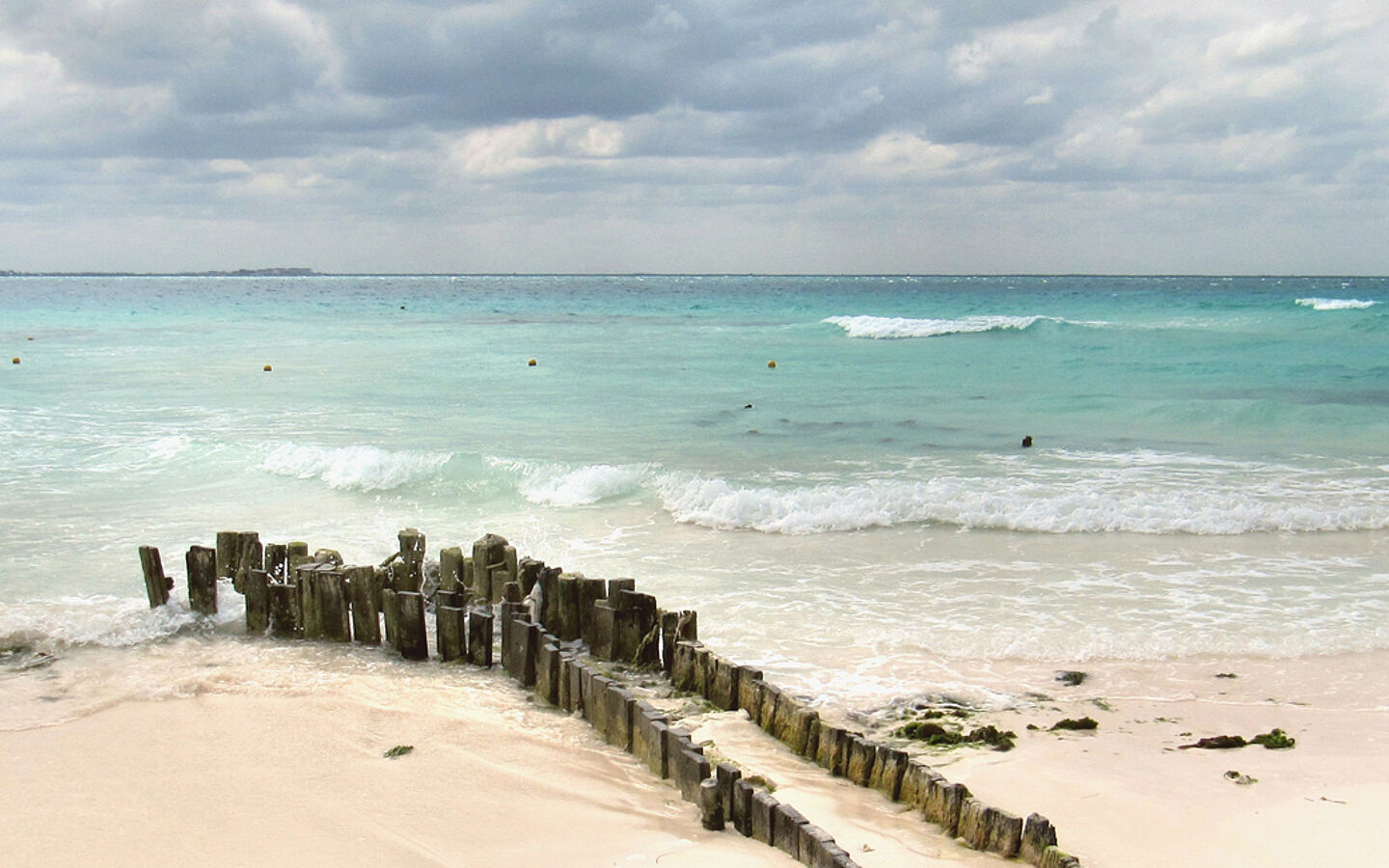
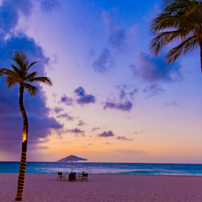
It all began over 40 years ago on a narrow spit of land with the development of Cancún's hotel zone - one of the first state-sponsored, large-scale tourism projects in the world, which was approved by the Mexican government in 1969. Numerous luxurious large hotels in the characteristic 1970s/80s concrete construction style, including the infrastructure typical of tourism, were built on the kilometer-long, wide, white, fine sandy beach. The new destination quickly became a dream destination, especially for American vacationers.
Having become very outdated, Cancún has been reinventing itself over the past few years. It has been heavily invested in and renovated, and new hotels, shopping and entertainment centers have been built. Innovative concepts such as Me Cancún are now attracting a younger audience again, and Europeans are also gradually acquiring a taste for it. Shopping and nightlife, indulgence and relaxation, contemporary luxury and a modern lifestyle have once again brought Cancún to the forefront.
From Cancún, the Riviera Maya stretches about 80 kilometers south to Tulum. Since the 1990s, the former fishing village of Playa del Carmen in particular has been booming, but the hotel zones on the Riviera Maya are now increasingly merging. Newly developed, self-contained urbanizations such as Mayakoba - currently with the three top hotels Banyan Tree, Fairmont and Rosewood - are shaping the latest tourist development. Thanks to low buildings and the fact that there is still plenty of space, these top hotels rarely give the impression of mass tourism.
Luxury hotels are increasingly focusing on an "all-inclusive concept" at the highest level, which leaves little to be desired, not only in culinary terms. The separation of families and "couples only" in different areas of a resort is becoming more and more prevalent, as demonstrated by the Paradisus of the Meliã Group in Playa del Carmen - or the hotels are "child-free", such as the Royal Hideaway in Playacar, an exclusive suburb of Playa del Carmen.
In Playa itself, there are also smaller boutique hotels, guesthouses and bungalow complexes, remnants from the time when mainly divers and backpackers discovered the Yucatan coast. However, individual travelers can still be found in the numerous cafés and restaurants of the coastal town, and a stroll through the lively 5th Avenue is not only a must for them.
Maya spirit and diving mecca
A visit to at least one of the famous Mayan sites on the peninsula, which are a World Heritage Site, is also a must. The ruins of Tulum, the last city built by the Maya, are extremely picturesque and very impressive, located directly by the sea not far from the Papaya Playa design hotel project: a double experience of looking at ruins and swimming. The archaeological site can also be reached quickly from anywhere on the Riviera Maya. Unlike the most famous temples of Chichén Itzá, which are located in the middle of the jungle, a visit requires a full day trip, but you can really feel the "Mayan spirit" here. However, it is even better to undertake a mini-Yucatan tour with an overnight stay in between.
Of course, the coast is also an Eldorado for water sports enthusiasts - all resorts offer a variety of options on the wide sandy beaches, from jet skiing to snorkeling trips. The second largest coral reef in the world is located directly off the coast, making the Riviera Maya particularly attractive for divers. But the reef is not the only attraction. In geological terms, the entire peninsula is a huge water-permeable limestone plateau, which has formed a subterranean network of watercourses many kilometers long that continues to be fed by rain. As the limestone gradually dissolves due to the water, huge caves are formed, the ceilings of which eventually collapse, creating basin-like openings that reach the groundwater and into which you can dive. These pools, known as cenotes, are understandably far more attractive to many divers than the much-vaunted reef.
In contrast to other regions in the north of Mexico, the security situation on the Yucatan is good, you can actually move around anywhere without danger and really enjoy your trip. The warmth and above all openness of the people on the Yucatan also contributes to this. And we can dispel a widespread prejudice in this country: all cab drivers were not only entertaining, but also always absolutely correct - but it never hurts to ask about the price beforehand.
Guacomole, ceviche and co. - The finest of Mexican cuisine
Anyone who has had experience of Mexican food at Tex-Mex restaurants in Germany can dispel their prejudices on the Riviera Maya. You may find taco chips topped with lots of cheese and sour cream in some cantinas, but they are not on the menu in better restaurants. However, there is no question that Mexican cuisine, with its regional cuisines and Mexico City as its melting pot, is worth experiencing: at the end of 2010, it was declared a UNESCO World Heritage Site.
Guacamole is everywhere. But the queen of all guacamoles is served in the chic beach restaurant at the Maroma Resort and Spa. An XL stone jar filled to the top with avocado puree. "The avocado must not be mashed during preparation, only cut into small pieces," explains head chef Juan Pablo Loza. Another secret of this guacomole is the ingredients, which are only added at the table. "This varies from region to region, but grated cream cheese is a must. Pomegranate seeds are also an original ingredient that is often added for sweetness, crunchiness and decoration," says the chef from Mexico City. Depending on taste and region, chili, coriander - extremely popular in Mexican cuisine - lime, chorizo or crispy bacon rind can also be added. According to Juan Pablo, however, tomatoes have no place in guacamole.
When it comes to beans, what you would have guessed is confirmed: they are an essential component of almost all Mexican dishes. Mexican cuisine is a simple, rural cuisine. What potatoes are in this country, rice and black beans are in Mexico. Equally indispensable: meat, braised or grilled. Fish is not quite as popular. However, there are traditional dishes that are still prepared, such as tikin-xik, which originates from the Maya. "Tikin" means fish, "xik" means wings - fish is cooked open in a banana leaf or grilled on charcoal until tender. Simply delicious!
One of the most refined and elegant culinary discoveries is ceviche. "Ceviche is actually a Peruvian dish," says Rafael Casás, former head chef at the Banyan Tree Mayakoba, "there are also many Japanese living there who have brought sashimi and therefore raw fish into Peruvian cuisine." Ceviche is a cold dish with raw products. The main ingredients come from the sea: fresh seafood and fresh fish are the basis, which are only marinated with lime juice - orange or grapefruit juice are also sometimes used - and thus "cooked". Other ingredients: finely chopped red onion and finely chopped chili. "We like to use coriander, even in ceviche," explains Bernardo García, head chef at the luxury hideaway Esencia. He uses it to give his shrimp and cactus ceviche as well as his perch or octopus ceviche a flavorful kick.
Ceviche dispenses with the calories, which are doubled and tripled in desserts and sweet treats - Mexico is a chocolate-loving country. Cream tarts, for example - sometimes with fruit, sometimes without - are offered in abundance.
Text: Uwe Lehmann and Manuela Blisse
Photo: © M. Hermsdorf / pixelio.de
The name Riviera Maya has only been around for a few years. A new wind is blowing here on the perfect beaches of Mexico's Yucatan Peninsula. Discerning travelers can once again feel like the chosen ones in elegantly designed resorts, with impeccable gastronomy and in view of the impressive ruins of the once highly developed Mayan culture.
Location
Mexiko Riviera Maya
Area
Mexiko
Language
The official language of Mexico is Spanish
Arrival
Cancun Airport
Capital city
Mérida
Religion
87% of Mexicans are Catholics
Weather
Hurricane season in Mexico is from July to October
Best time to travel
November to July
Climate
| Jan | Feb | Mar | Apr | May | Jun | Jul | Aug | Sep | Oct | Nov | Dec | |
| Max. Temperature | 21 | 23 | 25 | 26 | 27 | 2523 | 23 | 24 | 23 | 22 | 22 | 21 |
| Min. Temperature | 6 | 7 | 10 | 11 | 12 | 12 | 12 | 12 | 11 | 10 | 8 | 7 |
| Hours of Sunshine | 7 | 7 | 7 | 7 | 6 | 5 | 5 | 5 | 5 | 6 | 7 | 6 |
| Rainy days | 1 | 2 | 3 | 5 | 12 | 17 | 21 | 18 | 14 | 8 | 3 | 2 |
Currency
Mexican peso
Vaccinations
There are no mandatory vaccinations for Mexico. A certificate of vaccination against yellow fever is only required if you have previously stayed in one of the countries in South America or Africa in the so-called yellow fever zone.
All golfers dream of the golf courses in Cancun! Apart from the fact that they are located in a beautiful setting, the golf courses in Cancun and Riviera Maya offer the highest standards of professional golf tournaments and professional golfers.
A magical landscape and great weather attracted numerous world-renowned golf course designers to create some of their masterpieces in Cancun and Riviera Maya, creating one of the most competitive golf courses in the world.
The golf courses in Cancún and the Riviera Maya offer challenging fairways, with rolling hills and distinctive curves, framed by colorful and tropical vegetation. Some have even been built around ancient Mayan temples. From the tee to the green, a fascinating view extends over the turquoise waters of the Caribbean and the white beaches in the distance.
The Mayan civilization is one of the original cultures of the New World and spans more than 3,000 years. The
Mayas lived mainly on the Yucatan Peninsula in the eastern third of
third of Mesoamerica and at their peak they were one of the most densely
most densely populated and culturally dynamic societies in the world.
The Maya culture
is known for its spectacular art, impressive architecture and sophisticated
and the sophisticated mathematical and astronomical systems.
Mayan architecture
Mayan architecture spans many thousands of years. The
most dramatic and easily recognizable are the fantastic stepped pyramids
stepped pyramids at the sites of Chichen Itza and Coba. A year ago
a year ago, Chichen Itza was named one of the Seven Wonders of the World and a UNESCO World Heritage Site for 20 years.
The Mayan calendar
The
Mayan calendar was not the original Mesoamerican calendar,
but with the intricacies of the Mayans it became the most sophisticated. The
Mayan calendar, along with the Aztec calendar, is the best documented and most
documented and most fully understood Mesoamerican calendar.
Maya writing and Maya art
The Maya script is the only fully developed written language of pre-Columbian America. Mayan art is considered by many to be among the most sophisticated and beautiful of the ancient New World.
Maya Tree of Life
The
Mayan civilization recognized the four primary cardinal directions and assigned them
each a color - red to the east, white to the north, black to the west and yellow to the south. They also had a fifth "direction", which designated the center and wore a blue-green color. The center was represented by a large Ceiba tree, which became known as the Maya Tree of Life. This tree connected the center of the earth with both the underworld and the sky.
Mayan gods
There
were thirteen Mayan gods who belonged to thirteen cardinal points of the
Mayan religion and nine gods from the nine underworlds. Natural
elements such as the stars and the planets, plants, numbers, days of the week
and time periods each had their own gods. The
mood of the Mayan gods changed according to the days in the
Mayan calendar or by the position of the sun, moon and stars.
stars. Some
of the most important gods are Chaac - God of Rain and Thunder, Ixchel - Goddess of Childbirth and Ah Puch - God of Death.
Hotels



![[Translate to en:] AMADEUS Riva (c) Lüftner Cruises](/fileadmin/_processed_/d/e/csm_AMADEUS_Riva_ebdf4c2c55.jpg "[Translate to en:] AMADEUS Riva (c) Lüftner Cruises")















































![[Translate to en:] AMADEUS Riva (c) Lüftner Cruises](/fileadmin/_processed_/d/e/csm_AMADEUS_Riva_64c1995e26.jpg "[Translate to en:] AMADEUS Riva (c) Lüftner Cruises")