


Menorca
06/30/2022 Reading time: 2 Minutes
Menorca [məˈnɔɾkə] is the easternmost and northernmost island of the Spanish autonomous region of the Balearic Islands.
Its Catalan name means "the smaller one", in contrast to Mallorca, "the larger one". Menorca has 93,397 inhabitants (as of 2019)[2] living on 694 square kilometers. In 2006, the proportion of foreigners was 14.2 % (12,543 inhabitants) and the proportion of German inhabitants was 0.8 % (683). The main town is Maó (Spanish/Castilian: Mahón).
Geographical data
The island has an area of almost 700 km². From Cape La Mola to the headland of Bajoli, the island is around 50 kilometers long and 16 kilometers wide in a north-south direction.
The north is rocky and characterized by rugged, jagged, sometimes fjord-like coasts. In contrast, the south has a gentle relief with some deep ravines, the coast here is more straightforward with rocks and long sandy beaches. In the middle of the island rises the 357-metre-high Monte Toro, from where you have a good panoramic view.
The approximately 285-kilometre-long coastline[3] offers the following variety: Cliffs, secluded bays and long beaches as well as some natural harbors.
Barranc d'Algendare landscape
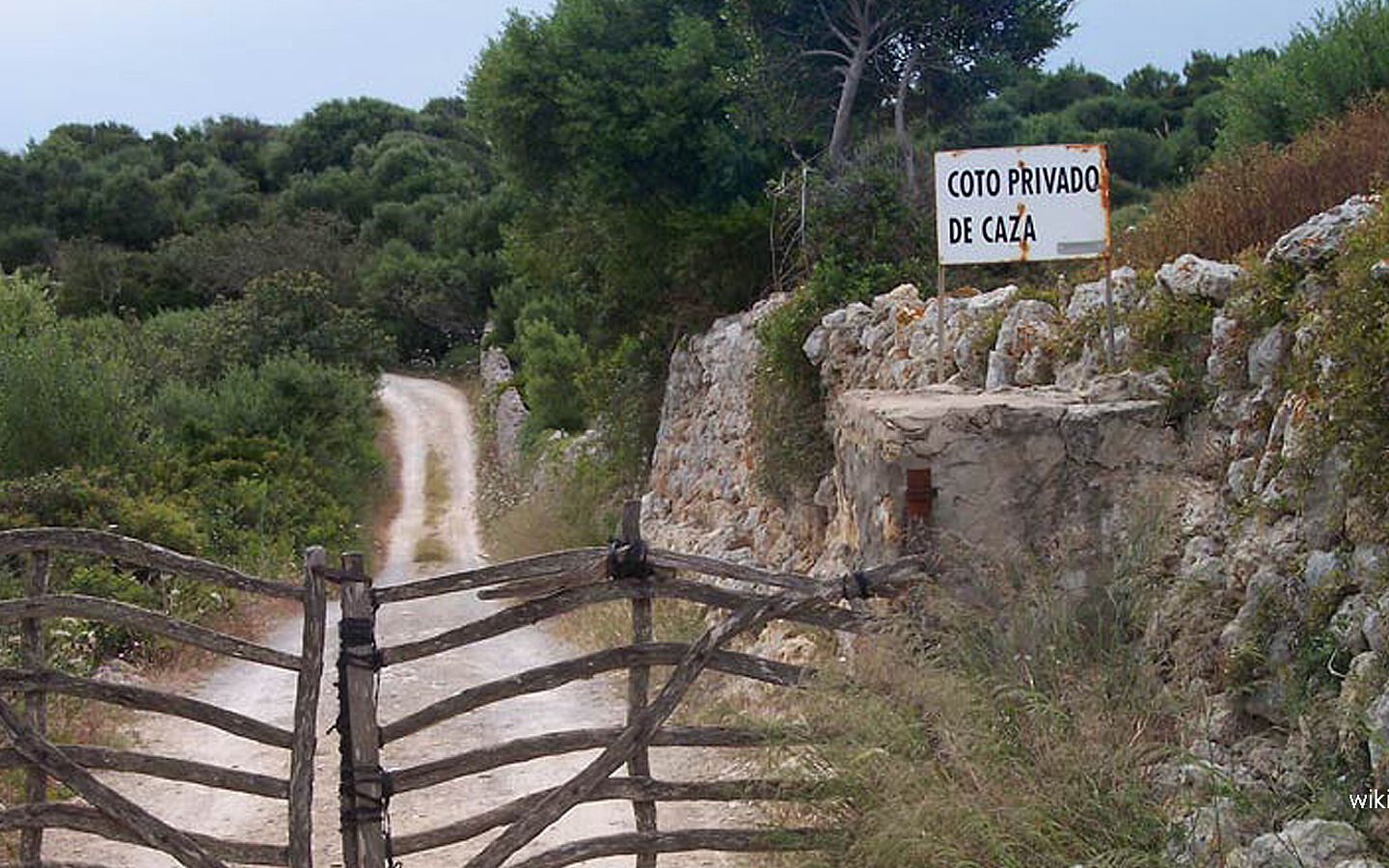
Outside the two towns of Ciutadella and Maó, the island's landscape is characterized above all by tranquillity: many fields lined with stone walls, whitewashed farms with an old cheese-making tradition (see Mahón-Menorca cheese), idyllic villages and picturesque fishing villages.
Overall, the island is very green and wooded and there is a lot of agriculture. The original north is rocky and characterized by rugged, jagged, sometimes fjord-like coasts, while the south is gentler, the coast is less rugged and has several beaches suitable for tourism.
As a result of the late development of tourism, Menorca was largely saved from large hotel buildings and urban sprawl. In 1993, the island was declared a biosphere reserve. Today, almost half of the island is a protected landscape and nature reserve. Many undeveloped beaches and landscapes have therefore been preserved. Compared to the tourist centers of the neighboring islands (Mallorca, Ibiza), the construction of tourist accommodation is more spacious. Menorca is therefore a destination for those interested in nature and culture as well as for bathing enthusiasts.
Islands
The following islands belong to Menorca and are under the administration of the Consell Insular de Menorca. On October 8, 1993, the islands were declared a biosphere reserve for the protection of typical landscapes and included in the UNESCO agreements. The focus is on the protection of individual parts of the landscape: Natural monuments, protected landscape features, protection of species and biotopes in accordance with Directive 79/409/EEC on the conservation of wild birds and the Fauna-Flora-Habitat Directive for the creation of a European biotope network system Natura 2000.
Source: wikipedia.org
Its Catalan name means "the smaller one", in contrast to Mallorca, "the larger one". Menorca has 93,397 inhabitants (as of 2019)[2] living on 694 square kilometers. In 2006, the proportion of foreigners was 14.2 % (12,543 inhabitants) and the proportion of German inhabitants was 0.8 % (683). The main town is Maó (Spanish/Castilian: Mahón).
Geographical data
The island has an area of almost 700 km². From Cape La Mola to the headland of Bajoli, the island is around 50 kilometers long and 16 kilometers wide in a north-south direction.
The north is rocky and characterized by rugged, jagged, sometimes fjord-like coasts. In contrast, the south has a gentle relief with some deep ravines, the coast here is more straightforward with rocks and long sandy beaches. In the middle of the island rises the 357-metre-high Monte Toro, from where you have a good panoramic view.
The approximately 285-kilometre-long coastline[3] offers the following variety: Cliffs, secluded bays and long beaches as well as some natural harbors.
Barranc d'Algendare landscape
Outside the two towns of Ciutadella and Maó, the island's landscape is characterized above all by tranquillity: many fields lined with stone walls, whitewashed farms with an old cheese-making tradition (see Mahón-Menorca cheese), idyllic villages and picturesque fishing villages.
Overall, the island is very green and wooded and there is a lot of agriculture. The original north is rocky and characterized by rugged, jagged, sometimes fjord-like coasts, while the south is gentler, the coast is less rugged and has several beaches suitable for tourism.
As a result of the late development of tourism, Menorca was largely saved from large hotel buildings and urban sprawl. In 1993, the island was declared a biosphere reserve. Today, almost half of the island is a protected landscape and nature reserve. Many undeveloped beaches and landscapes have therefore been preserved. Compared to the tourist centers of the neighboring islands (Mallorca, Ibiza), the construction of tourist accommodation is more spacious. Menorca is therefore a destination for those interested in nature and culture as well as for bathing enthusiasts.
Islands
The following islands belong to Menorca and are under the administration of the Consell Insular de Menorca. On October 8, 1993, the islands were declared a biosphere reserve for the protection of typical landscapes and included in the UNESCO agreements. The focus is on the protection of individual parts of the landscape: Natural monuments, protected landscape features, protection of species and biotopes in accordance with Directive 79/409/EEC on the conservation of wild birds and the Fauna-Flora-Habitat Directive for the creation of a European biotope network system Natura 2000.
Source: wikipedia.org
Hotels



![[Translate to en:] AMADEUS Riva (c) Lüftner Cruises](/fileadmin/_processed_/d/e/csm_AMADEUS_Riva_ebdf4c2c55.jpg "[Translate to en:] AMADEUS Riva (c) Lüftner Cruises")











































![[Translate to en:] AMADEUS Riva (c) Lüftner Cruises](/fileadmin/_processed_/d/e/csm_AMADEUS_Riva_64c1995e26.jpg "[Translate to en:] AMADEUS Riva (c) Lüftner Cruises")