


Hong Kong
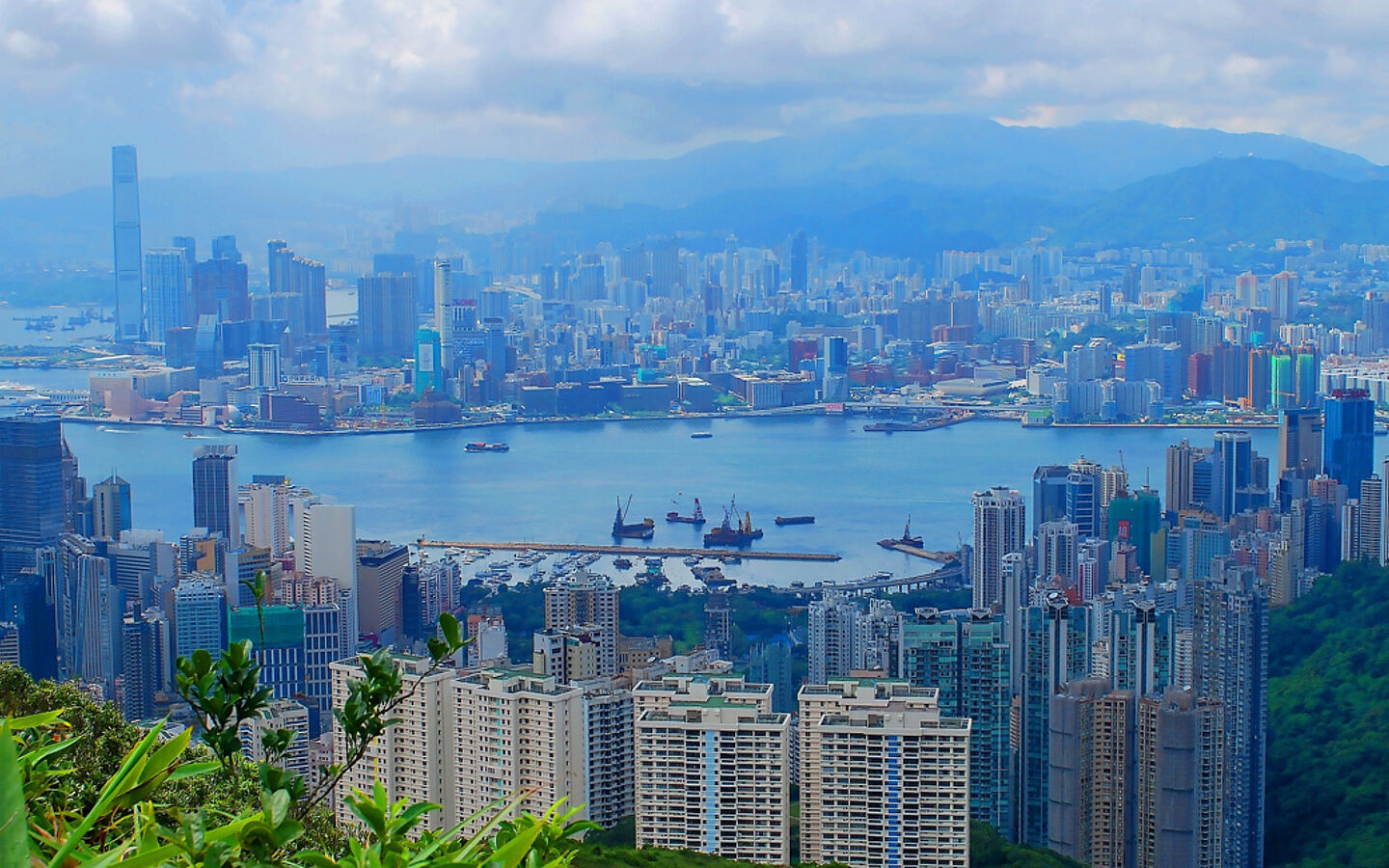
The former crown colony of Hong Kong has grown up quite a bit. Today, mammon and indulgence rule the city's fortunes. And here and there, luxury hotels and restaurants offer an exciting taste of Chinese culture.
Since its return by the British almost 15 years ago, Hong Kong has become a popular playground for rich Chinese from the People's Republic. Easier entry has had a positive effect on visitor numbers and has also changed the composition of visitor statistics: last year, 63 percent of tourists were already mainland Chinese. For them, Hong Kong is more exotic than Europeans would expect at first glance. Disciplined queues of people in the public transport stations bear witness to the British past, as do the left-hand traffic and the two-storey buses and streetcars. "If you are pushed from behind in the crowd or see someone standing on the wrong side of the escalator, you can assume in both cases that it is a mainland Chinese," an annoyed resident of the city told us.
Maximum (construction) boom - little bohemia
Nevertheless, a lot has changed in Hong Kong, and from today's perspective, the change seems to have benefited the city rather than harmed it. To this day, the Chinese leadership has kept its promise to preserve Hong Kong's special political position. The most profitable newspaper in the world, the Hong Kong-based "South China Morning Post", is still not subject to censorship. In economic terms, the metropolis is currently booming like no other. There seems to be no end to the brisk construction activity: A major land reclamation project is currently underway on the waterfront near the Convention Centre, and on the opposite side, in West Kowloon, the ICC Tower has recently become the tallest building in the city, with the Ritz-Carlton Hotel on its top floors.
At the same time, Hong Kong is a fascinating place for Western visitors. Chinese pharmacies, traditional teahouses, night markets, Cantonese street restaurants and groups of men playing mahjong provide deep insights into traditional Chinese lifestyles. Walks through the bustling street canyons make you forget that Hong Kong is not overly blessed with classic sights - old colonial buildings can be counted on one hand, and the trips to the large bronze Buddha on Lantau Island or to Stanley Market in the south of the main island recommended in travel guides turn out to be mainstream tourist events. Less frequented are the numerous hiking trails that surround the metropolis - three quarters of the territory is unpopulated. The proximity of nature to the city is made clear by the eagles that soar around the skyscrapers of Hong Kong Island.
The "Symphony of Lights" light show, which is applauded by the crowds on the Kowloon waterfront every evening, is quite nice. However, it reveals that public art discourse is conducted at a lower level than would be appropriate for a metropolis of seven million people, which is probably due to overly rigid rules. Street artists, if they exist at all, are still regarded as troublemakers even when they have already been elevated to Olympian status by leading art institutions. A difficult place for the bohemians. On the other hand, Hong Kong is an elitist metropolis where money rules like few other places. Stores run by global luxury fashion labels have replaced their local predecessors in many places. Some top brands, including Louis Vuitton, Tiffany & Co. and Bulgari, have more stores in Hong Kong than in Paris.
The luxury hotel industry is flourishing in a similar way, having undergone a transformation in many places over the past decade from faceless business establishments to stylish originality. Great emphasis is now placed on unique selling points, be it with an emphasis on feng shui (InterContinental Hong Kong), colonial architecture (Hullett House), bombastic sights (Island Shangri-La), contemporary design (Landmark Mandarin Oriental) or tradition (Peninsula Hotel).
China (De) Light
In view of this situation, it is not surprising that a separate Michelin Guide for Hong Kong and Macao has been facilitating culinary navigation for three years. It is noticeable that the most acclaimed restaurants in the guide are predominantly located in the top hotels. Almost every restaurant worth its salt has separate rooms for private parties ("private rooms"). Sommeliers have sprung up in recent years. The surge in demand has obviously had an impact on quality - it can happen that the "sommelier" makes Cabernet Sauvignon the main grape variety in Chianti Classico.
But perhaps one should only drink tea in Hong Kong anyway; after all, an intensive study of Cantonese cuisine is obvious. Admittedly, swallow's nest soups, shark fins and turtles are not everyone's cup of tea, not to mention even more barbaric dishes, but a double boiled wonton soup and dim sum are definitely worth trying. In addition, roast suckling pig in Hong Kong is just as delicious as the crispy chicken and duck that are also available everywhere.
At the latest when it comes to the finely cut slices of Peking duck skin, which are individually rolled into small críªpes with leek, cucumber, chilli and duck sauce, Western visitors will perhaps come to the realization that Hong Kong has remained in its essence what it perhaps always was, namely a fascinating spot of "China light".
More insider information on China in the Jin Sha blog by author Stephan Burianek:
www.jinshablog.org
Travel to Hong Kong - a cultural compass for your hand luggage
The excellent selection of short but highly impressive texts covers topics that aptly characterize Hong Kong: Feng Shui, colonial history, the film industry, land reclamation, mahjong, business bosses, triads, concubines and more. A perfect read before, during and after a trip to Hong Kong!
(Unionsverlag, Zurich)
Location
China
Area
2.754 km²
Population
7.188 million
Language
Chinese (Cantonese, Mandarin), English
Capital city
"Central"
Religion
Almost every religion is practiced in Hong Kong. The Chinese population is dominated by the Buddhist and Confucian worldviews, and more than 10% of the population (mostly ethnic Chinese) are Christians.
Weather
Hong Kong's climate is tropical and humid with an average annual temperature of 22.5 °C, rainfall of 2,382.7 mm and 10 humid months. The winter from January to March is cool and dry, the summer from April to September is hot and rainy, while the fall (October to December) is warm and dry. There is a regular risk of typhoons in summer.
Best time to travel
The best time to visit Hong Kong is from October to April. During the summer months, it is the rainy season and monsoon, and the high temperatures are accompanied by high humidity, which makes the climate very unpleasant for Western Europeans.
Climate
| Jan | Feb | Mar | Apr | May | Jun | Jul | Aug | Sep | Oct | Nov | Dec | |
| Max. Temperature | 18 | 19 | 21 | 25 | 29 | 30 | 31 | 31 | 30 | 28 | 24 | 20 |
| Min. Temperature | 13 | 14 | 16 | 20 | 24 | 26 | 26 | 26 | 26 | 23 | 19 | 15 |
| Hours of Sunshine | 5 | 4 | 3 | 3 | 5 | 5 | 7 | 7 | 6 | 6 | 6 | 6 |
| Rainy days | 4 | 5 | 6 | 8 | 12 | 15 | 14 | 15 | 11 | 6 | 4 | 3 |
| Water Temperature | 18 | 18 | 19 | 21 | 25 | 27 | 27 | 27 | 27 | 26 | 23 | 20 |
Time difference (to MEZ)
+7h
Currency
Hong Kong dollar
Visa
Although Hong Kong has been part of the People's Republic of China since 1997, its own entry regulations apply. Onward travel to the mainland is not possible without a visa. For onward travel to most neighboring countries, the passport must be valid for at least six months.
Work visas or residence permits must be applied for before entering the country. Applications should be sent either to the Chinese Embassy in Vienna or by fax (+852 2877-7711) to the Hong Kong Immigration Department (www.immd.gov.hk).
If the granted period of stay is exceeded, high fines, imprisonment or deportation are imposed (depending on the length of the overstay).
When entering and leaving the country, health checks and body temperature measurements may be carried out at border crossing points as a precautionary measure against epidemic diseases.
Vaccinations
No vaccinations are required for entry into the country. However, apart from a basic protection program for all travellers, the Zentrum für Reisemedizin Wien recommends a preventive vaccination against rabies for individual tourists and for longer stays
Food in Hong Kong - The best restaurants in Hong Kong
Food in Hong Kong is not just food, but is seen as a passion and a social event. This is why almost every meeting among the locals takes place over a meal.
Cantonese cuisine is very diverse and ranges from simple cookshops and stalls to restaurants with specialties from all Chinese regions and haute cuisine with a European or Asian character. But Hong Kong also has plenty to offer junk food lovers, as almost all of the world's fast food chains are represented in Hong Kong. But Hong Kong would not be a world metropolis if it did not also have culinary highlights from all over the world. Let yourself be enchanted and enraptured by Indonesian, Japanese, Russian, Italian, French, Filipino, Thai and Korean cuisine.
Particularly unusual - by European standards - is the presentation of dishes in the simple cookshop. Here, no attention is paid to a nice garnish, but this cuisine is only aimed at being a feast for the palate, not a feast for the eyes. In better restaurants, on the other hand, you can enjoy perfectly prepared and garnished delicacies.
Pay attention to the spiciness of Cantonese cuisine, as it cannot be compared to European standards, although Hong Kong cuisine is rarely very spicy.
Going out in Hong Kong - One of the hippest nightlife capitals in the world
Don't miss out on Hong Kong's trendy entertainment districts.
Whatever you're in the mood for, you'll find it. Be it
be it the trendy bar or the hip nightclub, the pub around the corner
or the sophisticated wine bar, the entertainment venue or the chic restaurant.
Your
evening foray may begin with happy hour, usually between
between 18:00 and 21:00, sometimes even until midnight, on the principle of
principle of two drinks for the price of one. Inquire about such promotions before
order for such promotions. From 22:30 onwards, it's off to the
clubs to listen to a live band or dance to house music or techno sounds.
techno music. Most of these clubs are open all night
so take your time discovering the nightlife in Hong Kong.
Hong Kong flight - A helicopter flight over Hong Kong
On a helicopter flight over Hong Kong's skyline, the islands and the mountains of the
mountains of the New Territories, on a clear day you can also see the
skyscrapers of Shenzhen in the People's Republic of China. The prices for
helicopter services are between 500 and 2,000 euros per flight, depending on the duration
flight (maximum five people). Departures are possible from the Peninsula
Hotel.
www.heliservices.com.hk
Hong Kong culture - theaters and museums worth seeing
Shopping in Hong Kong - top international brands and more
No matter what product you are looking for, whether you are interested in the latest
trends from well-known luxury brands or bargains at typical street
street markets, in Hong Kong you are sure to find what you are looking for. Not to mention the many
gadgets on every corner - the range is huge and the prices are duty and tax free.
prices are duty-free and tax-free;
--
Many leading brands have large branches in the city. Here the
latest fashion trends and trendy leather goods are sold here. Also
Hong Kong's young designers are also noteworthy. Now highly regarded internationally
highly regarded internationally, they produce fantastic trend fashion in first-class
quality at great prices.
Hotels

![[Translate to en:] AMADEUS Riva (c) Lüftner Cruises](/fileadmin/_processed_/d/e/csm_AMADEUS_Riva_ebdf4c2c55.jpg "[Translate to en:] AMADEUS Riva (c) Lüftner Cruises")
































![[Translate to en:] AMADEUS Riva (c) Lüftner Cruises](/fileadmin/_processed_/d/e/csm_AMADEUS_Riva_64c1995e26.jpg "[Translate to en:] AMADEUS Riva (c) Lüftner Cruises")