


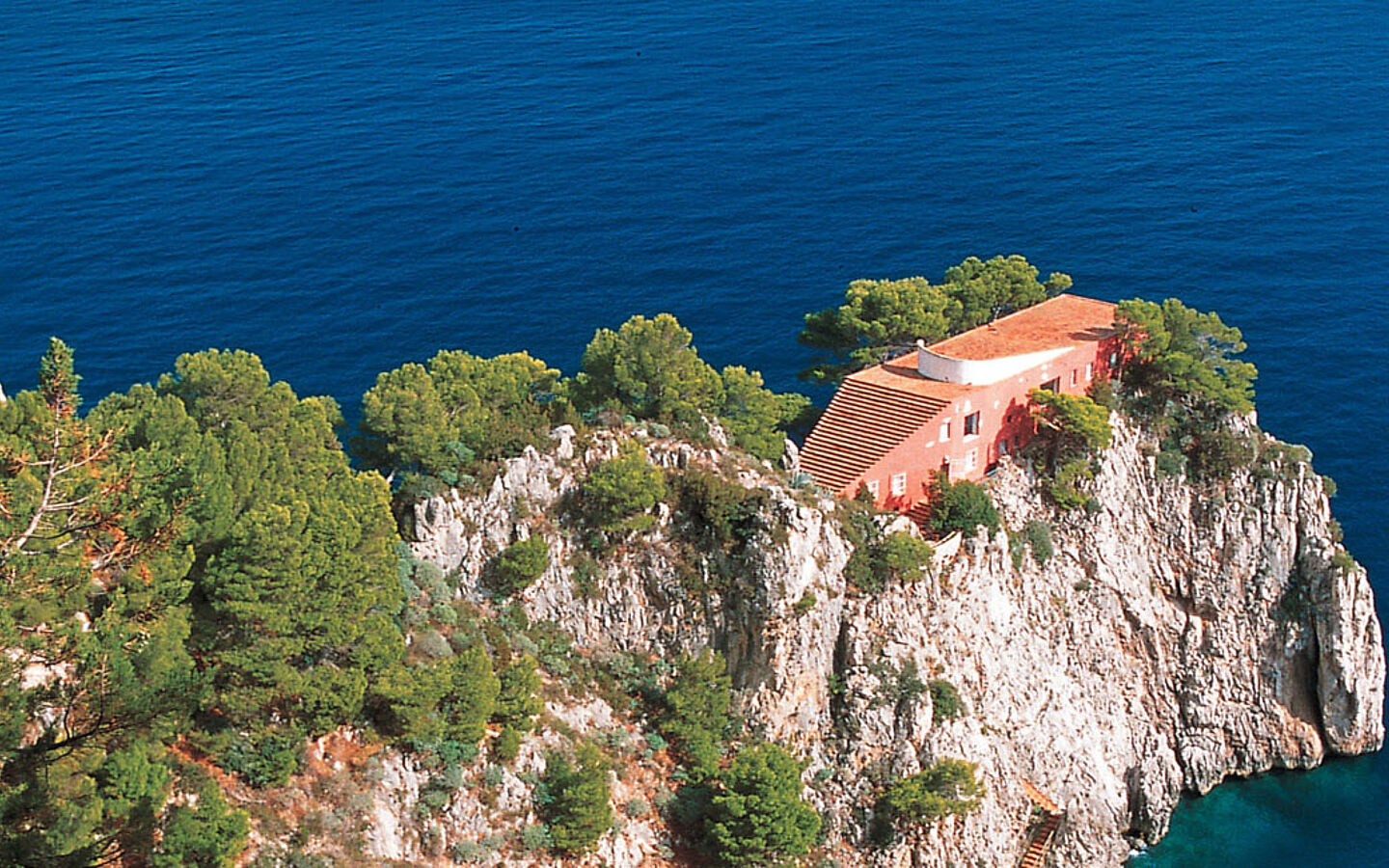
Capri
Roman emperor Tiberius was in love. So deeply in love with the Neapolitan island of Capri that he fell in love with the small paradise with its dramatic beauty. More than 2,000 years ago, he had the fairytale villa of Jovis built and ruled the Roman empire from there until his death. Later came hundreds of bizarre artists, rich eccentrics and neurotic dandies, who quickly became part of island society. Indeed, a whole list of prominent literary figures were drawn to the sweet exile in the sun: Alberto Moravia, Jean-Paul Sartre, Rainer Maria Rilke and Graham Greene, for example, who wrote world literature in seclusion in their summer villas at a time when the only means of transportation on the island were still horse-drawn carriages.
Today, Hollywood stars such as Dustin Hoffman and Julia Roberts come to experience the unique Dolce Vita ambience. And you can understand them all. Because the ageless Capri lies there as if in a dream, the landscape sometimes lovely, sometimes rugged. The houses and alleyways are picturesque. At any moment, you think, Gina Lollobrigida could turn the corner. Capri still draws on this 60s flair today, and that is probably what makes it so expensive. Year after year, thousands of tourists flock here, especially in the summer months, to be enchanted by the natural beauty and the unique view of the sea that can be enjoyed from almost anywhere on the island. But the true Capri fan avoids the high season, when up to 15,000 day-trippers, some from cruise ships or speedboats that shuttle between Naples or Sorrento and Capri every hour, crowd onto the island. But they only stay for a few hours and hardly leave any money there.
What used to be an open farmers' market has now become the central living room under the open sky, but only once the last hydrofoil has disappeared towards the mainland. Until then, Capri society hides behind the walls, hedges and groves of luxury estates, usually in pairs. Capri is not an island for family vacations. The beaches are small and there is no space to run around, which would be completely out of place. And instead of powdered sugar beaches, there are idyllic bays. The Marina Piccola is the island's bathing spot. At lunchtime, you can lie on canvas chairs in the traditional La Canzone del Mare or on foam mattresses on the rocks in the trendy Fontelina lido, where you can hold your often tight-fitting swimming trunks up to the sun and gaze at the three mighty rock needles of Faraglioni, the landmarks of Capri. The water here is so transparent that you can see the stone foundations of the island far below sea level. In the afternoon, you might want to take a quick dip in the pool with its distant view, or take a short trip to the Arco Naturale, a mighty natural stone arch formed by erosion, which requires top fitness due to the numerous steps.
A little away from the tourist epicenter lies another little paradise, Anacapri.
The second, higher village on the island is visited by far fewer tourists - perhaps because it lacks the sophistication. You could also say that the Anacaprese territory is less hysterical. Here you should definitely visit Via Orlando, which looks even more like the old days with its ceramic stores, traditional sandal makers and greengrocers.
Anacapri is also home to the famous Villa San Michele, which was built and furnished on Roman remains by Axel Munthe, the Swedish doctor and writer who lived on the island for more than 50 years.
A rarely beautiful garden surrounds the villa, and a visit is just as recommendable as a ride on the chairlift to the highest island elevation at 589 meters, Monte Solaro. At the top, you are rewarded with a breathtaking panoramic view - Vista divina, the divine view, as the Caprese call it. And probably the only thing that is free on the Insula capreae (Roman goat island), as the Romans called it. Those who explore the mountain on foot are rewarded with a special nature experience. The solitary hike leads through the olive groves and vineyards of Anacapri into untamed vegetation with ancient pines, Judas trees and agaves.
The full splendor of the island is also revealed on a boat tour. The hotspot in the Tyrrhenian Sea is 17 kilometers round and you can admire countless small grottos and protruding rock faces. Of course, you will also pass the Grotta Azzurra with its unique shade of intense blue, which is created by the filtering and reflection of the water. The view from the sea of the imposing old luxury villas with their Moorish or Baroque decorations, which are usually hidden from land behind almond trees, bougainvilleas and wisteria, is also fascinating. Perhaps the Russian poet Ivan Turgenev described Capri in the most flowery terms: "Naples is beautiful, Pompeii is interesting, but Capri is a wonder. And not because it has the wonderful Blue Grotto, but because this island is enchanted, a temple of the goddess nature, the incarnation of beauty!"
Text: Sylvia M. Sedlnitzky
A small island with great charisma: nowhere is the sea bluer, the yachts more chic and the views more breathtaking. Capri has more than 2,000 years of seaside tourism behind it and yet attracts the international jet set summer after summer. Capri is also a dream destination for thousands of day tourists.
Nevertheless, the onslaught has not really been able to harm the island's beauty. The myth of this style icon is scratch-proof! Room with a view: From J.K. Place you can enjoy a fantastic view of the azure blue sea.
Photos: (c) Azienda Autonoma Cura Soggiorno e Turismo Isola di Capri
Location
Italien
Area
10,4 km2
Population
13.839
Language
Italian
Arrival
Naples
Largest city
Anacapri
Capital city
Capri
Religion
catholic
Weather
Season is from March to October. Pleasantly warm temperatures in spring. In August it is very hot, the sirocco, which blows from south-east Africa, often makes it humid and muggy on Capri.
In September, the sea still has pleasant temperatures of around 25 degrees and you can usually still dine outdoors in the evening.
Best time to travel
March to October
Climate
| Jan | Feb | Mar | Apr | May | Jun | Jul | Aug | Sep | Oct | Nov | Dec | |
| Max. Temperature | 11.7 | 12.6 | 14.8 | 18.2 | 22.2 | 26.3 | 29.1 | 29 | 26 | 21.7 | 17 | 13.9 |
| Min. Temperature | 4.3 | 4.8 | 6.4 | 8.9 | 12.3 | 16 | 18.1 | 18.1 | 15.9 | 12.4 | 9 | 6.4 |
| Hours of Sunshine | 3.8 | 4.6 | 5.2 | 6.6 | 8.2 | 9.3 | 10.4 | 9.9 | 8.1 | 6.4 | 4.1 | 3 |
| Humidity | 75 | 71 | 71 | 74 | 73 | 69 | 70 | 73 | 74 | 77 | 76 | 74 |
| Rainy days | 10 | 10 | 10 | 9 | 7 | 5 | 2 | 3 | 7 | 10 | 11 | 13 |
| Water Temperature | 14 | 13 | 13 | 15 | 18 | 21 | 24 | 25 | 23 | 21 | 18 | 16 |
As consistent as its overall appearance, Capri also stands by its classic style in culinary terms. Its strength lies in its simplicity. There are no excursions into elaborate haute cuisine, nor are dishes stewed for too long, blandly seasoned or drowned in flour paste. What counts is the high quality of the ingredients and the unadulterated aroma - usually at fairly steep prices. Anyone who has ever tasted the sun-ripened tomatoes of Capri or the red Pomodorini de Piennolo will already have an idea of how authentic island cuisine can taste. Add to this a fresh buffalo mozzarella, drizzled with good olive oil and balsamic vinegar, basil - this is the Insalata Caprese, for example, which was invented at the Hotel Quisisana at the end of the 1920s.
Of course, people also eat pasta. The island's culinary flagship is ravioli alla caprese, filled with Campania caciotta cheese and marjoram, or linguine al sugo di scorfano, thin tagliatelle with scorpionfish in a spicy tomato and chilli salsa. Capri is also known for gnocchetti alla chiummenzana or the famous penne aumm aumm with mozzarella, eggplants and tomatoes. Capri also serves fresh fish such as the rare and tasty sea bream pezzogna or seafood all' acqua pazza, stewed in oil, tomatoes and garlic, and totani con patate, those large squid that are only caught in September nights at the deepest points around Capri. Meat plays a subordinate role. At most, a coniglio alla Tiberiana, i.e. rabbit with small pomodorini and herbs from the island, is served. Rustic dishes such as cianfotta, a vegetable stew with artichokes, asparagus, peas and small zucchinis, which the vegetarian Emperor Tiberius is said to have invented with his gardener, are only served in spring.
Capri is even a major player in the world of traditional desserts - for example in the Torta Caprese, the famous chocolate cake, which is refined with finely chopped almonds, powdered sugar and a dash of liqueur. Or at Delizieal Limone, delicious cream puffs with a lemon cream filling, which are of course accompanied by the tart-sweet Limoncello liqueur. We also recommend the simple dry white wine Tiberio Isola di Capri Doc or the Capri Blue, by far the best wines on the island. Even the local Birra de Capri meets high standards, as the barley juice is also available in an elegant 75 cl champagnotta champagne bottle. So Cin Cin!
TEXT: SYLVIA SEDLNITZKY
The island of Capri is just as beautiful at night as it is during the day. The sea is illuminated by the silver light of the moon and the twinkling lights of the fishing boats, and the streets are enlivened by the sounds of people's laughter, music and dancing. At night, the main square of Capri is the center of glamorous and social life: where the world of beautiful people gather and linger at the tables of elegant pavement cafés until the early hours of the morning.
From traditional Neapolitan serenades to the latest dance hits, Capri's exclusive nightclubs and discos play music until the early hours. Some of the most important politicians in Italy have even been spotted in the bars.
Capri Shopping - Chic and modern Shopping on the island of Capri is a unique experience and an ideal opportunity for those who want to buy the latest designer dress, the most beautiful jewelry, a pair of custom-made sandals or the legendary Capri Pants. In the historic centers of Capri and Anacapri, the artists' and craftsmen's studios are open to the public so that visitors can both buy and watch the goods being produced.
Visitors looking for a special gift should visit one of the local shoemakers or one of the small stores selling handmade lace and embroidery. Don't miss a tour of the laboratories where the island's flower essences are transformed into exquisite perfumes. The Capri Limoncello liqueur in all imaginable bottle shapes and sizes is a perfect souvenir and can also be taken home in the form of delicious Limoncello chocolates.
From dawn to dusk, vacationers have the opportunity to explore the medieval alleyways of Capri. For lunch, you can dine excellently in the characteristic bistros. After a day of shopping, it is best to relax in one of the pavement cafés in the Piazzetta, where you can watch the hustle and bustle of the island and enjoy a tasteful shopping aperitif.
Hotels



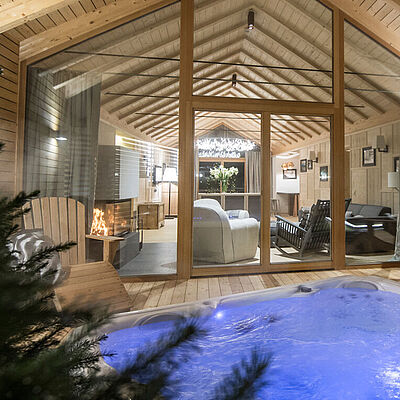
![[Translate to en:] AMADEUS Riva (c) Lüftner Cruises](/fileadmin/_processed_/d/e/csm_AMADEUS_Riva_ebdf4c2c55.jpg "[Translate to en:] AMADEUS Riva (c) Lüftner Cruises")











































![[Translate to en:] AMADEUS Riva (c) Lüftner Cruises](/fileadmin/_processed_/d/e/csm_AMADEUS_Riva_64c1995e26.jpg "[Translate to en:] AMADEUS Riva (c) Lüftner Cruises")