


Bahrain
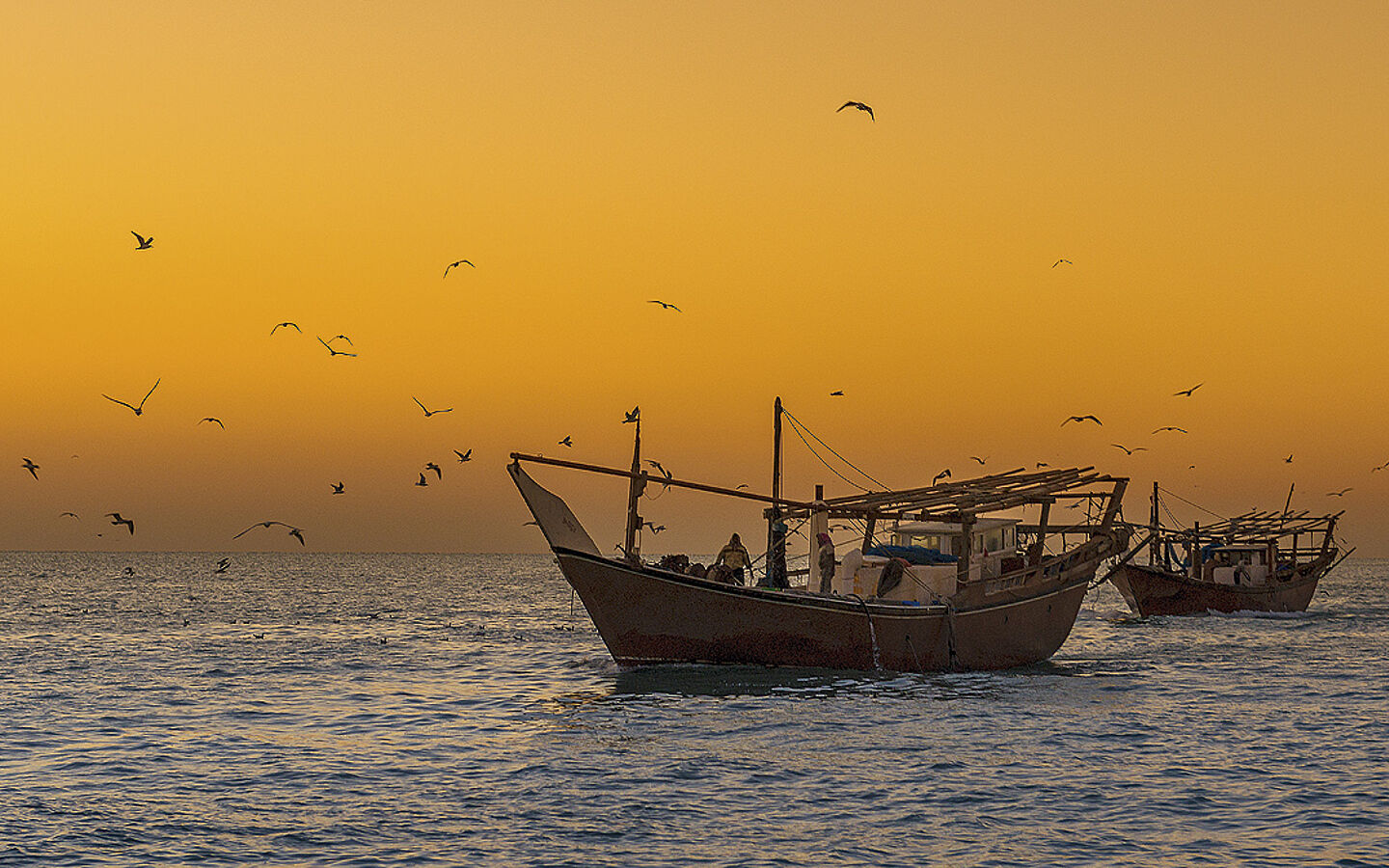
The Kingdom of Bahrain, which extends over 33 islands in the inland sea of the Arabian Gulf, has a rich history that goes back more than 4,000 years and was largely determined by one economic factor: diving for pearls and the pearl trade. Both have become firmly anchored in the culture of the kingdom. This is based on the shallow waters around the numerous islands, which offer the best conditions for oysters. Freshwater springs meet salt water here, which has led to the formation of large natural oyster beds. The special water gives the pearls a remarkable luster. Pearls from Bahrain have always been considered extraordinarily precious. The French jeweler Jacques Cartier, who made numerous trips to Muharraq to buy pearls, already appreciated this. Above all, however, Cartier was fascinated by the culture that inspired the jewelry he created at the beginning of the 20th century. Three of these oyster beds are now UNESCO World Heritage Sites, as are parts of the coast and the southern tip of the island of al-Muharraq - as well as many houses in the old town of Muharraq, which bear witness to the heyday of the pearl trade in the 19th and early 20th centuries. Those who wish can literally immerse themselves in Bahrain's unique culture. Since this year, tourists have had the opportunity to dive for pearls themselves. Each person is allowed to collect 60 oysters - if there is a pearl in one of these shells, you can keep it. The world of pearls can also be explored in the form of a 3.5-kilometre themed walking trail - the Pearl Route on al-Muharraq.
But besides the precious pearls , Bahrain is also characterized by enormous diversity. In the capital Manama, modern architecture
architecture that testifies to Bahrain's economic importance - in particular the 240-metre-high Bahrain World Trade Center. But the Formula 1 Grand Prix, which is taking place for the 14th time this year and has created a strong global awareness of Bahrain, also illustrates the wide range in a small area. The kingdom is almost twice the size of Vienna, for example. Bahrain offers a rich cultural program ranging from western jazz sounds to traditional Bahraini craftsmanship as well as the impressive light shows of the Bahrain Light Festival, which takes place every year in November. The archaeological site of the Bahrain Fortress, a UNESCO World Heritage Site, is well worth a visit. Museums - such as the National Museum - and theaters are also worth a visit. Bahrain shows its sophisticated side in the trendy Block 338 district, where various restaurants and bars promise an extraordinarily colorful mix and a great atmosphere.
www.btea.bh
! Photo slider: Al-Fateh Mosque; © Makrodepecher / pixelio.de!
Typical Arabic food - meat and fish
The usual specialties from the Gulf region and Arab states can also be found in Bahrain. One of the country's specialties is of course shwarma, a meat dish similar to doner kebab. Hammour is a local fish that is very similar to grouper and is served fried. In Bahrain you will find restaurants in every price range and the typical fast food chains are also plentiful. Western specialties are often offered in the larger shopping malls and in the center of larger cities.
Bahrain culture - The former "sea" In ancient times, Bahrain was part of an empire and was known as Dilmun. The empire was later referred to by the Greeks as Tyre. The name "Bahrain" is derived from the Arabic word Bahr, which means "sea".
Archaeological finds from the 3rd millennium BC show that the main island was probably settled by Sumerians. The nation was then known as Dilmun and served as a trading post on the route between Sumeri and the Indus Valley. In the fourth century AD, Bahrain was introduced into the Sasanian Empire. In the seventh century, the Muslims conquered the region and ruled until the sixteenth century. In 1521, Portugal ruled Bahrain. This state of affairs lasted until 1602, when the Persians conquered the country from the Portuguese.
In the 1830s, the British signed several treaties with Bahrain, offering protection from the Turks in exchange for access to the Persian Gulf. Numerous voices against the British increased in the 1950s, but England did not decide to withdraw until 1971, and Bahrain only gained its independence on August 14 of that year.
Seef Mall Bahrain - shopping on 450,000 m²
The
shopping opportunities in Bahrain are a
a true paradise and experience for tourists. The offer ranges from countless
souks, markets and numerous modern shopping centers, where you can
where you can go shopping in comfort. The markets, such as the Central Market, Meat Market or Fish Market, only offer fresh produce - all kinds of fruit and vegetables.
fresh produce - all kinds of fruit and vegetables and even shark. The markets are usually very hectic, but it's worth enjoying the atmosphere and haggling over the price. In the evening, it is worth visiting the
Gold Souq in Bahrain, which is particularly popular with women.
women's hearts beat faster. Gold prices in Bahrain are very attractive. Rings and necklaces are priced according to weight and not appearance.
Hotels


![[Translate to en:] AMADEUS Riva (c) Lüftner Cruises](/fileadmin/_processed_/d/e/csm_AMADEUS_Riva_ebdf4c2c55.jpg "[Translate to en:] AMADEUS Riva (c) Lüftner Cruises")








































![[Translate to en:] AMADEUS Riva (c) Lüftner Cruises](/fileadmin/_processed_/d/e/csm_AMADEUS_Riva_64c1995e26.jpg "[Translate to en:] AMADEUS Riva (c) Lüftner Cruises")