


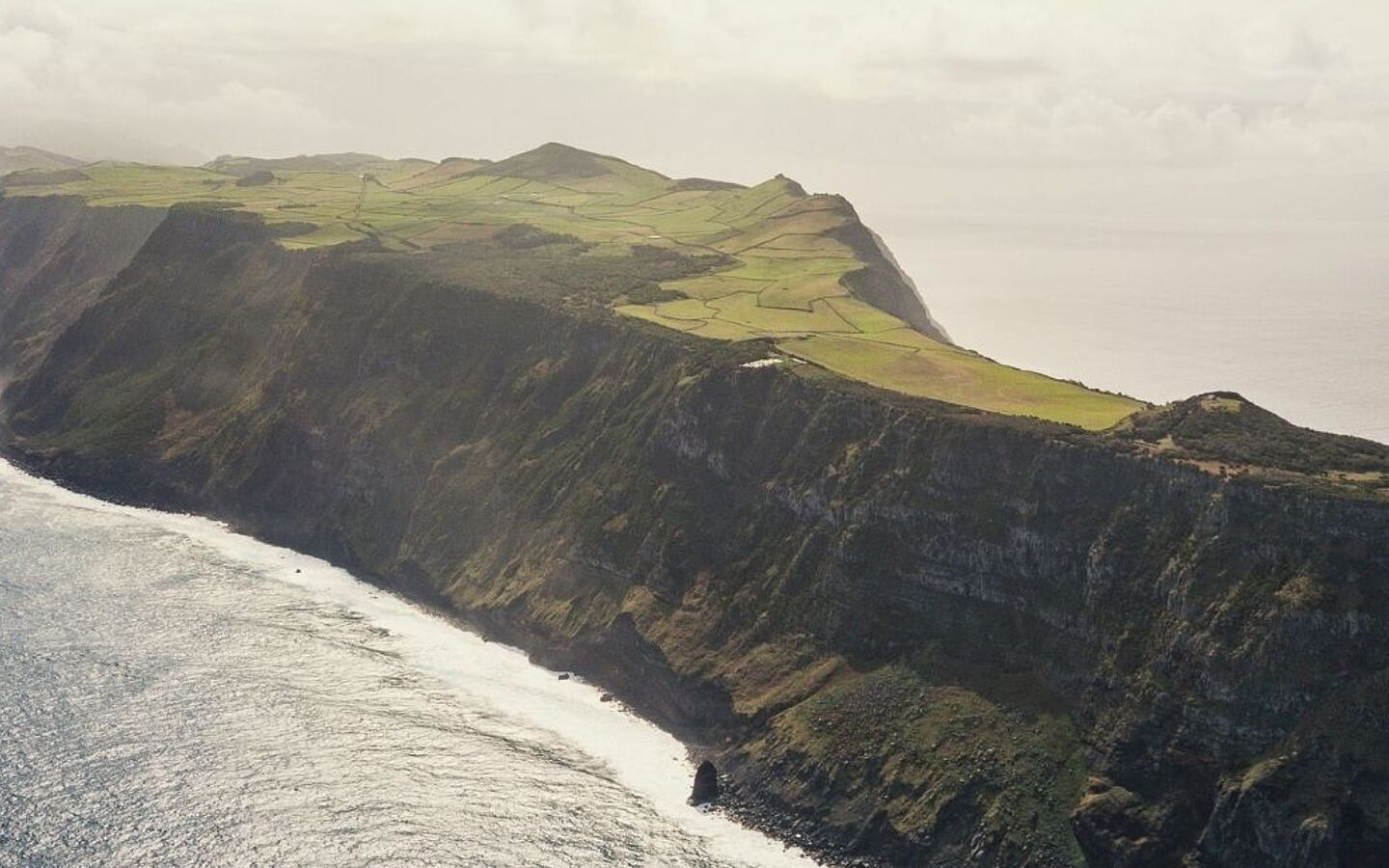
Azores
05/10/2021 Reading time: 3 Minutes
Exactly 1369 km west of Europe and 1930 km east of the US mainland, with an area of only 2,330 square kilometers, spread over 9 larger islands and several smaller ones: these are the hard facts. However, these facts cannot express the beauty of the archipelago.
FOR EXPLORERS: SÃO MIGUEL, FAIAL AND TERCEIRA
The origins of the archipelago can still be impressively explored on the largest island in the Azores. Holidaymakers can experience sulphur and iron-rich thermal springs (caldeiras) in the Furnas Valley, for example, visit the volcanic springs at Lake Furnas, the collapsed volcanic cone Caldera Sete Cidades - one of Portugal's seven natural wonders - and enjoy the seemingly endless hiking trails that run through the varied landscape of the hinterland. If you can't get enough of volcanoes, you should pay a visit to the Capelinho Volcano Interpretation Center on Faial. Here you can experience the volcanic eruption that began off the coast in September 1957 and lasted for 13 months. In 1983, Portugal was awarded its first UNESCO World Heritage Site: Angra do Heroísmo. The capital of Terceira has an excellently preserved old town and fortifications that date back to the early modern era. There are also huge laurel forests, caves, whale watching and - who would have thought it - a pretty lively nightlife.
FOR ENJOYERS: SÃO JORGE, CORVO AND FLORES
São Jorge has been inhabited since the 15th century; it is assumed that cheese production goes back almost as far. Since the mid-1990s, "Queijo São Jorge" has been a protected designation of origin and the spicy, strong cheese is popular with gourmets all over the world. The Fajã do Santo Cristo lagoon, also on the island of São Jorge, is the only place in the Azores where clams grow. They are larger than usual there and their unique taste makes for a special culinary experience. Corvo, the smallest island with just 465 inhabitants, is a tranquil place; it is particularly popular with ornithologists. Flores, the westernmost point of the European continent, has been a UNESCO biosphere reserve since 2009 due to its impressive cliffs, forests and lush flora. The interior of the island is not populated; here you will find numerous idyllic spots that you have all to yourself.
FOR SPORTY PEOPLE: SANTA MARIA, GRACIOSA AND PICO
Santa Maria was not only the first island to be discovered and colonized. It was also the first island in the Azores to be formed. Its turbulent geological past is responsible for its unique landscape features. Santa Maria is known for its arts and crafts, but also scores points with tourists for its great diving spots and white sandy beaches. The island of Graciosa has been declared a biosphere reserve by UNESCO. It is the second smallest of the archipelago and is characterized by its gently undulating terrain with several shallow bays. There are fantastic conditions for diving here, but anglers, rowers, sailors and windsurfers will also have unforgettable days. On Pico, the 2,350-metre-high Pico Mountain, Portugal's highest peak, beckons. The island's wine-growing region has been a UNESCO World Heritage Site since 2004.
www.visitazores.com/de
FOR EXPLORERS: SÃO MIGUEL, FAIAL AND TERCEIRA
The origins of the archipelago can still be impressively explored on the largest island in the Azores. Holidaymakers can experience sulphur and iron-rich thermal springs (caldeiras) in the Furnas Valley, for example, visit the volcanic springs at Lake Furnas, the collapsed volcanic cone Caldera Sete Cidades - one of Portugal's seven natural wonders - and enjoy the seemingly endless hiking trails that run through the varied landscape of the hinterland. If you can't get enough of volcanoes, you should pay a visit to the Capelinho Volcano Interpretation Center on Faial. Here you can experience the volcanic eruption that began off the coast in September 1957 and lasted for 13 months. In 1983, Portugal was awarded its first UNESCO World Heritage Site: Angra do Heroísmo. The capital of Terceira has an excellently preserved old town and fortifications that date back to the early modern era. There are also huge laurel forests, caves, whale watching and - who would have thought it - a pretty lively nightlife.
FOR ENJOYERS: SÃO JORGE, CORVO AND FLORES
São Jorge has been inhabited since the 15th century; it is assumed that cheese production goes back almost as far. Since the mid-1990s, "Queijo São Jorge" has been a protected designation of origin and the spicy, strong cheese is popular with gourmets all over the world. The Fajã do Santo Cristo lagoon, also on the island of São Jorge, is the only place in the Azores where clams grow. They are larger than usual there and their unique taste makes for a special culinary experience. Corvo, the smallest island with just 465 inhabitants, is a tranquil place; it is particularly popular with ornithologists. Flores, the westernmost point of the European continent, has been a UNESCO biosphere reserve since 2009 due to its impressive cliffs, forests and lush flora. The interior of the island is not populated; here you will find numerous idyllic spots that you have all to yourself.
FOR SPORTY PEOPLE: SANTA MARIA, GRACIOSA AND PICO
Santa Maria was not only the first island to be discovered and colonized. It was also the first island in the Azores to be formed. Its turbulent geological past is responsible for its unique landscape features. Santa Maria is known for its arts and crafts, but also scores points with tourists for its great diving spots and white sandy beaches. The island of Graciosa has been declared a biosphere reserve by UNESCO. It is the second smallest of the archipelago and is characterized by its gently undulating terrain with several shallow bays. There are fantastic conditions for diving here, but anglers, rowers, sailors and windsurfers will also have unforgettable days. On Pico, the 2,350-metre-high Pico Mountain, Portugal's highest peak, beckons. The island's wine-growing region has been a UNESCO World Heritage Site since 2004.
www.visitazores.com/de



![[Translate to en:] AMADEUS Riva (c) Lüftner Cruises](/fileadmin/_processed_/d/e/csm_AMADEUS_Riva_ebdf4c2c55.jpg "[Translate to en:] AMADEUS Riva (c) Lüftner Cruises")
















































![[Translate to en:] AMADEUS Riva (c) Lüftner Cruises](/fileadmin/_processed_/d/e/csm_AMADEUS_Riva_64c1995e26.jpg "[Translate to en:] AMADEUS Riva (c) Lüftner Cruises")