


Sri Lanka
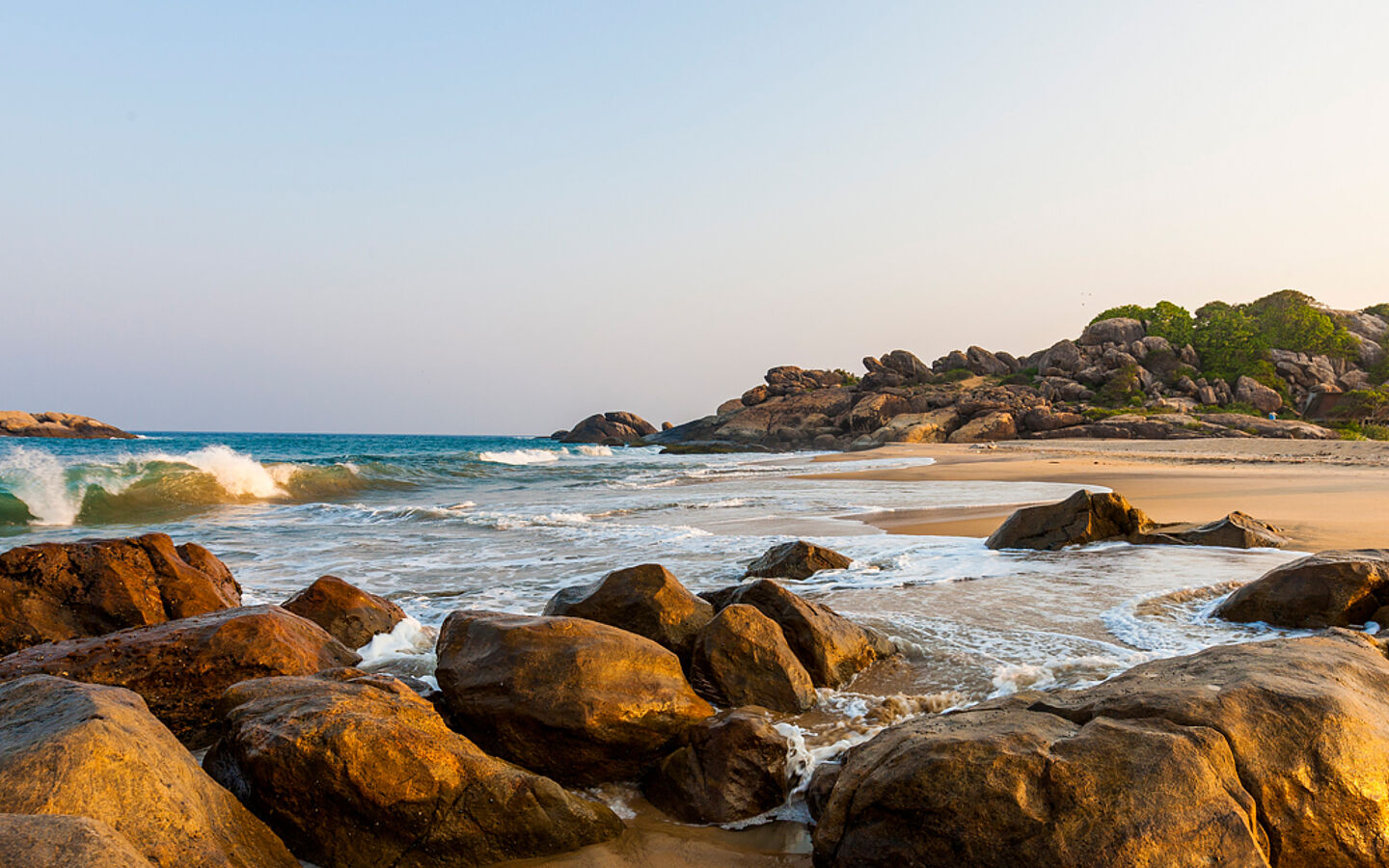
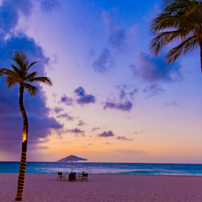
Sri Lanka means "royal shining land". An island with fabulous palm beaches, overflowing tropical nature and a rich variety of wildlife. Now a number of exclusive resorts have been established that leave little to be desired.
On the satellite map, the island nation looks like a tear, detached from the Indian subcontinent. A tear of joy, now that the civil war and tsunami had ensured that the "royal shining land", as Sri Lanka is translated, had been frozen in its beauty for decades. A great deal has happened since the peace agreement was signed in 2009. The capital Colombo is becoming a modern metropolis. Hundreds of kilometers of overland roads have been newly built, especially in the east and north of the island, regions that were long off-limits to tourism due to the turmoil of war. In the west, the highway from the international airport to the tip of the island in the south has been completed - currently with a gap of around 20 kilometers around Colombo. And then there is even a 210 million dollar project in the middle of the jungle. However, this is more likely to be frequented by wild elephants and other animals than by passengers: Mattala Rajapaksa International Airport. Built with Chinese money, officially opened in 2013, but with almost no air traffic. Only the local Cinnamon Air recently started a daily service from Colombo, according to reports. So at least guests of the Shangri-La Resort & Spa Hambantota could get to their destination relatively quickly. That is, if they don't land in Sri Lanka in the middle of the night, like many flights with Middle Eastern airlines. Sri Lankan Airlines, on the other hand, will be discontinuing its flights to Germany from October.
Disarming smile
As fantastically beautiful as the island state is - I would even say it is the most attractive vacation destination in tropical Asia - the transfer to the hotel is long and tiring. Especially as the luxury resorts are located in the south of Sri Lanka, others on the east coast. Depending on the distance, it takes between four and eight hours, with the only exception being night-time landings, which are significantly faster on the traffic-free routes. Hotel websites like to hide this fact by listing the number of kilometers. But what are 200 kilometers for drivers from German-speaking countries, especially when they read that there is no freeway? There is indeed a highway, but it currently only covers the 35 kilometers from the airport to the northern city limits of Colombo and resumes after 20 kilometers of city driving in a stop-and-go rhythm further west. The Southern Expressway takes you quickly through the hinterland to just before Matara at the southern tip. And then it meanders - lots of bends, lots of villages and chaotic traffic jams. However, once you've got through that, the strain immediately falls away and even near-collisions in blind bends are forgotten minutes later. Because you look into faces with disarming smiles. As soon as the eye registers the first impressions of exotic flair, a helpful spirit is on hand with an ice-cold towel and a welcome drink. I have never experienced anything else in any of the hotels I have tested.
Price level at an international level
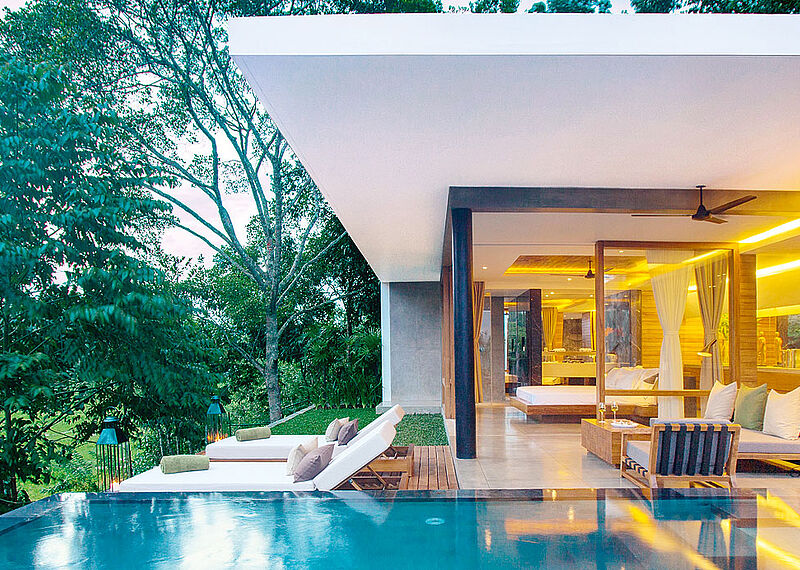
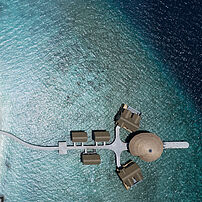
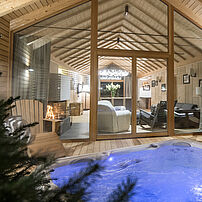
Anyone who knows Sri Lanka from the past and remembers it as an inexpensive vacation destination might be surprised now. If you are looking for a luxury holiday, you will have to dig just as deep into your pockets as in Mauritius, Thailand or Bali, for example. However, they do get something in return: excellent service and a varied cuisine, enchanting resorts with less than 100 rooms (or even less than 50) on spacious and lush terrain. Privacy is also a top priority at almost all of the resorts tested. Crowded beaches and cheap tourism, with beach bars, beach boys and hawkers are many bays away - in Hikkaduwa, Unawatuna or Mirissa, for example. But there is one thing you have to accept: Apart from Galle Fort, there are virtually no options for eating out and shopping in the immediate vicinity, and there is zero nightlife. Things are also bleak for golfers on the south coast. The only 18-hole course belongs to the Shangri-La. Otherwise you have to head to Tea Country, high in the mountains. Nuwara Eliya is home to the second oldest course in Asia, founded by the British in 1889. Too far for a day trip. If you are on vacation in the south of the island, you should definitely pay a visit to the Galle Fort World Heritage Site - the only place on the island with picturesque architecture. The mighty fortress walls enclose finely restored colonial houses, churches and temples from the 17th, 18th and 19th centuries. Boutiques, antique stores, galleries and lots of jewelry stores also lure visitors here. Precious stones are Sri Lanka's third largest export. The markets in the new town are also pretty. But only in the morning. By eleven o'clock at the latest, greengrocers and fishermen pack up their remaining goods and leave. Only the fruit sellers by the sea remain.
It is difficult to say whether you should spend your vacation on the south coast or in the east. The south has a more varied landscape and is more densely populated. As beautiful as the beaches are, swimming in the sea is dangerous unless you are in a bay protected by a reef. The waves roll in unhindered from the Antarctic, build up and throw themselves against the coast with all their might. It is not for nothing that Arugam Bay north of Yala National Park is one of the global hot spots for surfing. But only in the summer months. Otherwise, the east coast, like the new tourist mecca of Pasikuda, is dead calm. Ideal for swimming. At least at high tide. Those traveling with children are better off here. There is not much more than hotel complexes on the kilometer-long beach in Pasikuda. But you can quickly reach the "cultural triangle", for example the former royal city of Polonnaruwa in just under an hour. Some national parks can also be reached quickly on the well-developed roads. When it comes to wildlife in Sri Lanka, there is basically nothing comparable in the tropical Asian region. Where else do around 6,000 wild elephants live in such a small area? They also like to loiter along the road, stand in the rice fields or check out the beach. Around ten percent of the island is managed by the Department of Wildlife Conservation. And who would have thought that Yala has a higher density of leopards than any game reserve in Africa? As engagingly luxurious as all the resorts are, it's always worth heading out and discovering this royally shining land with its lovely people.
Photos: (c) Paul Spierenburg
DIPLOMATIC MISSIONS
Austria
Embassy of Sri Lanka
Weyringergasse 33, 1040 Vienna
Phone: +43 1 5037988
Fax: +43 1 5037993
E-Mail: slmission@srilankaembassy.at
www.srilankaembassy.at
Germany
Embassy of Sri Lanka
Niklasstraße 19, 14163 Berlin
Phone: +49 30 80909749
Fax: +49 30 80909757
E-Mail: info@srilanka-botschaft.de
www.srilanka-botschaft.de
Location
Sri Lanka liegt im Indischen Ozean, südöstlich des indischen Subkontinents, zwischen 6° und 10° nördlicher Breite und zwischen 79° und 82° östlicher Länge.
Area
65.610 km²
Population
20.48 million
Language
Sinhala and Tamil
Arrival
Connections via Dubai from all major German airports are offered by Emirates, www.emirates.com and Qatar Airways from Frankfurt, Berlin and Munich, www.qatarairways.com
Sri Lankan Airlines will fly non-stop from Frankfurt to Colombo five times a week until October 30, until then the fastest connection. After that, the route will be operated as a codeshare with Qatar Airways. From Berlin and Vienna, the airline offers daily codeshare connections with airberlin and NIKI. There is a codeshare agreement with Etihad Airways from Munich.
www.srilankan.com
As luxury resorts are mainly located in the south and east of the island, you have to be prepared for long transfer times of 3 to 8 hours, depending on the destination. For daytime arrivals, the journey time can sometimes double due to confusing and very busy traffic. A domestic flight with a seaplane from Cinnamon Air is often a good idea.
Capital city
Sri Jayawardenepura
Religion
multi-religious
Weather
Tropical with varying rainfall conditions due to the monsoons.
Best time to travel
December and April
Climate
| Jan | Feb | Mar | Apr | May | Jun | Jul | Aug | Sep | Oct | Nov | Dec | |
| Max. Temperature | 31.9 | 32.6 | 32.5 | 32.2 | 31.5 | 30.5 | 30.1 | 30.4 | 30.6 | 30.3 | 30.6 | 31.1 |
| Min. Temperature | 22.4 | 22.8 | 23.9 | 24.8 | 26 | 26 | 25.7 | 25.8 | 25.2 | 24.4 | 23.6 | 22.9 |
| Hours of Sunshine | 6 | 6 | 6 | 3 | 1 | 0 | 1 | 1 | 1 | 3 | 4 | 4 |
| Rainy days | 7 | 4 | 8 | 14 | 16 | 14 | 11 | 9 | 13 | 19 | 16 | 10 |
Time difference (to MEZ)
UTC+5:30
Currency
Sri Lanka Rupee
Visa
Sri Lanka visa
Flavor explosions in abundance
Really spicy: Sri Lankan cuisine makes vegetarians rejoice. Imaginative spice blends also turn fish and meat dishes into culinary adventures.
We are familiar with Thai and Bali specialties, perhaps with Chinese and Indian cuisines. But who, if they haven't already been there, knows the culinary secrets of Sri Lanka? And so it is more than astonishing that an incredible wealth of delicate, sometimes hearty to devilishly spicy dishes are hidden behind the simple term "rice and curry". Strictly speaking, the national dish should be called "Rice and Curries", as there are always several bowls of different contents grouped together on the table. Curry, derived from the Indian word "karhi", stands for a mixture of spices, but also for a mix of meat, seafood or vegetables in a thick sauce with or without coconut milk. Each dish, in turn, is prepared with different spice mixtures. These may include cumin, star anise, cinnamon, cardamom and cloves, as well as coriander, fenugreek, fennel or mustard seeds; not forgetting fresh curry leaves - all lightly roasted and powdered in the traditional way in a clay pot. At least that's how chef Roshan teaches it at the Amangalla cooking school. If you hold your nose over it, it almost blows you away. The aroma is so strong that you gasp for air. Watery spices such as garlic, ginger, onions and/or chili then refine the soupy part. Depending on whether you choose beef, fish, chicken, shrimps or prawns as the main ingredient or stick to vegetarian ingredients, it is served with a bowl of rice, dhal (yellow lentil stew), fruit or vegetable chutney, coconut sambol and pappadam. The latter is a wafer-thin, crispy baked flatbread. The coconut sambol is spicy because it is made from freshly grated chili. Once you've tried these juicy crumbles, you won't be able to go without them. Guaranteed! For vegetarians, Sri Lanka is paradise par excellence. For religious reasons or due to a lack of money, a large part of the population eats a meat-free diet. And thanks to the creativity of the island's chefs and the local variety of tropical and subtropical vegetables, the vegetarian menu is virtually exploding. This may not necessarily be reflected on the hotel menus. But anyone who expresses a desire to try typical Sri Lankan dishes in all their colorful abundance will almost certainly be met with open ears and happy smiles.
A specialty, usually served for breakfast, are "hoppers", rice flour pancakes fried in bowl-shaped pans. A fried egg in the middle makes it an "egg hopper", the batter is pulled into noodles, formed into a ball and steamed to make a "string hopper". In the south of the island, you can see flat clay bowls tied up with paper and dangling five or more high on strings from stores or stalls. They contain homemade curd, a creamy yogurt made from buffalo or cow's milk. Mixed with palm sugar syrup (honey), the result is a highly delicious meal. Roti rolls are a hearty snack in Tamil cuisine. The dough is rolled out flat, fried on a wrought iron plate, topped with spiced vegetables or meat and folded up.
Of course, apart from local specialties, every luxury hotel offers classics from Central European, Mediterranean and US cuisines. Meat lovers can usually bite into juicy imported steaks. The range of daily fresh fish and seafood on offer is also very large. But experience shows that those who have made friends with the spice-rich and therefore healthy island cuisine usually stick with it. Especially as you have to search for a long time at home to find authentic Sri Lankan dishes.
Tip: It is not worth looking for private restaurants with gourmet cuisine outside the luxury resorts. There is still a lack of initiatives in this area, except in Colombo.
TEXT: KIKI BARON
Sightseeing in Sri Lanka - A must for culture lovers Sri Lanka offers a wealth of cultural sights on the one hand and spectacular nature with a rich variety of wildlife in 22 national parks on the other. A combination of a round trip followed by a stay on the beach is therefore very popular;
The "cultural triangle"
The three cornerstones are Anuradhapura, Polonnaruwa and Kandy. In the first millennium after the turn of the millennium, Buddhist kingdoms emerged, whose splendor and wealth can still be seen today in the imposing ruins. There are temples and monasteries, some with gigantic dagoba (stupa), as well as palaces. This development was only possible thanks to an ingenious irrigation system with extensive water reservoirs and kilometers of canals. This meant that the barren soil could always be used for agriculture.
Anuradhapura was the first capital, founded in 437 before the turn of the millennium. The entire area of the ancient site is 20 square kilometers in size. You have to be prepared for a lot of hype at the sacred tree. The Bodhi Tree grew from a branch of the Indian tree under which Buddha was enlightened;
Mihintale, on the other hand, is visited by few tourists but is well worth a visit. The monastery complex on a hill is regarded as the cradle of Sri Lankan Buddhism and is still revered to this day.
The Sigiriya rock fortress is regarded as the decadent crowning glory of royal architecture. Would-be heir to the throne Kashyapa had entrenched himself on the 200-metre-high monolith and had a fortress and water features built. The latter still serve as models for tropical garden design today. Kashyapa's artistic life is immortalized in Sri Lanka's most famous fresco - bare-breasted cloud girls from the 5th century. However, the climb up the towel-thin stairs to the rocky plateau requires a lot of breath and a head for heights.
In Polonnaruwa, the center of power from the 11th century onwards, Gal Vihara is the highlight of ancient sacred stone carvings. The ensemble shows four Buddhas carved out of granite rock. The reclining one, at 14 meters, indicates with its displaced feet that it is about to pass into nirvana. In addition, ruins from the 12th century speak vividly of grandiose architecture;
The cave temples in Dambulla are spectacular. Founded in the 1st century BC, there are hundreds of Buddha images in five separate caves. Kandy is home to the most important Buddhist relic - the sacred tooth of the religion's founder. In July/August, it is carried through the city in an exciting elephant procession during the Esala Perahera.
Spice gardens
Kandy is a center of spice cultivation. In numerous gardens you can see, smell and taste under expert guidance: Cinnamon, cardamom, cloves, coriander and many other spices. You learn what they are good for and against. Interesting, but ultimately these are sales shows and the spices are much more expensive than at home;
Central mountain region
Eternal spring reigns from an altitude of 800 meters. Everything blooms and flourishes and huge areas glow in the bright green of the tea plantations. A very varied region: small settlements and narrow gorges, sweeping terraces with rice and vegetables, spice and fruit cultivation, jungle and always bizarre mountain peaks such as Adam's Peak or Pidurutalagala. The highest town is Nuwara Eliya (pronounced Nurelja) with its pretty market, golf course and polo pitch;
Galle
Apart from the ancient sites, the historic fort with its buildings from the Portuguese, Dutch and British eras is the only town on the island that is really worth seeing. Last but not least, the fort was awarded UNESCO World Heritage status. A large part of it has been restored in recent years and is now home to hotels and guest houses, restaurants and boutiques. It has been a hub for gemstones and jewelry since time immemorial and numerous jewelers have (re)established themselves here. The markets in the new town are also interesting.
National parks
Around a fifth of the country is protected, the largest areas being Wilpattu in the northwest and Yala in the south. These are not new achievements, as the first reserve was established 300 years ago. Regardless of where guests stay, the nearest park is just a day trip away. In the meantime, lodges have also been established in the vicinity of some parks. In Uda Walawe, encounters with elephants are almost guaranteed, and in Yala, the probability of seeing a leopard is quite high.
Whale watching
The waters off the southern tip of Sri Lanka are home to blue and sperm whales, which are best seen between December and February. The starting point for early morning observation tours is the port of Mirissa. An exciting experience that hundreds of tourists on dozens of boats do not miss out on every day. The disadvantage is that the boats are very uncomfortable and if the first sighting extends into the afternoon, you can expect a lot of rocking.



![[Translate to en:] AMADEUS Riva (c) Lüftner Cruises](/fileadmin/_processed_/d/e/csm_AMADEUS_Riva_ebdf4c2c55.jpg "[Translate to en:] AMADEUS Riva (c) Lüftner Cruises")












































![[Translate to en:] AMADEUS Riva (c) Lüftner Cruises](/fileadmin/_processed_/d/e/csm_AMADEUS_Riva_64c1995e26.jpg "[Translate to en:] AMADEUS Riva (c) Lüftner Cruises")