


Philippines - the country that never sleeps
01/08/2020 Reading time: 4 Minutes
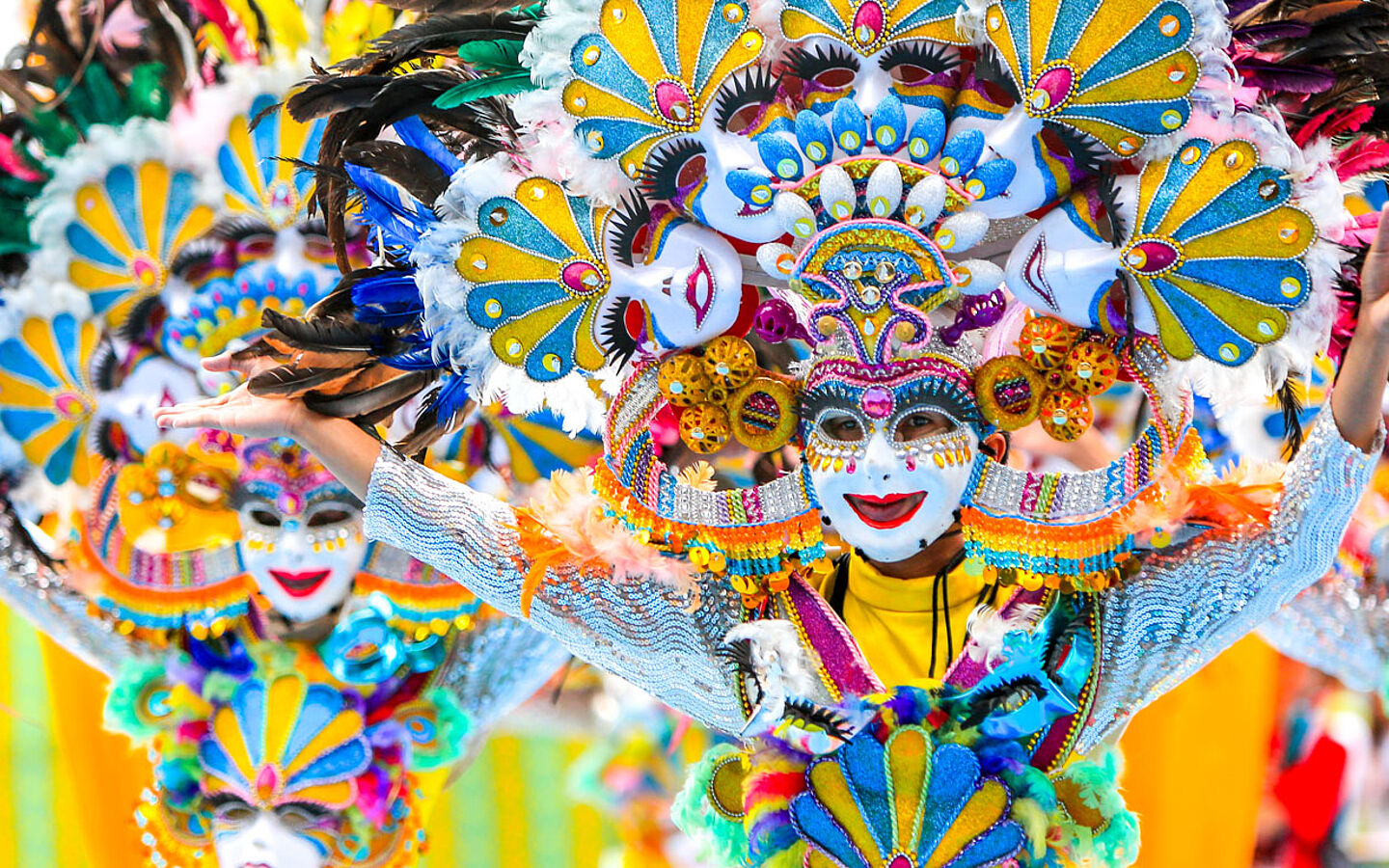
The festivals in the Philippines are colorful, shrill, loud and above all a real spectacle, taking place in almost every region and at all times. The occasions are just as varied as the people who take part. So there is hardly a visit without seeing the colorful costumes and impressive dancers of the Ati-Atihan, Pahiyas or Viva Vigan festivals. However, religiously motivated festivities such as the Sinulog Festival or the Procession of the Black Nazarene are also an integral part of the 2020 festival calendar.
A march for forgiveness: Procession of the Black Nazarene in Manila on January 9
The year begins in the capital city of Manila with the great procession in honour of the Black Nazarene - a statue of Christ whose eponymous black coloring presumably stems from a fire. The route, which is over six kilometers long, leads the devotees from Rizal Park to the basilica in the Quiapo district. The statue is considered one of the most important devotional objects in the country and is visited by millions of believers every year - those who touch it hope to be healed or have their sins forgiven.
Thanks to the new arrivals: Ati-Atihan Festival in Kalibo from January 13 to 19
Also in January, the Ati-Atihan Festival takes place in Kalibo on the island of Panay in the center of the Philippines. The country's largest festival is celebrated every year in January for a week in the streets in honor of Santo Nino - the baby Jesus. The origins of the festival date back to the 13th century, when ten tribal chiefs had to flee Borneo with their families and found a new home on Panay. The Ati-Atihan festival was held for the first time in honor of the new arrivals. Dancer groups representing the indigenous people of the island take part in the street festivals today, as do music groups in colorful costumes. The highlight is the big parade on the last day.
Celebration in honor of Christianity: Sinulog Festival in Cebu City on 19 January
At the same time, the Sinulog Festival is celebrated on the neighboring island of Cebu, which attracts up to two million people every year. The festival with religious origins commemorates the conversion from paganism to Christianity in the Philippines and has offshoots in several parts of the province. Traditional dance rituals, the election of the festival queen and a procession to the Basilica Minore, where a centuries-old image of the infant Jesus is kept, are the highlights of the celebrations with the grand parade, which attracts numerous tourists from all over the world.
Colonial-style city festival: Viva Vigan Festival of Arts in Vigan in the 1st week of May
Vigan in Northern Luzon is one of the oldest colonial cities in the country and has been a UNESCO World Heritage Site since 1999. Every year in May, the Viva Vigan Festival of Arts takes place to commemorate the historical significance and cultural value of the city and to appeal for the preservation of the old town. During the festivities, two things in particular catch the eye - the Binatbatan dance, which re-enacts the traditional production of cotton, and brightly painted Asian buffaloes, which emphasize the importance of local agriculture. Other events include fashion shows, singing and beauty contests, exhibitions, garden shows and trade and food fairs.
Fruit, vegetables and more: the Pahiyas harvest festival in Lucban on May 15
"Payes" means "to decorate" in Filipino - so it's no wonder that lavish decorations are the order of the day at the Pahiyas harvest festival in the municipality of Lucban, south-east of the capital, and every house façade is magnificently adorned. However, not only brightly colored rice flour plates, banana leaves, fruit and vegetables are used in the decorations, but also the famous longaniza - a typical Filipino sausage, similar to the Spanish chorizo. The great effort is rewarded, as the most creative decoration wins a prize at the end of the day.
Further information about the Philippines can be found online at www.morefunphilippines.de www.facebook.com/MoreFunPhilippinen,www.instagram.com/morefunphilippinen and at www.youtube.com/user/morefunph
Philippine Department of Tourism
A march for forgiveness: Procession of the Black Nazarene in Manila on January 9
The year begins in the capital city of Manila with the great procession in honour of the Black Nazarene - a statue of Christ whose eponymous black coloring presumably stems from a fire. The route, which is over six kilometers long, leads the devotees from Rizal Park to the basilica in the Quiapo district. The statue is considered one of the most important devotional objects in the country and is visited by millions of believers every year - those who touch it hope to be healed or have their sins forgiven.
Thanks to the new arrivals: Ati-Atihan Festival in Kalibo from January 13 to 19
Also in January, the Ati-Atihan Festival takes place in Kalibo on the island of Panay in the center of the Philippines. The country's largest festival is celebrated every year in January for a week in the streets in honor of Santo Nino - the baby Jesus. The origins of the festival date back to the 13th century, when ten tribal chiefs had to flee Borneo with their families and found a new home on Panay. The Ati-Atihan festival was held for the first time in honor of the new arrivals. Dancer groups representing the indigenous people of the island take part in the street festivals today, as do music groups in colorful costumes. The highlight is the big parade on the last day.
Celebration in honor of Christianity: Sinulog Festival in Cebu City on 19 January
At the same time, the Sinulog Festival is celebrated on the neighboring island of Cebu, which attracts up to two million people every year. The festival with religious origins commemorates the conversion from paganism to Christianity in the Philippines and has offshoots in several parts of the province. Traditional dance rituals, the election of the festival queen and a procession to the Basilica Minore, where a centuries-old image of the infant Jesus is kept, are the highlights of the celebrations with the grand parade, which attracts numerous tourists from all over the world.
Colonial-style city festival: Viva Vigan Festival of Arts in Vigan in the 1st week of May
Vigan in Northern Luzon is one of the oldest colonial cities in the country and has been a UNESCO World Heritage Site since 1999. Every year in May, the Viva Vigan Festival of Arts takes place to commemorate the historical significance and cultural value of the city and to appeal for the preservation of the old town. During the festivities, two things in particular catch the eye - the Binatbatan dance, which re-enacts the traditional production of cotton, and brightly painted Asian buffaloes, which emphasize the importance of local agriculture. Other events include fashion shows, singing and beauty contests, exhibitions, garden shows and trade and food fairs.
Fruit, vegetables and more: the Pahiyas harvest festival in Lucban on May 15
"Payes" means "to decorate" in Filipino - so it's no wonder that lavish decorations are the order of the day at the Pahiyas harvest festival in the municipality of Lucban, south-east of the capital, and every house façade is magnificently adorned. However, not only brightly colored rice flour plates, banana leaves, fruit and vegetables are used in the decorations, but also the famous longaniza - a typical Filipino sausage, similar to the Spanish chorizo. The great effort is rewarded, as the most creative decoration wins a prize at the end of the day.
Further information about the Philippines can be found online at www.morefunphilippines.de www.facebook.com/MoreFunPhilippinen,www.instagram.com/morefunphilippinen and at www.youtube.com/user/morefunph
Philippine Department of Tourism




![[Translate to en:]](/fileadmin/_processed_/4/d/csm_Spring23_Wine_Sideshots_0891_4fe01c4668.jpg "[Translate to en:]")













































![[Translate to en:]](/fileadmin/_processed_/4/d/csm_Spring23_Wine_Sideshots_0891_e0e951bfb0.jpg "[Translate to en:]")