


Mr. & Ms. Connoisseur: The Latest from the World of Luxury Travel
This new column takes you to special places and explores the latest developments in the world of travel. It covers new luxury concepts in Vienna, exceptional flight experiences, inspiring mountain retreats, and a brief look at global trends. Concise, diverse, and with a personal touch, it highlights what’s currently shaping the industry—and what travelers can look forward to.
03/31/2026 Reading time: 8 Minutes
Listen.
Viennese privacy on an unprecedented scale.
From nobility to the nouveau riche: this is one way to describe the highly successful transformation of one of Vienna’s most prestigious buildings. We are talking about an iconic luxury address in the 1st district of the Austrian capital: the 5-star Palais Coburg has been providing reliable ultra-luxury in the city center since its opening in 2003, following a takeover by financial magnate Peter Pühringer—a native of East Germany and now one of Austria’s wealthiest individuals. Recently, just a stone’s throw from the Palais—following a neighborhood dispute with residents—a new Mandarin Oriental also opened, which certainly did no harm to the “Grätzl,” as the Viennese say.
Now the owner of the Palais Coburg, the Pühringer Foundation Group, has announced that the luxury hotel will be transformed into an exclusive private guesthouse with 36 individual suites . To stay in Viennese parlance: In fact, the Coburg has already been a successful “melange” of accommodation, a 2-star gourmet destination, and an exclusive wine archive. Connoisseurs appreciated the great vintages, a perfectly celebrated wine culture—including guided tours for the initiated—and culinary delicacies, which the capital’s elite took full advantage of. The historic casemates and the Bel Etage with its state rooms will likely be showcased as the heart of the palace following their careful renovation—also because the owners emphasize a “new definition of luxury” in their suite concept: quieter, more personal, more discreet.
700394

“Quiet Luxury” was indeed a hallmark of the reserved owner and patron Peter Pühringer, who once saved the building and then made it possible to operate a hotel—one about which it was sometimes said in Vienna that occupancy rates were not his only goal: he didn’t care if he was the only guest in the house. Of course, the hotel’s success over decades and its stylish repositioning have contributed—and continue to contribute—significantly to the Austrian capital’s reputation as the ultimate luxury destination. The palace remains a Vienna landmark, and we are truly proud of it.
Beloved.
High up in the sky.
Frequent flyers have long sworn by its excellent Business Class—and yet the airline is still an insider’s tip: A long-haul flight with EVA Air , such as the recent flight to Bangkok (with Taipei as the final destination via Thailand), is the ultimate experience currently available above the clouds. It offers a total work of art in aviation—combining precision, safety, and service quality—that comes quite close to the amenities of First Class.
700394

No crowds, no rush at the gate. A sense of calm upon entering the cabin—a warm smile included. The customary glass of champagne upon arrival, the seat a dream. Storage spaces are perfectly organized, the toiletries are of the highest quality (presented on this flight in an elegant pouch by Maison Kitsune), and the acoustics are state-of-the-art. The seat in EVA Air’s so-called “Royal Laurel Class” is a workspace, retreat, and resting place all in one: generously sized and arranged in a 1-2-1 configuration, it transforms into a fully flat bed at the touch of a button. But then! As a signature moment of which the airline is particularly proud, the real “turndown service.” While we briefly stretch our legs, the seat is transformed into a made-up bed—complete with mattress topper and blanket. It works. Why don’t other airlines offer this on board, or why has Austrian Airlines done away with it again? With a friendly smile, designer pajamas are handed to us; subtle scents in the restrooms leave us in awe—even on a 10-hour flight, the cabin remains impeccably maintained. The unobtrusive presence of the crew—always on hand and almost anticipating our needs—is complemented by a personal approach to each passenger and a quiet, naturally delivered service culture.
700394

The food is served with the same unpretentious elegance: multi-course menus with a focus on Asian and international flavors, accompanied by a wine list featuring exceptionally innovative cellar expertise and a cocktailand spirits selection—including Taiwanese whiskey—make time literally fly by. The fact that the food is served with tablecloths is just as unsurprising as the extreme cleanliness throughout the entire aircraft: spotless with no signs of wear, surfaces that are obviously freshly disinfected, and, we can hardly believe it, Wi-Fi on board without a single glitch: How often have we seen the market leaders of the skies, in particular, having to apologize after landing (and that’s in the best-case scenario!) with an extra mileage credit for the broken internet. The smaller EVA Air shows how it’s done. No wonder this true gem above the clouds ranks 5-star in all relevant rankings. Connoisseur Circle Rating: Spectacularly good.
Seen.
My friend, the forest.
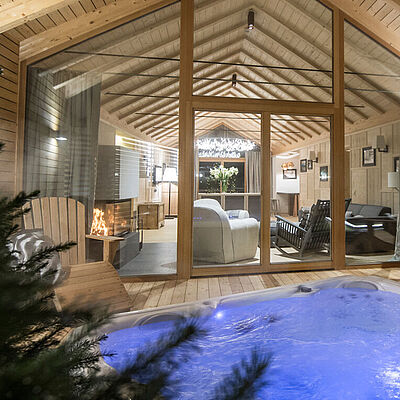
We have a magnificent discovery on the cover of the latest issue of Connoisseur Circle, which will be released in a few days: FORESTIS is the name of this hotel experience—rarely have we encountered a retreat managed with as much love and expertise as this South Tyrolean sanctuary.
And so goes the fairy tale come true: In 1912, the Austro-Hungarian Empire was searching for a site for a sanatorium. At an altitude of 1,800 meters, in Palmschoß above Brixen, the ideal location was found: Pure mountain air, a mild climate, and fine spring water laid the foundation for the legend of a house built of wood and natural stone, combined with an Alpine Art Nouveau villa—long before South Tyrolean hotelier Alois Hinteregger recognized the special energy of the place in the overgrown area and built a hotel there. In 2020, his son Stefan and his wife Teresa opened their FORESTIS there. The name is derived from “foresta,” meaning forest, and reflects the philosophy: a place where nature, tranquility, and time become the true luxury.
700394

700394

700394

Inspired by the Celtic connection to the forest, the FORESTIS spa concept is based on four native trees—mountain pine, spruce, larch, and Swiss stone pine. Their natural active ingredients and vibrations make the forest the heart of relaxation. The cuisine at FORESTIS, bearing the signature of Executive Chef Roland Lamprecht , continues the motto of “forest and nature cuisine.” Lamprecht uses mushrooms, berries, herbs, products from local farmers, and heirloom vegetables grown specifically for FORESTIS—and he combines Mediterranean lightness with Alpine flavors: newly composed each day and deeply rooted in his South Tyrolean homeland. Take a look—we promise we’re not exaggerating: With YERA, Lamprecht has taken his forest cuisine to the next level. To enjoy the flavors and ingredients of the forest even more intensely, Teresa and Stefan Hinteregger have created a new restaurant. It’s located in the forest, built into the mountainside—a tribute to traditional craftsmanship and ancient cave-dwelling techniques. Lamprecht and his team use traditional methods: they ferment, salt, dry, smoke, and work with low temperatures and infusions. At YERA, cooking takes place on and over an open fire in front of the guests. Is your mouth watering yet? Read more soon in our spring issue—available at good newsstands and online here: www.ccircle.cc
700394

700394

700394

Listen.
Thailand is concerned about energy.
When one says Thailand, one thinks of tropical joie de vivre—but also endless streams of light, heavy traffic, and heavily air-conditioned hotels as places of retreat. Today, a subtle note is added: In the wake of the war in Iran, the harbingers of a veritable energy crisis are joining the usual lightness of being. The signs of heightened vigilance are subtle and multifaceted—barely noticeable to guests and by no means disruptive, because—as is customary in the country—they are implemented with the utmost consideration.
Here, the government is urging people to use stairs instead of elevators. There, air conditioning is being adjusted more precisely, temperatures in public areas are being raised, and gasoline is being rationed at gas stations. The Bangkok Post describes the cost pressures on raw materials, transportation, packaging, and energy—and speaks of imminent price increases. For the first time, hoteliers’ fears that energy prices are spiraling out of control are louder than their concerns about declining bookings. Thailand, heavily dependent on energy imports, is feeling the impact of global conflicts firsthand. Travelers, in turn, are already noticing significantly higher airfares, even in the Land of Smiles. Thailand, a master of moderation, will overcome this challenge as well. In our view, there is still hardly any other country with a better price-performance ratio—still good value overall. We’re keeping our fingers crossed.
700394

Image credit: Palais Coburg, Mandarin Oriental, EVA Air, Charlotte Lapalus-FORESTIS




![[Translate to en:] AMADEUS Riva (c) Lüftner Cruises](/fileadmin/_processed_/d/e/csm_AMADEUS_Riva_ebdf4c2c55.jpg "[Translate to en:] AMADEUS Riva (c) Lüftner Cruises")
















































![[Translate to en:] AMADEUS Riva (c) Lüftner Cruises](/fileadmin/_processed_/d/e/csm_AMADEUS_Riva_64c1995e26.jpg "[Translate to en:] AMADEUS Riva (c) Lüftner Cruises")