


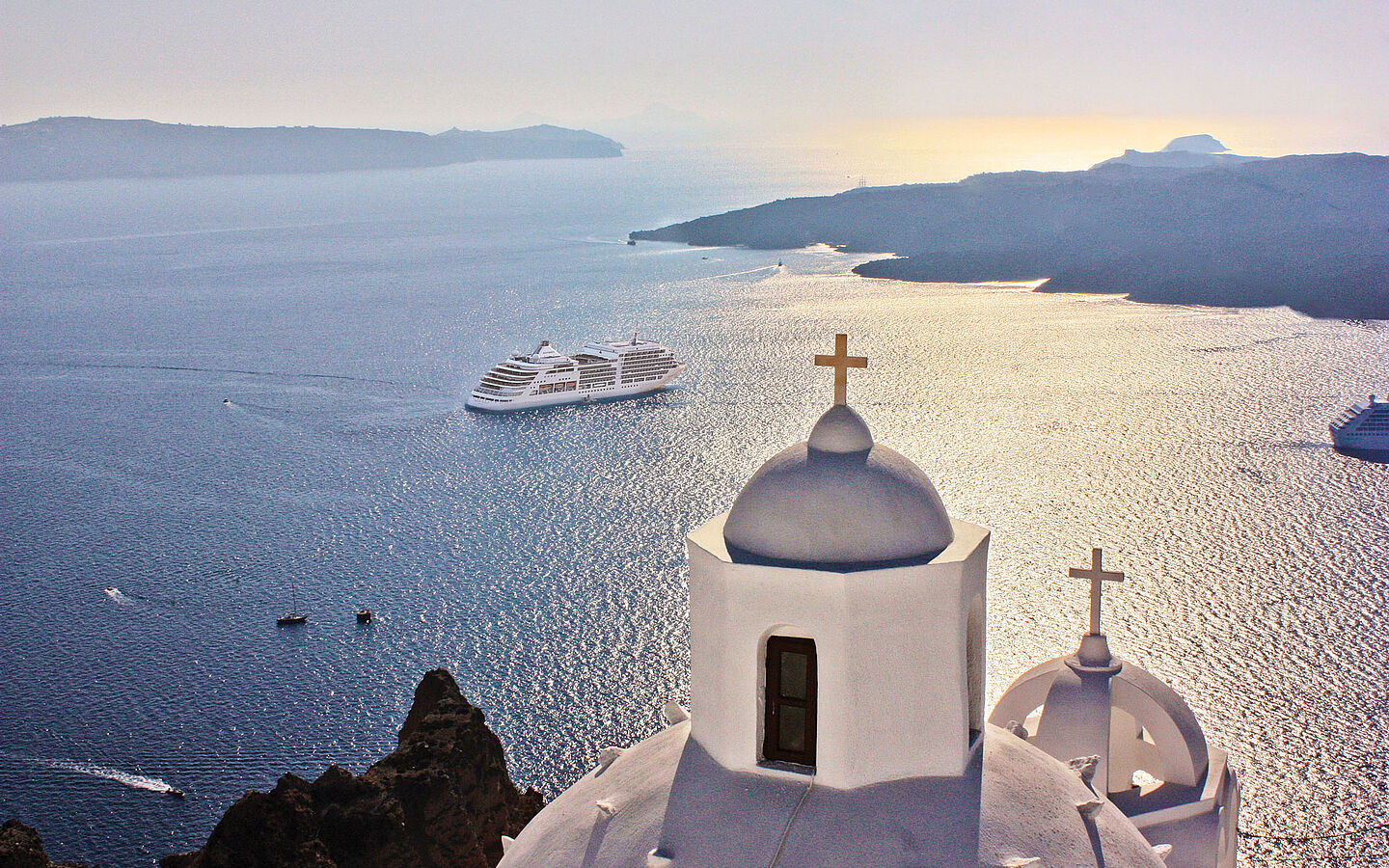
Back on the wave of success
The future of cruises
For years, the cruise industry was all about "full speed ahead" - until corona caused a sudden slump on all the world's oceans. With innovative concepts and new ships, the shipping companies now want to steer their way out of the crisis and safely navigate the hurdles of the future. A trend report by cruise expert Jörg Bertram.
In order to be able to look ahead, it is sometimes helpful to look back at one's own past. In times like these, this also applies to the major shipping companies, which were already facing the full force of the headwind seven decades before coronavirus. In the 1950s, however, it was not a small virus that kept the world on tenterhooks that triggered a hurricane. Instead, it was the emergence of large passenger jets connecting continents in just a few hours that caused the demise of the "scheduled passenger shipping" business model.
But this crisis also presented an opportunity at the time - or, to put it more specifically, the birth of the "modern cruise". And today? A rough wind is blowing again, which requires course corrections in order to stay on course for success ...
The future of cruising - 6 trends and developments that point the way ahead
1. green cruising: cruising is becoming more sustainable
From the (rather symbolic) abolition of plastic straws high up at the on-board bar to heavy oil-free hybrid propulsion deep down in the belly of the ship: the topic of sustainability will play an even more central role in the coming years. This is partly due to the fact that it is only a small step from the already widespread "flight shaming" to the still rather exotic "cruise shaming". On the other hand, it is also due to the increasingly strict requirements of the environmental authorities. For example, only fuels with a maximum sulphur content of 0.1% may be burned in all EU ports - as well as in all protected areas declared as "Emission Control Areas" (ECA).
One of the pioneers in green cruising is the Norwegian expedition and mail ship shipping company Hurtigruten, which not only launched the world's first hybrid expedition ships, but has also banned all single-use plastic products from on board, reduced its food waste by more than 20% and involves crews and guests in collecting waste during loading. Another commitment from the far north fits in with this: From 2026, Norway wants to effectively only allow electric or hydrogen-powered ships into its fjords. Anyone who does not achieve zero green emissions will have to stay outside in future - and the extremely profitable route to the North Cape will probably have to be removed from their travel program ...
2. Try me a river: Rivers are the new sea
Small, beautiful, Rhine - or perhaps Danube, Douro, Volga and Mekong? Until a few years ago, river cruises were still considered a classic trip for senior citizens, but they have now become the biggest growth market on the water. This is mainly thanks to new ships with spacious spa areas, on-board bikes for shore excursions and special offers for families, golfers or gourmets, which are now the contemporary standard for many providers and open up new target groups on the city-country-river course.
"The trend is clearly moving towards more quality and more lifestyle," confirms Dr. Wolfgang Lüftner, CEO of Austrian river cruise operator Lüftner Cruises. With features such as glass infinity or indoor pools as well as spacious cabins and balcony suites, the 16-ship AMADEUS fleet is one of the most innovative and comfortable on Europe's rivers. However, Lüftner is not only focusing on innovations on board, "we also need to rethink our shore programs. Vineyard walks, cycle tours, tastings with local producers or individual museum visits and concerts are increasingly in demand and are establishing themselves as an alternative to the classic city tour."
3rd Expedition Luxury: on the road to the end of the world
No fewer than 52 new expedition cruise ships were under construction at the end of 2019. After completion and the end of the pandemic, most of them will be sailing in the Antarctic or Arctic as well as on the Amazon or in the Andaman Sea. What else do they have in common? The highest possible ice class, environmentally friendly high-tech engines and, in many cases, a penchant for luxury: helicopters for land flights or submarines for diving can be found on them, as well as suites of up to 200 m2 and gourmet restaurants at star level. Long expedition cruises equipped in this way will also become more of a focus in future. Silversea, for example, has a 167-day expedition voyage on the agenda for 2023, while ships such as the HANSEATIC inspiration from Hapag-Lloyd Cruises or the Australian Scenic Eclipse will embark on the Northeast Passage, which takes just under a month.
4. closed due to overcrowding: strategies against overtourism
A figure that may come as a surprise: in 2019, around 30 million cruise passengers traveled - spread across all continents and hundreds of port destinations. Venice also had around 30 million visitors in the same year. Of these, just 5% were cruise passengers. Blaming the industry for overtourism in the lagoon city (and some other port destinations) therefore falls short of the mark. Nevertheless, overtourism - and especially overcrowding - are problems that also affect the cruise industry and are partly caused by it. This is why exclusive contracts that would only allow certain shipping companies to call at certain ports are currently being discussed, as are extended seasons for particularly popular destinations that suffer from extreme visitor peaks, especially during a few weeks in summer.
5. size matters: the perfect ship size
Megaliner or minicruiser? So far, the trend barometer has swung in both directions. On the one hand, ships have become bigger and bigger, transforming themselves into floating cities for more than 6,000 guests. On the other hand, demand for small to medium-sized ships and yachts with a capacity of up to 200 passengers has increased, particularly in the luxury segment. The latter in particular are likely to benefit in post-pandemic times, as Julian Pfitzner, new CEO of the Hapag-Lloyd Cruises brand, is convinced: "Small, exclusive ships with plenty of individual space on board, exceptional travel experiences and excellent personalized service - that is our DNA and I am certain that these values will become even more important in the future."
6. where the journey is going: the trend destinations
In the Mediterranean, there is hardly any way around Montenegro with its unique fjord landscape. Israel is also finally back on many cruise itineraries. The Black Sea is also experiencing a comeback. In the far north, many providers have expanded their range of trips to Iceland and Greenland. And now that the cruise boom in the Emirates seems to be slowly dying down, more and more ships are being drawn to India, Mauritius, Madagascar and the Seychelles. For river ships, on the other hand, moorings are slowly becoming scarce along the Douro in Portugal.


![[Translate to en:] BABOR](/fileadmin/_processed_/4/b/csm_BABOR_Anniversary70_AnniversarySet_KeyVisual_web_quer_5_4_neu_3c7619d93b.jpg "[Translate to en:] BABOR")












































![[Translate to en:] BABOR](/fileadmin/_processed_/4/b/csm_BABOR_Anniversary70_AnniversarySet_KeyVisual_web_quer_5_4_neu_2e3d39240b.jpg "[Translate to en:] BABOR")