


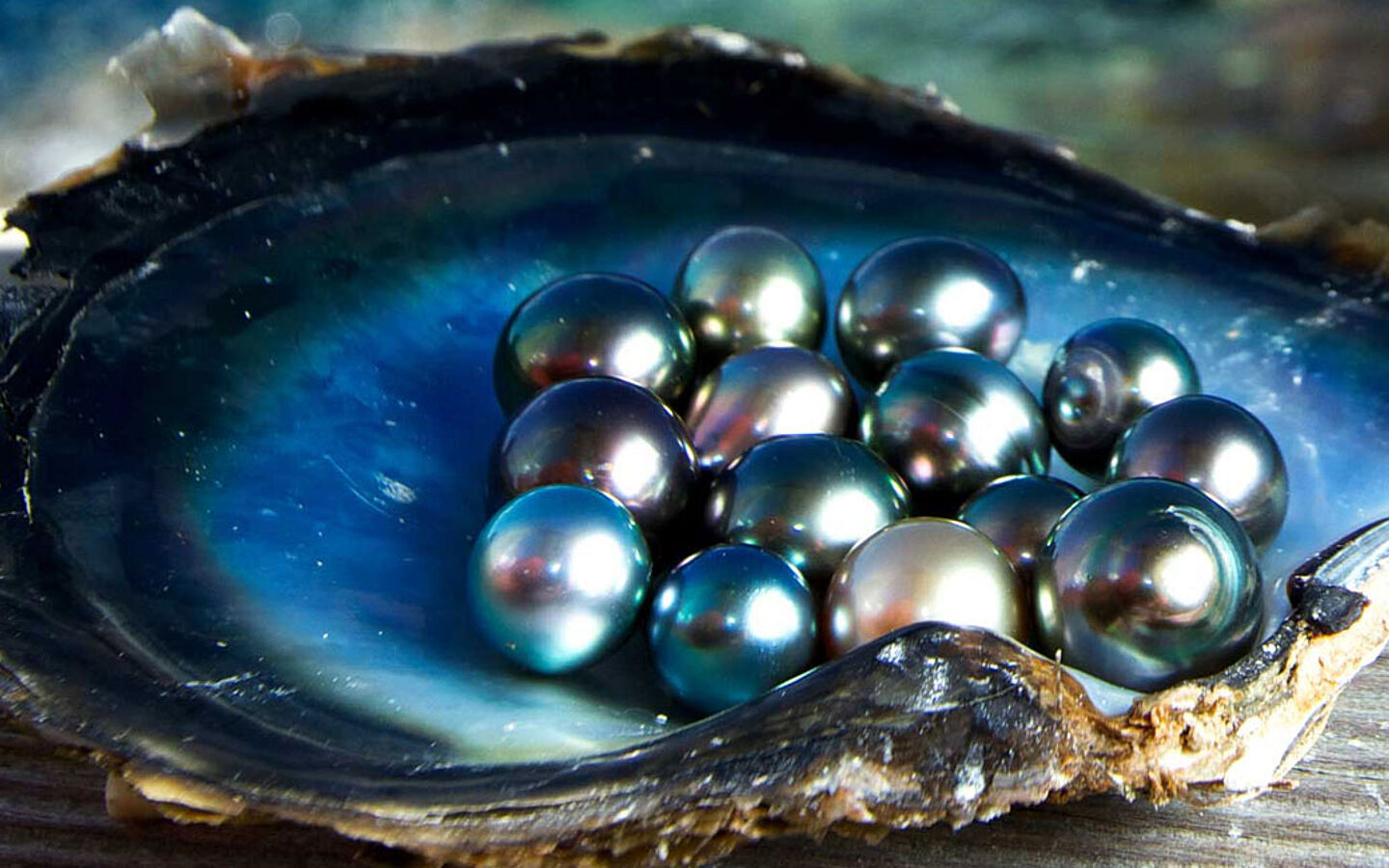
Pearl diving in Bahrain
For thousands of years, people have been diving for pearls off the coast of Bahrain, which are considered the most beautiful in the world due to their perfect quality.
03/09/2018 Reading time: 3 Minutes
As precious symbols of purity and beauty, pearls adorned royal crowns. On the island of Muharraq, a UNESCO World Heritage Site preserves evidence of the history of the pearl trade. Since this year, visitors have been able to go pearl diving themselves and even keep the pearls they find.The unique tradition of pearl fishing is part of the cultural memory of the Kingdom of Bahrain and was added to the list of UNESCO World Heritage Sites in 2012. Protected sites include three mussel beds in the northern waters off Bahrain, stately merchant houses in the old town of Muharraq, a stretch of coastline and part of the Bu Maher harbor promenade on the southern tip of Muharraq Island.
If you want to experience the tradition of pearl fishing up close, you can now dive or snorkel down to the oyster beds yourself on a guided tour. Up to 60 oysters can be collected per person, which are opened directly on the boat under supervision after the dive or snorkeling. Anyone who finds a pearl can even keep it. Pearl diving can be booked through DMC @Bahrain or directly through local hotels.
The pearl trail on Muharraq is a 3.5-kilometer hiking trail that connects various stations on the history of pearl fishing. The ideal starting point is the visitor center in the Bu Maher fortress, which once protected the important fishing and trading port. The first information about pearl fishing in Bahrain can be found in Assyrian texts dating back over 4000 years. The Roman scholar Pliny the Elder (24 to 79 AD) also mentions that the island was famous for its huge pearl deposits. The highly sought-after natural pearls come from mussel beds in the shallow coastal waters off the islands of Bahrain, where the seawater mixes with freshwater springs bubbling up from the seabed to create the unique quality.
The pearls for Queen Elizabeth I's magnificent jewels were dived for off the coasts of Bahrain, and Napoleon Bonaparte and Indian maharajas also appreciated the shimmering brilliance of the treasures from the sea. For thousands of years, Bahrain was the center of the pearl trade, which experienced its heyday between the 1850s and the 1930s. Back then, pearls were more valuable than diamonds, and jewelers from all over the world, such as Jacques Cartier, came to Bahrain to acquire the most beautiful pearls. The search brought Jacques Cartier to Bahrain for the first time in 1911, where he was a guest of the Mattar family, who still run the oldest and most prestigious jewelry store in Bahrain today. From the coast of Muharraq, Jacques Cartier himself went to sea with the Bahraini pearl divers.
In the 1930s, around 30,000 pearl divers are said to have spent several months at sea during the summer. Equipped with a basket, a knife and a nose clip, the divers lowered themselves from their wooden boats, the dhows, to the mussel banks using a rope. To protect themselves from the sharp-edged shells, they wrapped their hands with scraps of cloth.
When oil was discovered in Bahrain in 1932, many pearl fishermen switched to the newly emerging oil industry, which promised more lucrative and, above all, seasonally independent employment opportunities. Although the pearl trade is no longer as economically significant today, Bahrain is still the world's most important trading center for natural pearls. The sale of cultured pearls is strictly prohibited. Every pearl sold in Bahrain has a certificate of authenticity.
On guided boat tours to the best diving or snorkeling spots, visitors can collect up to 60 oysters and even keep the pearls they find.
Further information:
www.pearldiving.bh& www.btea.bh




![[Translate to en:] AMADEUS Riva (c) Lüftner Cruises](/fileadmin/_processed_/d/e/csm_AMADEUS_Riva_ebdf4c2c55.jpg "[Translate to en:] AMADEUS Riva (c) Lüftner Cruises")














































![[Translate to en:] AMADEUS Riva (c) Lüftner Cruises](/fileadmin/_processed_/d/e/csm_AMADEUS_Riva_64c1995e26.jpg "[Translate to en:] AMADEUS Riva (c) Lüftner Cruises")