


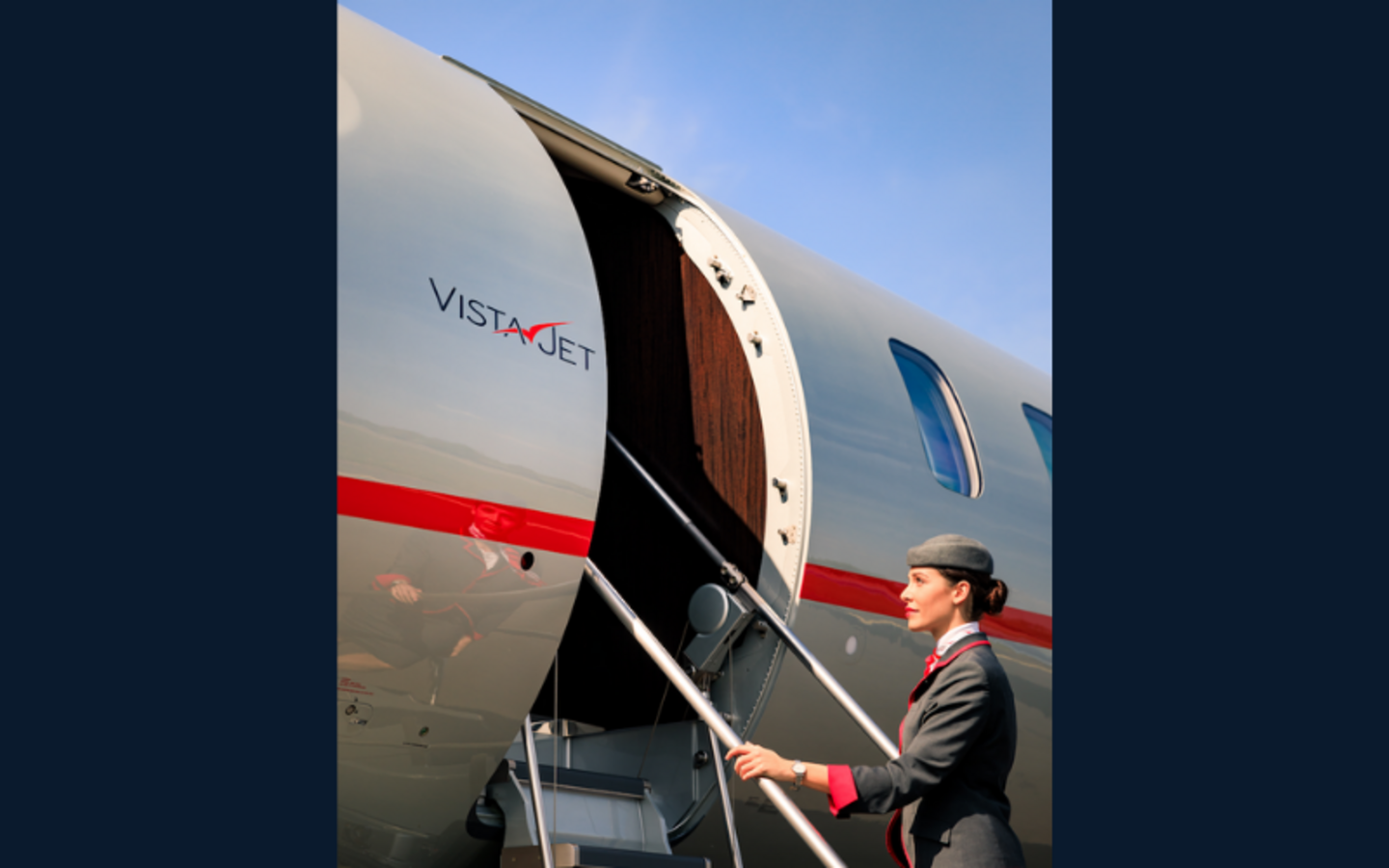
Private jet providers as crisis winners?
Thomas Flohr, founder and chairman of VistaJet, in conversation with Connoisseur Circle
03/08/2021 Reading time: 4 Minutes
The global corona pandemic is playing into the hands of business jet operators. Passengers are still faced with complicated and ever-changing travel restrictions and are looking for simple and reliable travel solutions. In 2020 and even today, commercial airlines are grounded and flights are canceled. But there are a number of people who have urgent travel needs.Private aviation is playing an increasingly important role in this. Before the pandemic, only around 10 percent of people who could afford it flew privately. Now, 71 percent of new requests received by VistaJet are from passengers who have not regularly used business flight solutions in the past.
Founder and Chairman of VistaJet, Thomas Flohr, confirms this ongoing trend as passengers switch to private jets due to limited global connectivity as a result of the pandemic. "What we have seen is a dramatic reduction in commercial air connectivity available globally. People need to travel and the world needs to function," Flohr tells Connoisseur Circle.
"Low levels of skips on scheduled flights mean that many connections can no longer exist," he said. However, VistaJet is also in talks with some airlines to offer the last leg of transportation, such as taking passengers from a hub to a smaller airport.
Several airlines have approached VistaJet to transport some of their premium customers on a Global Express private jet during this COVID-19 pandemic, as the load factor for a commercial aircraft has been minimal.
"For example, a Boeing 777 from an airline with about 10 seats in First Class. There were only four seats occupied and the large aircraft was not departing at the time. We then stepped in and provided this service," explained Flohr.
According to Flohr, the fundamental difference between a scheduled commercial flight and general aviation is that airlines depend on the load factor, which has collapsed due to the pandemic.
In the business jet market, the much smaller aircraft are not dependent on the load factor and are better able to offer point-to-point services. "People want to touch as little as possible on an airplane or at an airport," said Flohr. A trip by private jet has 20 touch points at the airport on the way to the plane, as opposed to 700 for commercial flying
And a reduction in air traffic has a double negative effect. Because having fewer direct flights means having to change planes at airports more often. This "again increases health risks and drives a significant number of passengers to business jets," said Flohr.
"We have a total of 130 aircraft. VistaJet is a global player and a trusted brand," he added.
The company offers the ability to order a private jet for only the hours a passenger needs, which creates a very low entry point when booking such an aircraft. There are people who can afford to fly on a private jet but have not yet done so, he argued.
"COVID-19 removed the barrier of saying, 'Okay, this is the most efficient way. I think this trend will continue. Will all the new passengers stay with private jets? Of course not, some will go back to the commercial infrastructure," Flohr said.
The average utilization of the business jet is only 250 flight hours. per year. "That is a waste. This needs to be increased to about 1,000 hours per year, then you reduce costs," Flohr said.
The fixed costs of an hour in a business jet - including pilot, amortization, purchase price, etc. - make up around 65% of the total cost. "If you fly 1000 hours, you reduce the [fixed] cost by 75%, and you're looking at a total cost savings potential of 30 to 40%.
That gives us a decent margin," he added.
To do this, however, a business jet operator needs a global infrastructure to avoid empty legs, for example. "You need that network effect, a flexible fleet that is constantly in operation and supported by the latest technology solution," Flohr said. And VistaJet can provide that.
"We are democratizing the use of a business jet," he said. The old image of only rich people using this type of transportation is quickly disappearing, Flohr added.
But business jet operators are also learning from the airlines.
"Some of them operate their airplanes 4,000 hours a year. Some of them have a single type of aircraft in the fleet. This reduces costs," said Flohr.
Partnerships between companies, including hotels, tour operators, private planes, yachts, chauffeur and concierge services, are also more important than ever in today's world. In this way, customers can be offered sustainable security at every stage of their trip.
VistaJet has flown to 187 countries to date, covering 96% of the world.
More information at:
www.vistajet.com/en-gb/









![[Translate to en:] AMADEUS Riva (c) Lüftner Cruises](/fileadmin/_processed_/d/e/csm_AMADEUS_Riva_ebdf4c2c55.jpg "[Translate to en:] AMADEUS Riva (c) Lüftner Cruises")




















































![[Translate to en:] AMADEUS Riva (c) Lüftner Cruises](/fileadmin/_processed_/d/e/csm_AMADEUS_Riva_64c1995e26.jpg "[Translate to en:] AMADEUS Riva (c) Lüftner Cruises")