



Sustainability in luxury tourism
Prof. Dr. Harald Zeiss is the founder of the Institute for Sustainable Tourism, Inatour, and Director of the Institute for Tourism Research at the Harz University of Applied Sciences. In this talk, he explains how to make luxury travel sustainable.
01/13/2026 Reading time: 5 Minutes
Can luxury travel ever be sustainable? There is a fundamental contradiction between luxury travel and sustainability. If we want to travel sustainably, we should use resources responsibly - but luxury often means using them wastefully. This doesn't always have to be the case, but if you look at current offers, a very large part of the luxury narrative is precisely this cornucopia of making everything possible.
Are there any exceptions?
There are developments towards more sustainable luxury travel that increasingly focus on special experiences. Particularly good service is always sustainable, for example, because it doesn't waste resources and at the same time puts people at the center, who - it is hoped - will then also receive better payment for the special experience.
How can luxury hotels become more sustainable?
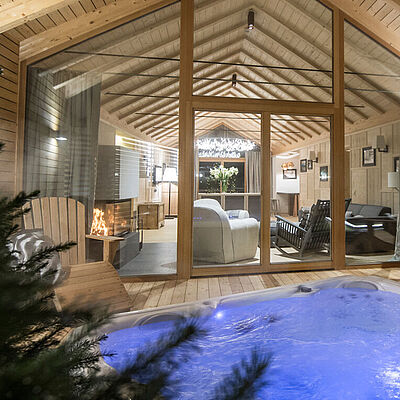
Luxury hotels that offer very large rooms with a shower, bathtub and whirlpool or private pool have a particularly high water and electricity consumption. As a result, luxury travelers leave a larger ecological footprint than the average traveler. To counteract this, hotels can invest in sustainable technologies, such as resource-saving water and energy generation. Unfortunately, not all luxury hotels implement these measures, so there is still a large gray area that is not very ecological.
Your conclusion?
The potential to make luxury travel sustainable is there, and there are many attractive starting points. I welcome the fact that luxury travel is increasingly focusing on experiences and less on opulence and waste. Especially in the luxury segment, there are often people traveling who have a higher educational background and should therefore understand that we should preserve our beautiful earth for future generations. My hope is that these travelers will pay less attention to the price and instead value the respectful use of resources.
Is there a contradiction between sustainable awareness and actual travel behavior?
Yes, there actually is. Many people are aware of the need to travel more sustainably, but still want to enjoy their vacation without a guilty conscience. This contradiction is known as "cognitive dissonance": Your head says you should be environmentally and socially responsible, but your gut then opts for the cheaper hotel or the long-distance route that is bad for the climate. Studies, such as the FUR Reiseanalyse, show that although many people want a socially and environmentally responsible vacation, there is a discrepancy between attitude and actual behavior - the so-called attitude-behavior gap. This is human, and the business model of fitness studios works so well because here too, "wanting" and "doing" are two different things. In the end, many travelers hope that the operator will take care of everything, just as we rightly assume that no child labor is used or employees are treated badly. Many expect that sustainable practices such as saving water or buying local food are a matter of course. However, the reality often does not quite meet these expectations.
How can we change this?
One approach is so-called "nudging": gently steering people in a certain direction without taking away their freedom of choice. One example of this is that travelers are more likely to book sustainable accommodation if they are nudged in a hotel by a green carpet and a reference to climate protection, as was the case at Iberotel a few years ago. Priming can increase the willingness to behave more sustainably - even if the levers are limited.
What would be more effective?
I believe that the industry should work with politicians and associations to set binding standards. This would ensure that sustainability is not just an optional extra, but a mandatory measure for all providers. In concrete terms, this means, for example, that all hotels - regardless of their category - are bound by measures such as water flow restrictions, waste recycling and energy consumption controls. Only through uniform standards will sustainability become an integral part of the industry and not just a voluntary addition.
Are there regions that are pioneers?
Yes, Scandinavia and the Netherlands have already achieved a lot in this area, as has Costa Rica, which is known for its particularly good nature conservation. Bhutan, on the other hand, is an example of a country that severely limits tourism in order to protect the environment and society. In Turkey, on the other hand, every hotel is currently being certified to the Travel Life standard, which I find very positive. Hotels that are concerned with sustainability can improve their overall quality through this standardization.
One more personal question for you: What does luxury on vacation mean to you?
For me, luxury is above all something special and extraordinary - experiences that leave a positive impression and surprise. It can be small moments, such as a drink at a trendy rooftop bar that you treat yourself to simply for the pleasure of the moment or an exclusive guided tour of a museum. But I also experience luxury in authentic encounters with local people from whom I can learn something and find out about their lives. And I often realize how well off we are in Germany, that we live in luxury every day.








![[Translate to en:] AMADEUS Riva (c) Lüftner Cruises](/fileadmin/_processed_/d/e/csm_AMADEUS_Riva_ebdf4c2c55.jpg "[Translate to en:] AMADEUS Riva (c) Lüftner Cruises")



















































![[Translate to en:] AMADEUS Riva (c) Lüftner Cruises](/fileadmin/_processed_/d/e/csm_AMADEUS_Riva_64c1995e26.jpg "[Translate to en:] AMADEUS Riva (c) Lüftner Cruises")